


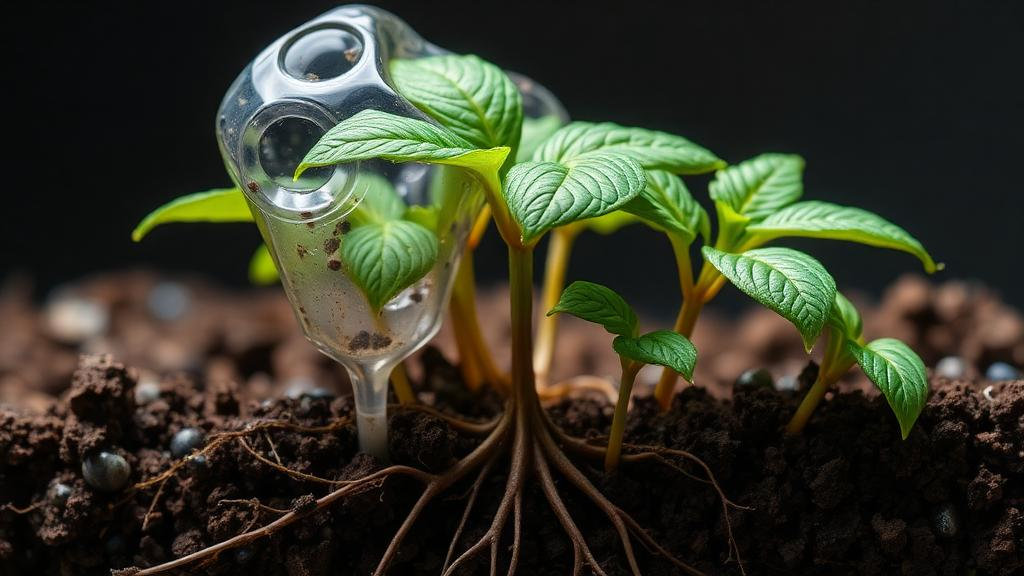
Plastic pollution has long been framed as an ocean problem, but a new comprehensive review argues that the land beneath our feet may be quietly absorbing far more of it than we realize. Published in Frontiers in Environmental Chemistry, the analysis synthesizes nearly fifteen years of research on how microplastics and nanoplastics enter terrestrial plants, travel through their tissues, and disrupt the biological machinery that sustains crops and wild vegetation alike. The findings suggest that plastic particles are not merely sitting in soil; they are being taken up by roots, absorbed through leaves, and transported through the very vascular systems that plants rely on to survive.
The review, led by Arlinda Cakaj of the University of Prishtina and colleagues across Europe and Thailand, systematically screened 189 peer-reviewed studies published between 2010 and 2025. The researchers classified plastic particles into two broad categories: primary microplastics, which are manufactured at small sizes for products like cosmetics and industrial abrasives, and secondary microplastics, which form when larger plastic items fragment under ultraviolet radiation, mechanical stress, and weathering. Nanoplastics, generally defined as particles smaller than one micrometer, represent the smallest and most biologically active fraction of this pollution. The team’s central insight is that these size classes behave very differently inside plants, and that understanding this distinction is critical for assessing ecological risk.
One of the most striking findings concerns how plastic particles breach plant defenses. Microplastics, which are typically larger than one micrometer, generally cannot penetrate intact cell walls. Instead, they adhere to root surfaces, accumulate around seeds, and physically block pores that plants use to absorb water and nutrients. In garden cress and broad bean, researchers documented microplastic accumulation on root surfaces that reduced water uptake and disrupted nutrient transport. In seeds, microplastics can obstruct the micropyle, the tiny opening through which water enters during germination, effectively suffocating the seed before it can sprout. Nanoplastics, by contrast, are small enough to slip through intercellular spaces in the root epidermis and cortex, particularly in regions where the Casparian strip, a waxy barrier that normally filters what enters the vascular system, has not yet fully developed.
Once inside the plant, nanoplastics do not stay put. Fluorescent labeling studies have tracked 50 to 150 nanometer polystyrene particles moving from roots to shoots in carrot and Arabidopsis thaliana, a widely used model plant. In wheat, 100-nanometer particles travel through cell wall gaps and reach the xylem, the pipeline that carries water and dissolved minerals upward from roots to leaves. The review also documents a second, less obvious entry route: foliar uptake. When nanoplastics land on leaf surfaces, they can pass through stomata, the microscopic pores that plants use for gas exchange, and then migrate systemically through vascular tissues. In lettuce, polystyrene nanoplastics accumulated around stomata and were subsequently transported all the way down to the roots, demonstrating that atmospheric deposition of plastic particles could contaminate plants from the top down as well as from the bottom up.
The mechanisms plants use to internalize these particles are surprisingly diverse. Beyond passive transport through cell wall gaps and intercellular spaces, the review identifies endocytosis, the process by which cells engulf external material, as a key uptake pathway for 100-nanometer polystyrene particles in rice roots. Aquaporins, membrane channels that normally regulate water flow, have been implicated in facilitating nanoplastic internalization in rice. Surface chemistry adds another layer of complexity: root exudates and mucilage, which are typically negatively charged, can inhibit the uptake of positively charged nanoparticles by altering electrostatic interactions at the root surface. This means that the same plastic particle may behave differently depending on the plant species, the soil chemistry, and even the microbial community living around the roots.
The physiological consequences of this internalized plastic are wide-ranging. The review identifies four major mechanisms through which microplastic stress reduces plant growth: excessive production of reactive oxygen species, alterations in leaf and root ion composition, disruption of hormonal regulation, and reductions in chlorophyll content and photosynthetic activity. Reactive oxygen species are chemically unstable molecules that damage lipids, proteins, and DNA when they accumulate faster than plants can neutralize them. In onion seedlings exposed to 1000 milligrams per liter of polystyrene nanoplastics for 72 hours, researchers measured significantly elevated hydrogen peroxide in root tissues, while lower concentrations produced no detectable effect. This dose-dependent threshold suggests that plants may tolerate low-level exposure but suffer acute oxidative damage once concentrations cross a critical boundary.
Photosynthesis emerges as one of the most consistently vulnerable processes. In lettuce, polystyrene microplastics reduced chlorophyll a by 9.1 percent and chlorophyll b by 8.7 percent, alongside measurable declines in carotenoid content, shoot biomass, plant height, and leaf area. In pumpkin, both polyvinyl chloride and polyethylene microplastics significantly reduced chlorophyll and photosynthesis rates. In mangrove seedlings, the reduction in carotenoids and chlorophyll a, combined with decreased efficiency of the photosynthetic electron transport chain, accounted for the observed photosynthetic inhibition. Positively charged nanoparticles were found to be more potent inhibitors of photosynthesis than their negatively charged counterparts, likely because they interact more aggressively with the negatively charged thylakoid membranes inside chloroplasts where the light reactions of photosynthesis occur.
The genetic and molecular impacts are equally concerning. In Arabidopsis and tobacco, microplastics downregulate critical photosynthesis-related genes, including those encoding light-harvesting chlorophyll a/b binding proteins that are essential for capturing solar energy. Polyethylene microplastics in tobacco suppressed more than 80 percent of differentially expressed genes associated with the electron transport chain and both photosystems. In onion root tip cells, exposure to plastic particles induced chromosomal abnormalities including micronucleated cells, chromatin stickiness, and fragmentation, raising the possibility of irreversible genomic damage. In watercress, genes related to photosynthetic pigments such as psbA and rbcL were overexpressed, a pattern the authors interpret as a sign of genetic stress rather than adaptation.
Nutrient uptake pathways are also disrupted in ways that could ripple through entire food chains. Polystyrene and polyvinyl chloride microplastics reduce the concentrations of calcium, potassium, nitrogen, and phosphorus in plant shoots and leaves, correlating with declines in photosynthesis and stomatal conductance. Surface functional groups on plastic particles play a decisive role: positively charged amine groups occupy binding sites on cell walls and block the adsorption of essential cations like potassium and calcium, while negatively charged sulfonate groups interact with phospholipids in cell membranes, causing cytotoxicity. In rice, polyethylene microplastics did not affect grain yield in common cultivars but significantly reduced the number of grains per panicle by 13 percent and grain yield by 23 percent in hybrid varieties, an effect linked to the destruction of hemoglobin’s tertiary structure and subsequent inhibition of root activity.
The review concludes with a sobering assessment of what remains unknown. Most existing studies have been conducted under controlled laboratory conditions using single polymer types at concentrations that may not reflect real-world exposure. The authors call for long-term field experiments with mixed plastic pollutants, standardized methods for detecting and quantifying nanoplastics in environmental samples, and deeper investigation into how root architecture, root exudates, and plant-microbe interactions govern uptake and toxicity. They also flag a growing concern about biodegradable plastics, whose degradation products may themselves affect plant metabolism and soil microbial communities. As regulatory frameworks such as the European Union’s Regulation 2023/2055 begin to restrict intentionally added microplastics in consumer products, the authors argue that agricultural sources, including mulching films, coated fertilizers, and irrigation materials, remain underappreciated contributors to soil contamination. The message is clear: the plastic we discard does not simply disappear. It fragments, disperses, and finds its way into the living tissue of the plants that feed us.
Subject of Research: Uptake, translocation, and physiological effects of micro- and nanoplastics in terrestrial plants
Article Title: Micro- and nanoplastics in terrestrial plants: uptake, accumulation, and impacts on growth and physiology
Article References: Micro- and nanoplastics in terrestrial plants: uptake, accumulation, and impacts on growth and physiology. (n.d.). https://doi.org/10.3389/fenvc.2026.1908849
Image Credits: AI Generated
DOI: 10.3389/fenvc.2026.1908849
Keywords: microplastics, nanoplastics, terrestrial plants, plant physiology, oxidative stress, photosynthesis, soil pollution, phytoremediation, nutrient uptake, food chain contamination, agriculture, environmental chemistry
Cite Scienmag News
Alan Morgan. (October 15, 2026). Plastic Particles Are Invading Plants From Roots to Leaves. Scienmag. https://scienmag.com/plastic-particles-are-invading-plants-from-roots-to-leaves/
Alan Morgan. "Plastic Particles Are Invading Plants From Roots to Leaves." Scienmag, 15 October 2026, https://scienmag.com/plastic-particles-are-invading-plants-from-roots-to-leaves/. Accessed 15 October 2026.
Alan Morgan. "Plastic Particles Are Invading Plants From Roots to Leaves." Scienmag. October 15, 2026. https://scienmag.com/plastic-particles-are-invading-plants-from-roots-to-leaves/


