

Tuesday, July 14, 2026
Science
No Result
View All Result
  • Login
  • HOME
  • SCIENCE NEWS
  • CONTACT US
  • HOME
  • SCIENCE NEWS
  • CONTACT US
No Result
View All Result
Scienmag
No Result
View All Result
Home Science News Athmospheric

Plasma Farming Advances Toward Outperforming Conventional Agricultural Methods

July 14, 2026
in Athmospheric
Reading Time: 2 mins read
0
Plasma Farming Advances Toward Outperforming Conventional Agricultural Methods

Plasma Farming Advances Toward Outperforming Conventional Agricultural Methods

65
SHARES
587
VIEWS
Share on FacebookShare on Twitter
ADVERTISEMENT

Solar storms—flares and coronal mass ejections—can shower Earth with energetic particles that once helped spark chemical reactions in the early atmosphere. Now, researchers are borrowing that idea in reverse: instead of waiting for space weather, they use controlled plasma to “nudge” plants. A new review by scientists from Nagoya University and Kyushu University in Japan surveys a rapidly growing field called plasma agriculture, aiming to improve crop performance as a sustainable alternative to chemical-heavy or genetically modified approaches.

Plasma, often imagined as searingly hot, is here produced in a low-temperature way. By applying high voltage to air or a gas, a small fraction of molecules becomes ionized: electrons gain high energy while the surrounding bulk remains close to room temperature. This is crucial—seeds can be treated directly without the heat damage associated with conventional thermal processing.

Across more than 30 crop species, the review finds that in over two-thirds of studies, carefully tuned plasma exposure increases seed vigor or yield. When plasma dose is poorly controlled, effects can turn neutral or even negative, highlighting the need for reliable treatment protocols before any large-scale adoption.

The dominant mechanism centers on energetic electrons colliding with atmospheric molecules. These collisions excite oxygen and nitrogen, breaking bonds and generating Reactive Oxygen and Nitrogen Species (RONS), including hydroxyl radicals, nitrates, nitrites, peroxides, and superoxides. In living tissues, RONS can act like double-edged signals—beneficial at low, tightly regulated levels, harmful when excessive.

Researchers are mapping multiple pathways, including surface modifications of the seed coat, pathogen inactivation on external tissues, hormone-related growth stimulation, and improved uptake of water and nutrients. The review emphasizes that these effects may reinforce one another rather than operate in isolation.

One particularly compelling direction involves epigenetic changes—alterations in gene expression patterns without modifying DNA sequence. Plasma-driven epigenetic shifts have been reported to enhance expression of genes tied to germination, stress tolerance, and metabolism, potentially offering longer-lasting physiological advantages.

Beyond seeds, plasma can also be used to treat water and soil. Since atmospheric nitrogen is abundant but chemically inert due to its triple bond, plants rely on nitrogen fixation by microbes or energy-intensive industrial processes such as Haber–Bosch. Plasma offers an alternative by converting nitrogen into reactive forms like ammonia, nitrites, and nitrates in plasma-activated water.

In that sense, plasma agriculture could function as an electricity-powered route for nitrogen preparation, reducing reliance on fossil-fuel-driven fertilizer manufacturing. With climate volatility and food demands rising, the reviewed approach positions low-temperature plasma as a promising, controllable tool for future-friendly farming.

Ultimately, the review argues that moving from laboratory demonstrations to farms will require deeper mechanistic clarity—especially the specific RONS chemistry, timing, and dose windows that transform stress signals into growth signals.

Subject of Research:
Article Title: Sunlight to Plasma: Mimicking nature’s light for smarter agriculture and crop production
News Publication Date: 17-Jun-2026
Web References:
References:
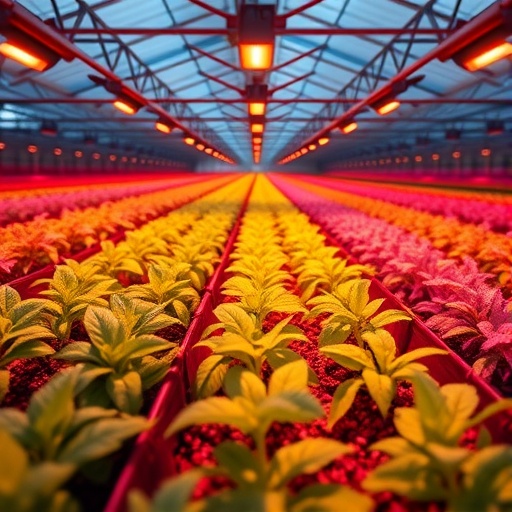
Image Credits: Sumeet Kulkarni, Nagoya University
Keywords: low-temperature plasma, plasma agriculture, seed vigor, RONS, epigenetics, nitrogen fixation, fertilizer, sustainable farming

Tags: controlled plasma applications in farmingcrop yield improvement with plasmaenvironmentally-friendly agricultural methodsionized gas effects on seedslow-temperature plasma seed treatmentnon-thermal plasma for agricultureplasma agricultureplasma farming technologyplasma treatment protocols for cropsplasma-induced seed vigorspace weather-inspired plant stimulationsustainable crop enhancement
Share26Tweet16
Previous Post

Modern Slavery Is Managed Like a Business Choice, Not an Accident

Next Post

Hasmonean and Qumran calendars combine to solve a Dead Sea Scrolls mystery

Related Posts

Plants respond instantly to sudden high light conditions
Athmospheric

Plants respond instantly to sudden high light conditions

July 14, 2026
AMS Science Preview: Texas Floods, Deformed Cities, and Olympic Weather Patterns
Athmospheric

AMS Science Preview: Texas Floods, Deformed Cities, and Olympic Weather Patterns

July 13, 2026
China’s Lakes Reveal Major Carbon Shifts from Climate and Pollution
Athmospheric

China’s Lakes Reveal Major Carbon Shifts from Climate and Pollution

July 13, 2026
Climate Change Causes Diverse and Deadly Health Impacts
Athmospheric

Climate Change Causes Diverse and Deadly Health Impacts

July 13, 2026
Richer, denser cities cut water use faster after early drought warnings
Athmospheric

Richer, denser cities cut water use faster after early drought warnings

July 13, 2026
Tropical Variability Drives Cold Surge Movement Across Hemispheres
Athmospheric

Tropical Variability Drives Cold Surge Movement Across Hemispheres

July 13, 2026
Next Post
Hasmonean and Qumran calendars combine to solve a Dead Sea

Hasmonean and Qumran calendars combine to solve a Dead Sea Scrolls mystery

  • Mothers who receive childcare support from maternal grandparents show more

    Mothers who receive childcare support from maternal grandparents show more parental warmth, finds NTU Singapore study

    27656 shares
    Share 11059 Tweet 6912
  • University of Seville Breaks 120-Year-Old Mystery, Revises a Key Einstein Concept

    1061 shares
    Share 424 Tweet 265
  • Bee body mass, pathogens and local climate influence heat tolerance

    682 shares
    Share 273 Tweet 171
  • Researchers record first-ever images and data of a shark experiencing a boat strike

    546 shares
    Share 218 Tweet 137
  • Groundbreaking Clinical Trial Reveals Lubiprostone Enhances Kidney Function

    531 shares
    Share 212 Tweet 133
Science

Embark on a thrilling journey of discovery with Scienmag.com—your ultimate source for cutting-edge breakthroughs. Immerse yourself in a world where curiosity knows no limits and tomorrow’s possibilities become today’s reality!

RECENT NEWS

  • Academic Freedom Under Threat, Research Resilience Strengthening Strategies Revealed
  • Different brain regions control poor sleep at different ages
  • Aging Cells Revert to Stem Cells as Self-Repair Mimics
  • Special Supplemental Nutrition Program and Cerebral Palsy Risk

Categories

  • Agriculture
  • Anthropology
  • Archaeology
  • Athmospheric
  • Biology
  • Biotechnology
  • Blog
  • Bussines
  • Cancer
  • Chemistry
  • Climate
  • Earth Science
  • Editorial Policy
  • Marine
  • Mathematics
  • Medicine
  • Pediatry
  • Policy
  • Psychology & Psychiatry
  • Science Education
  • Social Science
  • Space
  • Technology and Engineering

Subscribe to Blog via Email

Enter your email address to subscribe to this blog and receive notifications of new posts by email.

Join 5,146 other subscribers

© 2025 Scienmag - Science Magazine

Welcome Back!

Login to your account below

Forgotten Password?

Retrieve your password

Please enter your username or email address to reset your password.

Log In
No Result
View All Result
  • HOME
  • SCIENCE NEWS
  • CONTACT US

© 2025 Scienmag - Science Magazine

Discover more from Science

Subscribe now to keep reading and get access to the full archive.

Continue reading
