

Thursday, July 30, 2026
Science
No Result
View All Result
  • Login
  • HOME
  • SCIENCE NEWS
  • CONTACT US
  • HOME
  • SCIENCE NEWS
  • CONTACT US
No Result
View All Result
Scienmag
No Result
View All Result
Home Science News Medicine

Plant Viruses Boost AI, Machine Learning, and Nanotech in Biotechnology

July 10, 2026
in Medicine
Reading Time: 2 mins read
0
Plant Viruses Boost AI, Machine Learning, and Nanotech in Biotechnology

Plant Viruses Boost AI, Machine Learning, and Nanotech in Biotechnology

65
SHARES
587
VIEWS
Share on FacebookShare on Twitter
ADVERTISEMENT

Plant Viruses: Revolutionizing Biotechnology through AI, Machine Learning, and Nanotechnology

Emerging research is unveiling the profound potential of plant viruses as versatile tools in biotechnology, especially when integrated with cutting-edge technologies such as artificial intelligence (AI), machine learning (ML), and nanotechnology. This novel interdisciplinary approach promises to transform applications ranging from crop improvement to therapeutic agent delivery.

Plant viruses, traditionally studied for their pathogenic effects on crops, have now been repurposed due to their robust structural features. Their nanoscale size, uniform morphology, and programmable genetic material make them ideal scaffolds for engineering novel biomaterials. Researchers are harnessing these viral particles to develop precision delivery systems and nanosensors, allowing for unprecedented control at the molecular level.

Artificial intelligence and machine learning algorithms enhance this process by enabling the rapid analysis and prediction of virus-host interactions and the structural properties of viral capsids. AI-driven models accelerate the design of viral vectors tailored for specific functions, optimizing their stability, targeting capacity, and biocompatibility. This synergy expedites the development cycle, allowing for the synthesis of custom viruses with intended functionalities.

Nanotechnology complements these advancements by allowing researchers to manipulate viral particles at the nanoscale with exquisite precision. Utilizing surface modification techniques, plant viruses can be functionalized with biomolecules, drugs, or imaging agents. This capability turns viral capsids into multifunctional nanocarriers that can deliver payloads to specific cells or tissues, enhancing the efficacy and safety of biotechnological interventions.

The integration of these technologies also opens new avenues in agriculture. Engineered plant viruses can be employed as nano-fertilizers or bio-pesticides, offering an eco-friendly alternative to conventional chemicals. Moreover, AI-guided monitoring of viral application helps in minimizing environmental impact and maximizing crop yield, aligning with sustainable farming practices.

Beyond agriculture, the therapeutic potential of plant viruses is being explored in vaccine development and targeted drug delivery. Their ability to evoke immune responses without pathogenicity makes them promising candidates for novel vaccines. Additionally, machine learning optimizes viral design for enhanced immunogenicity and minimal side effects, marking a significant step in personalized medicine.

Despite these promising advances, challenges remain in ensuring biosafety, managing off-target effects, and scaling up production. Regulatory frameworks must evolve to address the complexities introduced by combining biological agents with AI and nanotechnology. Nevertheless, the rapid pace of interdisciplinary research points to a future where plant viruses are central to innovative biotechnological solutions.

The convergence of plant virology, AI, machine learning, and nanotechnology exemplifies how traditional biological systems can be transformed through computational and engineering technologies. This multidisciplinary paradigm holds transformative potential for agriculture, medicine, and materials science, heralding a new era of virus-based biotechnological innovation.

Subject of Research: Application of plant viruses in biotechnology leveraging artificial intelligence, machine learning, and nanotechnology

Article Title: Application of plant viruses in biotechnology with relation to artificial intelligence, machine learning, and nanotechnology

Article References:

Jain, K., Saini, A., Marwal, A. et al. Application of plant viruses in biotechnology with relation to artificial intelligence, machine learning, and nanotechnology.
npj Viruses (2026). https://doi.org/10.1038/s44298-026-00193-6

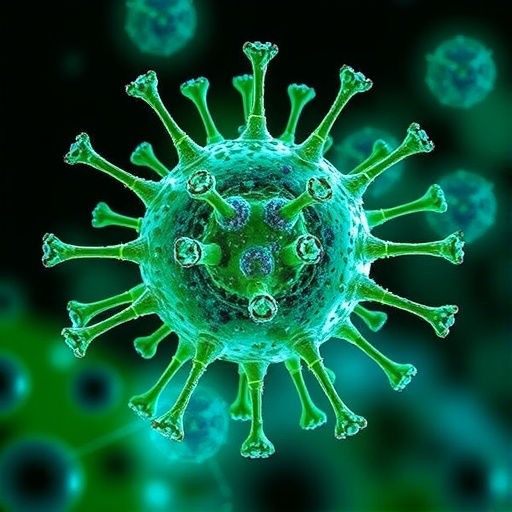
Image Credits: AI Generated

Tags: AI in agricultureAI-driven viral designinterdisciplinary plant virus applicationsmachine learning in virus researchnanomaterials for therapeutic deliverynanotechnology in plant sciencesPlant virus biotechnologyprecision nanotechnology in biotechprogrammable viral scaffoldsviral vectors for crop improvementvirus-based nanomaterialsvirus-host interaction prediction
Share26Tweet16
Previous Post

Stem Cell Therapy Shows One-Year Survival in Retinitis Pigmentosa Patients

Next Post

First Clinical Trial of Stem Cell Therapy for Huntington’s Disease Announced

Related Posts

Representations of the intrinsic value of information in mouse orbitofrontal cortex
Medicine

Representations of the intrinsic value of information in mouse orbitofrontal cortex

July 30, 2026
Ferroptotic propagation: from single-cell execution to tissue-scale death programs
Medicine

Ferroptotic propagation: from single-cell execution to tissue-scale death programs

July 30, 2026
Residential proximity to major roadways and prevalent diabetes in older adults: a cross-sectional study based on CLHLS
Medicine

Residential proximity to major roadways and prevalent diabetes in older adults: a cross-sectional study based on CLHLS

July 30, 2026
Overestimations in the cyclization efficiency of small, restriction enzyme-digested DNA fragments
Medicine

Overestimations in the cyclization efficiency of small, restriction enzyme-digested DNA fragments

July 30, 2026
Sulfated polysaccharides target RANK Lys97 to inhibit osteoclast differentiation and reverse osteoporosis
Medicine

Sulfated polysaccharides target RANK Lys97 to inhibit osteoclast differentiation and reverse osteoporosis

July 30, 2026
Regulation of RNA transcript elongation in metazoans and its relevance to disease
Medicine

Regulation of RNA transcript elongation in metazoans and its relevance to disease

July 30, 2026
Next Post
First Clinical Trial of Stem Cell Therapy for Huntington’s Disease Announced

First Clinical Trial of Stem Cell Therapy for Huntington's Disease Announced

  • Mothers who receive childcare support from maternal grandparents show more

    Mothers who receive childcare support from maternal grandparents show more parental warmth, finds NTU Singapore study

    27656 shares
    Share 11059 Tweet 6912
  • University of Seville Breaks 120-Year-Old Mystery, Revises a Key Einstein Concept

    1061 shares
    Share 424 Tweet 265
  • Bee body mass, pathogens and local climate influence heat tolerance

    682 shares
    Share 273 Tweet 171
  • Researchers record first-ever images and data of a shark experiencing a boat strike

    546 shares
    Share 218 Tweet 137
  • Groundbreaking Clinical Trial Reveals Lubiprostone Enhances Kidney Function

    531 shares
    Share 212 Tweet 133
Science

Embark on a thrilling journey of discovery with Scienmag.com—your ultimate source for cutting-edge breakthroughs. Immerse yourself in a world where curiosity knows no limits and tomorrow’s possibilities become today’s reality!

RECENT NEWS

  • Ancient DNA reveals Ice Age humans preferred female mammoths
  • Public research and development money unlocks private investment and lasting economic growth
  • Satellite mapping reveals global inequities in lake water quality: over one-third of lakes fail to meet good water quality standards
  • One million euros allocated to six EUniWell study programmes on the way towards the Joint European Degree Label

Categories

  • Agriculture
  • Anthropology
  • Archaeology
  • Athmospheric
  • Biology
  • Biotechnology
  • Blog
  • Bussines
  • Cancer
  • Chemistry
  • Climate
  • Earth Science
  • Editorial Policy
  • Marine
  • Mathematics
  • Medicine
  • Pediatry
  • Policy
  • Psychology & Psychiatry
  • Science Education
  • Social Science
  • Space
  • Technology and Engineering

Subscribe to Blog via Email

Success! An email was just sent to confirm your subscription. Please find the email now and click 'Confirm Follow' to start subscribing.

Join 5,147 other subscribers

© 2025 Scienmag - Science Magazine

Welcome Back!

Login to your account below

Forgotten Password?

Retrieve your password

Please enter your username or email address to reset your password.

Log In
No Result
View All Result
  • HOME
  • SCIENCE NEWS
  • CONTACT US

© 2025 Scienmag - Science Magazine
