


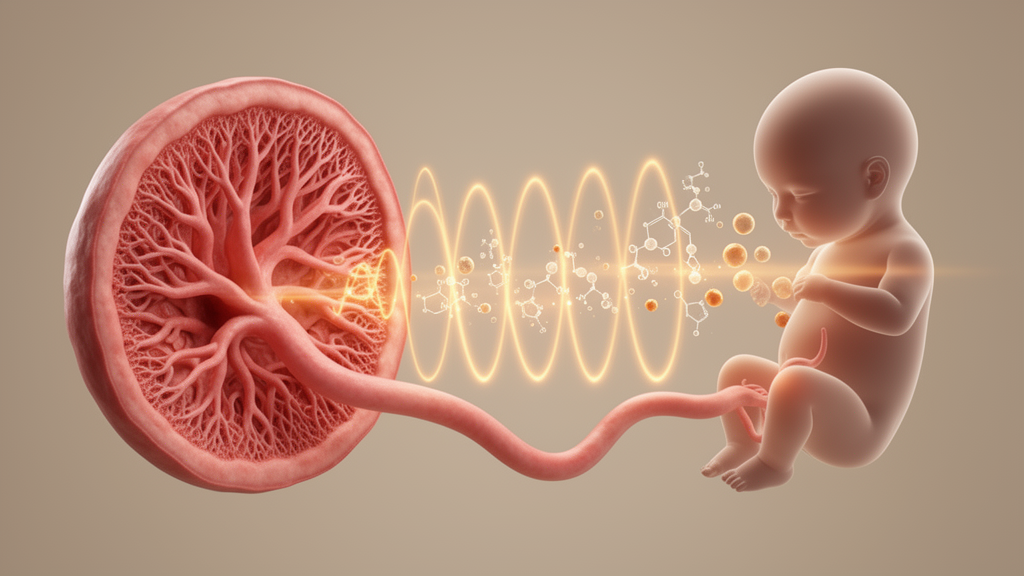
The placenta is no longer seen as a passive pipeline for nutrients and oxygen. A systematic review published in Frontiers in Endocrinology argues that this first organ to form in embryonic life acts as the primary biological interface translating maternal and even paternal physiological states into developmental signals that shape a child’s metabolic health for decades. Drawing on a structured, PRISMA-informed synthesis of the literature, author Duo Zhou of Hainan Women and Children’s Medical Center in Haikou, China, assembles evidence that maternal obesity, gestational diabetes mellitus, hypertensive disorders of pregnancy, undernutrition, micronutrient imbalance and inflammatory stress each leave distinct molecular fingerprints on placental tissue, and that these fingerprints converge on shared pathways that program insulin resistance, adiposity, dyslipidemia and elevated cardiometabolic risk in offspring.
The review’s evidence base was built methodically. Searches across PubMed/MEDLINE, Scopus, Web of Science, the Cochrane Library and ClinicalTrials.gov up to March 2026 identified 1,324 records, of which 412 duplicates were removed. After title and abstract screening excluded 720 irrelevant records, 192 full-text articles were assessed; 7 could not be retrieved, leaving 185 for full evaluation, and 105 studies ultimately entered the synthesis. The 80 rejected studies most often lacked sufficient mechanistic detail. The author explicitly stratified the evidence by design, prioritizing human cohorts while flagging their cross-sectional placental sampling, acknowledging species-specific limits of animal models, and noting that most epigenetic data derive from rodents, whose placental structure and endocrine function differ substantially from humans.
Structurally, the placenta is a functionally zoned organ rather than a uniform tissue. Chorionic villi project into the intervillous space bathed in maternal blood, with the syncytiotrophoblast serving as the principal site of material transfer, signaling and barrier function, while cytotrophoblasts beneath replenish the trophoblastic population. Extravillous trophoblasts invade the decidua and remodel maternal spiral arteries into a low-resistance, high-capacitance circulation. Transport is equally specialized: glucose moves through facilitative transporters, amino acids through active systems, and fatty acids via protein-lipase-transporter combinations, while oxygen delivery depends on maternal perfusion, villous architecture, diffusion distance and fetal blood flow. Changes in villous branching, barrier thickness, transporter abundance, mitochondrial density or local blood flow can therefore alter fetal exposure even when maternal nutrient levels appear unchanged.
Beyond exchange, the placenta is a major endocrine organ. It secretes human chorionic gonadotropin, human placental lactogen, progesterone, estrogens, leptin, corticotropin-releasing hormone and insulin-like growth factor-related mediators, shaping maternal insulin sensitivity, appetite, lipid metabolism and vascular adaptation while directly influencing fetal growth trajectories and stress responsiveness. Placental glucocorticoid handling is especially consequential: the enzyme 11β-hydroxysteroid dehydrogenase type 2 shields the fetus from maternal stress hormones, and reduced protective metabolism can produce long-term changes in insulin sensitivity, adiposity, blood pressure control and hypothalamic-pituitary-adrenal axis function. The organ also maintains maternal-fetal immune tolerance through interactions with macrophages, natural killer cells, cytokines and extracellular vesicles, and its remarkable plasticity allows adaptation to shifting maternal nutrition, oxygen, hormones and inflammation, though adaptations suited to a predicted environment can become harmful when postnatal reality mismatches prenatal expectations.
Different maternal complications initiate placental programming through distinct upstream triggers. In maternal obesity, the dominant insult is lipotoxicity and chronic low-grade inflammation rather than hyperglycemia: placentas from obese pregnancies frequently show lipid accumulation within trophoblasts, inflammatory activation, altered glucose and amino acid uptake, reduced mitochondrial efficiency and endoplasmic reticulum stress, with dysregulation of the master regulator PPARγ linking maternal adiposity to placental metabolic pathology. Gestational diabetes instead imposes a hyperglycemic, glucolipotoxic milieu, marked by upregulated facilitative glucose transporters and amino acid transporters, stabilization of hypoxia-inducible factor 1-alpha, and altered placental ceramide metabolism. Hypertensive disorders operate through uteroplacental malperfusion: failed spiral artery remodeling by extravillous trophoblasts produces ischemia, oxidative stress, syncytiotrophoblast damage and a distinctive anti-angiogenic profile that prioritizes fetal survival over anabolic growth.
Despite these different initiators, the review identifies shared downstream executors. Oxidative stress, endoplasmic reticulum stress and mitochondrial dysfunction emerge as terminal common denominators across maternal obesity, gestational diabetes and hypertensive disease. In nutrient-excess pregnancies, mitochondrial dynamics become unbalanced, biogenesis falls through reduced PGC-1α and TFAM levels, and bioenergetics deteriorate, accompanied by increased reactive oxygen species, reduced antioxidant defenses, DNA oxidation, protein carbonylation and elevated malondialdehyde in gestational diabetes placentas. Nutrient sensing itself is rewired: the mTOR and AMPK pathways, which integrate nutrient availability, cellular energy state, insulin signaling and stress, frequently shift toward perceiving surplus, promoting greater transfer of glucose, amino acids and fats and raising fetal insulin, lipid synthesis and fat accretion.
Inflammatory signaling provides a second convergent mechanism. Activation of NFκB and JNK pathways, inflammasome assembly and cytokines such as TNFα, IL-6 and IL-1β can disrupt insulin signaling, impair trophoblast function and alter nutrient transporter regulation. Placental inflammatory mediators can also modify hypothalamic circuits governing food intake, fetal stress responses and adipocyte differentiation, and inflammation can induce lasting transcriptional alterations in the placenta itself, extending the duration of maternal exposure. The review further elevates the paternal contribution through the POHaD framework: paternal obesity, type 2 diabetes and high-fat diets remodel sperm DNA methylation, histone marks such as H3K4me3 and small non-coding RNAs, which upon fertilization influence placental chromatin and transcriptomic profiles, producing increased hypoxia, ER stress, impaired vascular development and altered SLC-family transporter expression, with male placentas appearing particularly susceptible.
The consequences for offspring extend well beyond birth size. The review stresses that a child may be born with normal weight yet harbor profound deficits in metabolic flexibility, because placental dysfunction fine-tunes pancreatic beta-cell mass and insulin secretion, adipocyte lineage commitment, hepatic lipid metabolism, skeletal muscle capability and hypothalamic appetite circuits. Quantitatively, gestational diabetes confers a 2- to 4-fold increased risk of offspring type 2 diabetes, while each 5-unit increase in pre-pregnancy BMI raises offspring obesity odds by 1.12- to 1.20-fold, and placental epigenetic clocks correlate with elevated childhood systolic blood pressure. Effects are sex-specific and life-course dependent: programmed phenotypes may appear immediately in cord blood insulin or fat mass, or emerge later through interactions with diet, puberty and lifestyle, meaning placental programming establishes predisposition rather than destiny.
Translationally, the review calls for pathway-based risk stratification that moves beyond maternal diagnoses as crude proxies for placental biology. Candidate antenatal biomarkers include placental proteins, angiogenic and inflammatory mediators, extracellular vesicles, circulating nucleic acids, microRNAs, epigenetic signatures and maternal metabolic profiles, with cord blood metabolomics already identifying lipid metabolites that predict childhood obesity risk. Multi-biomarker panels are expected to outperform single markers, though barriers include assay standardization, optimal gestational timing and validation across diverse populations. Future priorities include longitudinal mother-placenta-child cohorts with standardized, spatially informed sampling, single-cell and spatial transcriptomics, trophoblast organoids, placenta-on-chip platforms and ex vivo perfusion to establish causality, and intervention trials testing whether preconception optimization of maternal weight, glucose, nutrition and vascular health can modify placental programming itself, with endpoints extending from placental biomarkers to long-term offspring metabolic follow-up.
Subject of Research: Developmental Origins of Health and Disease
Article Title: Placental programming of metabolic diseases: molecular pathways from maternal pregnancy complications to offspring metabolic risk
Article References: Zhou, D. (2026). Placental programming of metabolic diseases: molecular pathways from maternal pregnancy complications to offspring metabolic risk. Frontiers in Endocrinology, 17, Article 1860825. https://doi.org/10.3389/fendo.2026.1860825
Image Credits: AI Generated
DOI: 10.3389/fendo.2026.1860825
Keywords: placental programming, gestational diabetes, developmental origins of health and disease, maternal obesity, epigenetics, metabolic disease, Placental, programming, metabolic, diseases, molecular, pathways
Cite Scienmag News
Harold Sullivan. (October 26, 2026). Placenta as Conductor: How Pregnancy Complications Program Lifelong Metabolic Risk. Scienmag. https://scienmag.com/placenta-as-conductor-how-pregnancy-complications-program-lifelong-metabolic-risk/
Harold Sullivan. "Placenta as Conductor: How Pregnancy Complications Program Lifelong Metabolic Risk." Scienmag, 26 October 2026, https://scienmag.com/placenta-as-conductor-how-pregnancy-complications-program-lifelong-metabolic-risk/. Accessed 26 October 2026.
Harold Sullivan. "Placenta as Conductor: How Pregnancy Complications Program Lifelong Metabolic Risk." Scienmag. October 26, 2026. https://scienmag.com/placenta-as-conductor-how-pregnancy-complications-program-lifelong-metabolic-risk/


