

Monday, October 26, 2026
Science
No Result
View All Result
  • Login
  • HOME
  • SCIENCE NEWS
  • CONTACT US
  • HOME
  • SCIENCE NEWS
  • CONTACT US
No Result
View All Result
Scienmag
No Result
View All Result
Home Science News Chemistry

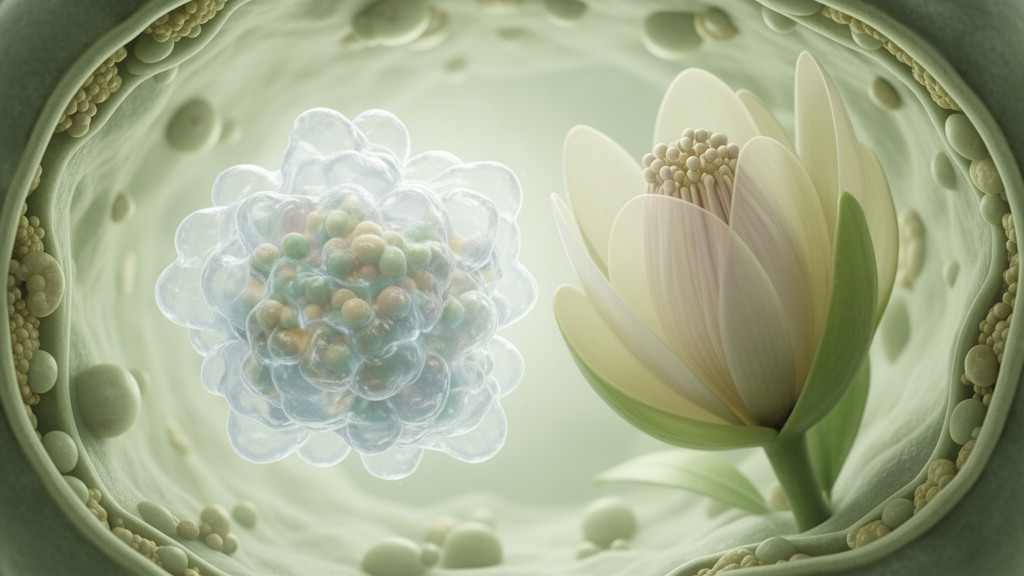
Phytoplasma protein structurally mimics regulators of flower development

October 26, 2026
in Chemistry
Kristina Jarvis
By Kristina Jarvis Scienmag Editorial Profile - Infectious Disease Medicine
Reading Time: 3 mins read
0
Phytoplasma protein structurally mimics regulators of flower development

Phytoplasma protein structurally mimics regulators of flower development

65
SHARES
587
VIEWS
Share on FacebookShare on Twitter
ADVERTISEMENT

A phytoplasma protein can disrupt the molecular machinery that controls flower development by structurally mimicking host MADS-box transcription factors, according to an experimental study published in the Journal of Biological Chemistry . The researchers found that the protein, called PHYLOY, interacts with a broader range of combinations of these transcription factors than previously thought. The work used small-angle X-ray scattering at the European Synchrotron Radiation Facility in Grenoble, France, together with site-directed mutagenesis to identify molecular features responsible for the interactions.

The reported mechanism provides an explanation for how infection can convert sepals, petals, stamens and carpels into leaf-like structures. Phytoplasmas are bacteria transmitted to plants by insects. The disease has affected economically important crops including sunflowers, sesame and grapevine.

The source release also describes historical outbreaks of coconut lethal yellowing disease in Africa, reporting crop losses of up to 40% in Tanzania and 20% in Ghana. It states that climate change has increased the presence of insect vectors at more northern latitudes, which could expand the geographic reach of phytoplasma diseases. The present study examined a protein from Candidatus Phytoplasma asteris, onion yellows strain, and did not test whether climate change caused the molecular interactions it reports.

Plant MADS-box transcription factors help determine how flowers develop. According to the study summary, these proteins work together in groups of four, bind to DNA and activate genes associated with the production of particular floral parts. The research team examined how PHYLOY interacts with three important MADS-box transcription factors.

They performed small-angle X-ray scattering experiments on beamline BM29 at the European Synchrotron and used the resulting data to study associations between the pathogen protein and different combinations of floral regulators. The experiments showed that PHYLOY can engage a wider range of MADS-box combinations than had previously been recognized. ESRF scientist Mark Tully said the flexibility visible in the data appeared to correspond to interaction plasticity between PHYLOY and the host plant transcription factors.

To investigate which molecular features enabled those associations, the researchers altered individual parts of PHYLOY and the MADS-box proteins through site-directed mutagenesis. Depending on the modification, the changes prevented or enabled the relevant interactions. These results showed that PHYLOY recognizes specific features shared by different MADS-box transcription factors.

The researchers interpret this pattern as structural mimicry: the phytoplasma protein resembles components of the plant’s own developmental machinery closely enough to interfere with the normal assembly of active transcription-factor groups. By preventing MADS-box proteins from functioning together properly, PHYLOY changes the developmental identity of floral organs, leading to leaf-like structures. The evidence comes from laboratory experiments on the protein interaction and its molecular basis, rather than from a field assessment across infected crops.

The team is working toward a high-resolution crystal structure of the MADS-box transcription factor–PHYLOY complex. The researchers say they hope to combine those structural data with high-throughput virtual screening to design inhibitors of the interaction, but that remains a future objective. The peer-reviewed article, “The phytoplasma effector, phyllogen, structurally mimics host plant MADS transcription factors,” was published in the Journal of Biological Chemistry on 13 August 2026 and was selected as the journal’s Editor’s Pick.

The study was led by CEA researcher Chloe Zubieta, a visiting scientist at the European Synchrotron, together with ESRF scientists Mark Tully and Max Nanao.

Subject of Research: Structural mimicry of host MADS-box transcription factors by the phytoplasma effector PHYLOY

Article Title: How a pathogen turns flowers into leaves

Article References: How a pathogen turns flowers into leaves. Original publication (Bibliographic details unavailable.)

Image Credits: AI Generated

DOI: Not provided

Keywords: phytoplasma, PHYLOY, flower development, MADS-box proteins, transcription factors, structural mimicry, small-angle X-ray scattering, plant disease, site-directed mutagenesis, insect vectors, pathogen, turns

Cite Scienmag News

Kristina Jarvis. (October 26, 2026). Phytoplasma protein structurally mimics regulators of flower development. Scienmag. https://scienmag.com/phytoplasma-protein-structurally-mimics-regulators-of-flower-development/

Kristina Jarvis. "Phytoplasma protein structurally mimics regulators of flower development." Scienmag, 26 October 2026, https://scienmag.com/phytoplasma-protein-structurally-mimics-regulators-of-flower-development/. Accessed 26 October 2026.

Kristina Jarvis. "Phytoplasma protein structurally mimics regulators of flower development." Scienmag. October 26, 2026. https://scienmag.com/phytoplasma-protein-structurally-mimics-regulators-of-flower-development/


Tags: climate change influencedisruption of plant molecular machinery by phytoplasmaflower developmentimpact of phytoplasma infection on crop yield and qualityinsect vectorsinteraction of phytoplasma proteins with MADS-box transcription factorsMADS-box proteinsmolecular mechanisms of phytoplasma-induced floral organ transformationpathogenPHYLOYphytoplasmaphytoplasma disease outbreaks in Africa and global spreadPhytoplasma protein mimicry of flower development regulatorsplant diseasesite-directed mutagenesissite-directed mutagenesis in phytoplasma studiessmall-angle X-ray scatteringsmall-angle X-ray scattering in plant pathogen researchstructural analysis of PHYLOY proteinstructural mimicrytranscription factorsturns
Share26Tweet16
Previous Post

Aligarh mixed-methods study links civic engagement to smart-city satisfaction

Next Post

Research report: Individual versus group feedback in a peer-led mock OSCE: a randomised pilot study of medical students’ confidence, anxiety and perceived feedback quality

Related Posts

Robotics and AI Reveal Hidden Pathway in 135-Year-Old Biginelli Reaction
Chemistry

Robotics and AI Reveal Hidden Pathway in 135-Year-Old Biginelli Reaction

October 26, 2026
Heterogeneous metalens array widens light-field XR displays
Chemistry

Heterogeneous metalens array widens light-field XR displays

October 26, 2026
Laboratory Study Converts Fluoroform into Trifluoromethyl Radicals with Light
Chemistry

Laboratory Study Converts Fluoroform into Trifluoromethyl Radicals with Light

October 26, 2026
Iron photocatalysis enables carbon-carbon bond formation
Chemistry

Iron photocatalysis enables carbon-carbon bond formation

October 26, 2026
SERS Fluctuations Become Concentration Fingerprints for Ultrasensitive Analysis
Chemistry

SERS Fluctuations Become Concentration Fingerprints for Ultrasensitive Analysis

October 26, 2026
BESSY II study validates in-water nano-IR spectroscopy of individual biomolecules
Chemistry

BESSY II study validates in-water nano-IR spectroscopy of individual biomolecules

October 26, 2026
Next Post
Research report: Individual versus group feedback in a peer-led mock OSCE: a randomised pilot study of medical students’ confidence, anxiety and perceived feedback quality

Research report: Individual versus group feedback in a peer-led mock OSCE: a randomised pilot study of medical students’ confidence, anxiety and perceived feedback quality

  • Mothers who receive childcare support from maternal grandparents show more optimized

    Mothers who receive childcare support from maternal grandparents show more parental warmth, finds NTU Singapore study

    27656 shares
    Share 11059 Tweet 6912
  • University of Seville Breaks 120-Year-Old Mystery, Revises a Key Einstein Concept

    1061 shares
    Share 424 Tweet 265
  • Bee body mass, pathogens and local climate influence heat tolerance

    682 shares
    Share 273 Tweet 171
  • Researchers record first-ever images and data of a shark experiencing a boat strike

    546 shares
    Share 218 Tweet 137
  • Groundbreaking Clinical Trial Reveals Lubiprostone Enhances Kidney Function

    531 shares
    Share 212 Tweet 133
Science

Embark on a thrilling journey of discovery with Scienmag.com—your ultimate source for cutting-edge breakthroughs. Immerse yourself in a world where curiosity knows no limits and tomorrow’s possibilities become today’s reality!

RECENT NEWS

  • Research report: Individual versus group feedback in a peer-led mock OSCE: a randomised pilot study of medical students’ confidence, anxiety and perceived feedback quality
  • Phytoplasma protein structurally mimics regulators of flower development
  • Aligarh mixed-methods study links civic engagement to smart-city satisfaction
  • Monk parakeet aggression shows no major sex-based difference

Categories

  • Agriculture
  • Anthropology
  • Archaeology
  • Athmospheric
  • Biology
  • Biotechnology
  • Blog
  • Bussines
  • Cancer
  • Chemistry
  • Climate
  • Earth Science
  • Editorial Policy
  • Marine
  • Mathematics
  • Medicine
  • Pediatry
  • Policy
  • Psychology & Psychiatry
  • Science Education
  • Science News
  • Social Science
  • Space
  • Technology and Engineering

Subscribe to Blog via Email

Enter your email address to subscribe to this blog and receive notifications of new posts by email.

Join 5,151 other subscribers

© 2025 Scienmag - Science Magazine

Welcome Back!

Login to your account below

Forgotten Password?

Retrieve your password

Please enter your username or email address to reset your password.

Log In
No Result
View All Result
  • HOME
  • SCIENCE NEWS
  • CONTACT US

© 2025 Scienmag - Science Magazine

Discover more from Science

Subscribe now to keep reading and get access to the full archive.

Continue reading