


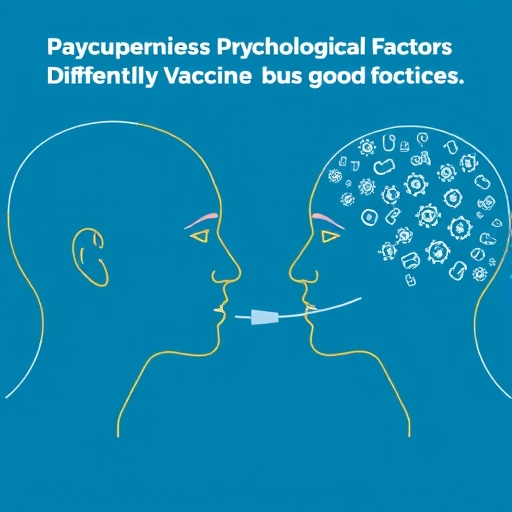
In the ongoing global effort to curb the COVID-19 pandemic, vaccination has stood as a critical tool in mitigating severe illness and curtailing viral transmission. Yet, understanding the side effects that arise post-vaccination remains a vital component in addressing vaccine hesitancy and improving public health messaging. A groundbreaking study conducted in Japan, recently published in BMC Psychology, has unraveled the nuanced relationship between physical and psychological factors contributing to side effects following COVID-19 vaccination. This rigorous longitudinal investigation not only challenges prevailing assumptions but also lays the foundation for more personalized healthcare approaches to vaccination.
The research team, led by Tsurumi, Fujiwara, Uwatoko, and colleagues, harnessed a within-subject repeated measures design, enabling them to capture dynamic changes and variances specific to individual vaccine recipients. Unlike cross-sectional studies that offer snapshots in time, this approach provided a high-resolution view of how side effects manifest and fluctuate, dissecting the entangled roles of the body and mind over repeated vaccination events. Through this methodology, the study revealed dissociable impacts—meaning that physical and psychological contributors to side effects operate through distinct pathways rather than a common underlying mechanism.
At the heart of the study is the differentiation between objective physiological responses to the vaccine and subjective psychological experiences. Physical side effects, such as soreness at the injection site, fever, and fatigue, are typically attributed to immune activation and inflammatory processes. Psychological factors, however, extend beyond mere physical manifestations to encompass expectations, anxiety, stress levels, and even prior experiences with illness or vaccination that can amplify or dampen perceived symptoms. By isolating these components, the researchers provided empirical evidence that side effect reporting cannot be fully understood without accounting for mental state variables, rendering a simplistic biological model insufficient.
Technically, the team employed a repeated measures protocol where participants received multiple COVID-19 vaccine doses over the study course, with side effects assessed systematically after each administration. Advanced statistical techniques, including mixed-effects modeling, were applied to tease apart within-person variability from between-person differences, providing clarity on how individual responses evolved. This high-powered approach allowed the detection of subtle but consistent patterns: while physical symptoms showed measurable variation linked to vaccine type and dose number, psychological factors exerted a robust influence independent of these variables.
One striking finding highlighted that individuals with heightened baseline anxiety demonstrated increased reports of side effects, even when physical indicators remained unchanged. This phenomenon, known as the nocebo effect, underscores the potency of psychological expectation in shaping symptom perception. The prevalence of such effects poses significant public health implications, suggesting that educational campaigns and pre-vaccination counseling might alleviate some side effect burdens by reframing expectations and reducing anticipatory anxiety.
Moreover, the study delved into the bi-directional interactions between physical symptoms and mental states. Inflammation-induced cytokines may provoke neurochemical changes that exacerbate fatigue and mood disturbances post-vaccination, blurring the boundary between physical and psychological domains. Therefore, the authors advocate for a holistic model that integrates immunology with psychoneuroimmunology to fully apprehend vaccine side effect profiles, encouraging interdisciplinary collaboration for future research.
The robustness of the findings is further supported by the Japanese cohort’s demographic characteristics, which include a wide age range and a balanced representation of gender and comorbidities. This diversity enhances the generalizability of results, even though cultural factors might modulate symptom reporting and health beliefs uniquely in Japan. The study opens questions regarding how cultural context intersects with psychological influences on vaccine side effects across global populations, marking an important avenue for comparative research.
Importantly, this work carries practical clinical significance. Understanding the dissociable contributions of psychological versus physical factors may guide clinicians in tailoring patient advice. For instance, identifying individuals susceptible to psychological amplification of side effects could lead to targeted interventions such as cognitive-behavioral strategies to manage anxiety. Likewise, recognizing the physical basis for certain symptoms can inform appropriate medical care and reassurance, reinforcing vaccination compliance.
In the broader context of vaccine rollouts, this study’s insights could transform public health frameworks. Policymakers must consider psychological preparedness as a core component in vaccination programs, incorporating mental health resources and communication tactics designed to diminish fear and misinformation. Given the accelerating deployment of booster doses and the emergence of new viral variants, these findings have immediate relevance for maintaining vaccine confidence and ensuring the success of immunization initiatives.
Furthermore, the researchers caution against interpreting side effect experiences solely through an immunological lens, especially in an era where social media and misinformation can exacerbate fear and skepticism. The elevation of psychological aspects does not negate the real physiological events but calls for nuanced dialogue acknowledging the mind-body interplay. This stance promotes empathy and reduces stigma associated with vaccine reactions, fostering better patient-provider relationships.
Technologically, the study benefitted from integration of standardized symptom tracking instruments and psychometric assessments, allowing precise quantification of both physical and psychological variables. The use of validated scales aligned with immunization schedules exemplifies best practices for studies exploring complex, dynamic health phenomena. Future methodological advancements, such as digital health monitoring and biomarker analysis, could further refine this model, enhancing predictive accuracy for side effect susceptibility.
Looking forward, the implications of dissociable impacts extend beyond COVID-19 vaccines, offering a template for evaluating side effects in other immunizations and medical interventions. The recognition that psychological context modulates symptom experience suggests broad applicability in clinical trials, pharmacovigilance, and patient-centered care. This paradigm shift encourages integrated health models bridging somatic and mental health, a progression increasingly recognized as essential in modern medicine.
In summary, the innovative work by Tsurumi and colleagues represents a critical leap in understanding the multifaceted nature of vaccine side effects. By dissecting the distinct roles played by physical and psychological factors, their research enriches scientific knowledge and practical approaches to vaccination. The pandemic has highlighted the intricate connections between body and mind in health outcomes, making findings such as these indispensable as humanity navigates the ongoing challenge of COVID-19 and prepares for future health crises.
Cite Scienmag News
Kristina Jarvis. (September 1, 2025). Physical and Psychological Factors Differently Affect COVID Vaccine Side Effects. Scienmag. https://scienmag.com/physical-and-psychological-factors-differently-affect-covid-vaccine-side-effects/
Kristina Jarvis. "Physical and Psychological Factors Differently Affect COVID Vaccine Side Effects." Scienmag, 1 September 2025, https://scienmag.com/physical-and-psychological-factors-differently-affect-covid-vaccine-side-effects/. Accessed 4 September 2026.
Kristina Jarvis. "Physical and Psychological Factors Differently Affect COVID Vaccine Side Effects." Scienmag. September 1, 2025. https://scienmag.com/physical-and-psychological-factors-differently-affect-covid-vaccine-side-effects/


