


Every day, humanity emits roughly 103 million tonnes of carbon dioxide, and the construction industry is under mounting pressure to turn that liability into raw material. A new study published in Case Studies in Construction Materials offers a strikingly counterintuitive insight into one of the most promising carbon-storage strategies: when it comes to converting carbon dioxide into stable carbonate minerals using waste phosphogypsum, the chemical that releases the most calcium is not the one that stores the most carbon most effectively. The finding challenges a widespread assumption in mineral carbonation research and could reshape how engineers select recycled calcium feedstocks for low-carbon building materials.
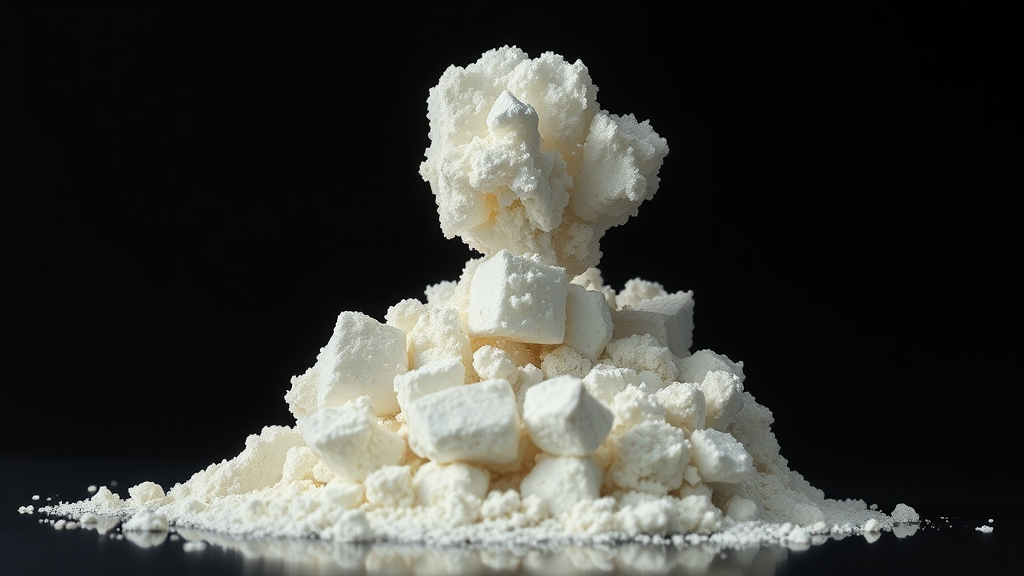
Phosphogypsum is the bulky, problematic by-product of phosphoric acid production for fertilizer manufacturing. Global stockpiles have now exceeded six billion tonnes, with another 200 to 250 million tonnes added every year, while utilization rates remain stubbornly low. Chemically, the material is dominated by gypsum, calcium sulfate dihydrate, with calcium oxide content commonly around 30 percent by weight. That makes it an tantalizingly abundant calcium reservoir for mineral carbonation, the process in which CO2 reacts with calcium- or magnesium-bearing phases to form stable carbonate minerals such as calcite. Unlike steel slag or carbide slag, however, phosphogypsum holds its calcium in sparingly soluble gypsum rather than in readily reactive lime or calcium silicates, so its carbonation depends entirely on whether that bound calcium can first be coaxed into solution.
Researchers led by Ying Shi and colleagues at Central South University in China tackled this problem with a comparative experiment of unusual rigor. They tested four activators, ammonium chloride, sodium acetate, ammonium acetate, and sodium gluconate, against plain deionized water, to dissolve calcium out of washed phosphogypsum from Guizhou Province. The resulting calcium-rich leachates were then carbonated under an identical protocol: pH was raised above 12 with sodium hydroxide, and each leachate was exposed to a CO2 atmosphere in sealed gas-tight bags for fourteen days, with the gas renewed daily. By measuring dissolved calcium at every stage and characterizing every solid that emerged, the team could link three successive steps that most studies treat in isolation: calcium release, calcium consumption, and carbonate product formation.
The leaching results were dramatic. Water alone extracted only modest amounts of calcium, leaving dissolved concentrations between roughly 726 and 833 milligrams per liter. Ammonium chloride nearly tripled that, sodium acetate and ammonium acetate pushed higher still, and sodium gluconate was in a class of its own, sustaining dissolved calcium concentrations around 15,300 milligrams per liter, roughly twenty times the blank system. Under optimized conditions, sodium gluconate released up to 98.5 percent of the available calcium from the solid, dissolving so much gypsum that only 5.4 grams of residue remained from an initial 240 grams of phosphogypsum. Electron microscopy showed the characteristic plate-like gypsum particles almost completely dismantled, while X-ray diffraction confirmed the near-total removal of gypsum and a relative enrichment of insoluble quartz. The gluconate anion, the study notes, forms stable soluble complexes with calcium ions, shifting the gypsum dissolution equilibrium and driving continued release.
Then came the twist. When the leachates were carbonated, the leachate with the most dissolved calcium performed the worst at consuming it. The ammonium chloride system, starting from a moderate 2,376 milligrams per liter of dissolved calcium, plummeted below 50 milligrams per liter within a single day. Sodium acetate and ammonium acetate followed similar trajectories, and after fourteen days all three had achieved calcium consumption efficiencies of 98.7 to 99.0 percent. The sodium gluconate leachate, despite beginning with 15,315 milligrams per liter, crawled down slowly, still holding 2,177 milligrams per liter after two weeks, for a final consumption efficiency of just 85.8 percent. Its pH also stayed persistently high, remaining near 11.8 at the end of the experiment while the other systems settled around neutral.
The authors attribute this behavior to lingering calcium-gluconate complexation. Even though the total dissolved calcium was enormous, much of it was locked in soluble complexes rather than existing as free calcium ions, reducing the ion activity product needed to trigger calcium carbonate precipitation and delaying supersaturation and nucleation. In other words, a high calcium concentration on paper does not guarantee that the calcium is chemically available to react with carbonate. The study is careful to note that carbon dioxide was supplied from a static gas phase without stirring or sparging, so gas-liquid mass-transfer resistance may also have shaped the apparent kinetics, but all leachates faced the same conditions, making the comparison fair.
The solid products told the same story from a different angle. Every leachate produced calcite, the crystalline form of calcium carbonate, confirmed by X-ray diffraction, infrared spectroscopy, and thermogravimetric analysis. But the quality of the products diverged sharply. The water, ammonium chloride, sodium acetate, and ammonium acetate systems yielded solids that were overwhelmingly carbonate, with apparent calcium carbonate equivalents of 93.56 to 96.90 percent by weight. The sodium gluconate product was a different beast entirely: quantitative X-ray diffraction showed crystalline calcite made up only about 20 percent of the recovered solid, with the remainder predominantly X-ray amorphous, accompanied by an unusual silicon-oxygen signature and a distinct thermal profile featuring substantial low-temperature mass loss.
Translated into climate terms, the differences are meaningful. Normalized to the initial phosphogypsum mass, the water, ammonium chloride, sodium acetate, and ammonium acetate routes mineralized an estimated 3.96, 14.36, 15.87, and 20.00 kilograms of CO2 per tonne of phosphogypsum, respectively. The sodium gluconate route, judged only by its quantified crystalline calcite, incorporated 72.51 kilograms of CO2 per tonne into calcite, a far higher figure that reflects its extraordinary calcium supply. Yet the authors caution that this headline number masks the complexity of the product and the substantial calcium left stranded in solution, which matters enormously if the goal is clean, well-defined carbonate for construction fillers or cementitious applications.
The broader lesson is a methodological one that could ripple through the field. Most phosphogypsum carbonation studies optimize a single leaching-carbonation system and report calcium recovery or carbonate yield, without asking whether more calcium release actually translates into better carbonation. By systematically decoupling the two stages, this study shows they can even be inversely related. Ammonium chloride emerges as the balanced performer, offering moderate calcium release, near-complete consumption, and clean calcite-dominated products, while sodium gluconate demonstrates that powerful complexing agents can extract calcium superbly yet sabotage its subsequent use. For engineers designing carbonation-based materials from industrial waste, the criterion for a good recycled calcium source must therefore expand from how much calcium a leachate contains to how much of that calcium can actually be consumed and converted into well-defined carbonate solids.
There remain open questions. The authors acknowledge that a complete calcium-sulfur-carbon material balance was not established, and they call for future work with phase-resolved elemental accounting to track where every element ends up. Impurities in phosphogypsum, including soluble phosphorus, fluoride, organic matter, and heavy metals, may also interact with calcium phases and carbonate nucleation in ways not yet fully resolved, and the sample from a single Guizhou source may not represent phosphogypsum from other phosphate ores. Still, the core message stands: in the race to turn a six-billion-tonne waste mountain into a carbon sink, chemistry that looks strongest at the extraction stage may quietly undermine the storage stage, and only a full-chain view, from dissolution to precipitation, can identify the leachates truly fit for locking CO2 into stone.
Subject of Research: Activator-assisted calcium release from phosphogypsum and its aqueous carbonation for CO2 mineralization
Article Title: Comparative study of phosphogypsum-derived leachates as recycled calcium sources for carbonation: Linking Ca release, consumption and carbonate product formation
Article References: Shi, Y., Guo, Q., Li, S., Zhou, X., Yan, K., & Liu, P. (2026). Comparative study of phosphogypsum-derived leachates as recycled calcium sources for carbonation: Linking Ca release, consumption and carbonate product formation. Case Studies in Construction Materials, 25, Article e06557. https://doi.org/10.1016/j.cscm.2026.e06557
Image Credits: AI Generated
DOI: 10.1016/j.cscm.2026.e06557
Keywords: phosphogypsum, mineral carbonation, CO2 sequestration, calcium leaching, calcite, sodium gluconate, ammonium chloride, industrial waste valorization, gypsum dissolution, carbonate precipitation, low-carbon construction materials, recycled calcium sources
Cite Scienmag News
Denise Maddox. (September 26, 2026). Phosphogypsum waste could lock away CO2, but the best calcium extractor is not the winner. Scienmag. https://scienmag.com/phosphogypsum-waste-could-lock-away-co2-but-the-best-calcium-extractor-is-not-the-winner/
Denise Maddox. "Phosphogypsum waste could lock away CO2, but the best calcium extractor is not the winner." Scienmag, 26 September 2026, https://scienmag.com/phosphogypsum-waste-could-lock-away-co2-but-the-best-calcium-extractor-is-not-the-winner/. Accessed 4 October 2026.
Denise Maddox. "Phosphogypsum waste could lock away CO2, but the best calcium extractor is not the winner." Scienmag. September 26, 2026. https://scienmag.com/phosphogypsum-waste-could-lock-away-co2-but-the-best-calcium-extractor-is-not-the-winner/


