


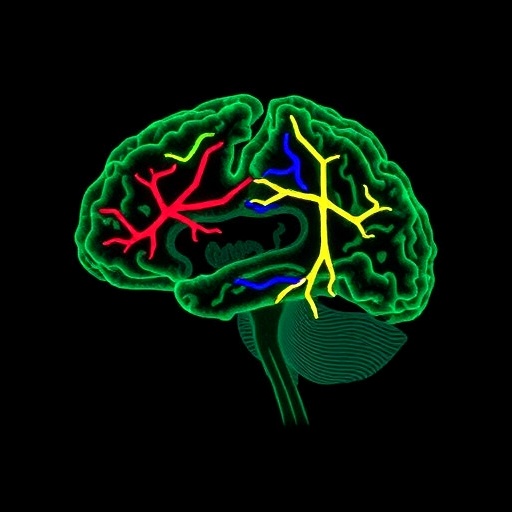
In a groundbreaking study published in the Journal of Translational Medicine, researchers led by Yu, Z., Li, J., and He, Z. have unveiled significant insights into the interplay between hypoxic preconditioning and neuroinflammation in the context of ischemic stroke. The team focuses on the role of PGC-1α, a critical regulator of cellular energy metabolism, and its influence on olfactory mucosa mesenchymal stem cells (OMMSCs). By harnessing the unique properties of these stem cells, the study proposes a novel therapeutic strategy to counteract neuroinflammatory responses following ischemic events.
Olfactory mucosa mesenchymal stem cells, though less studied than their counterparts from bone marrow or adipose tissue, exhibit promising qualities including immune modulation and neuroprotection. The researchers hypothesize that subjecting these cells to hypoxic conditions enhances their therapeutic potential in treating neuroinflammatory diseases. By understanding the cellular mechanisms of OMMSCs under hypoxia, the study aims to unlock new pathways for clinical applications in stroke therapy.
The ischemic stroke model employed in this study simulates conditions that occur during actual brain ischemia, wherein blood flow is restricted, leading to cellular injury and death. Within this paradigm, the research team explored how hypoxia influences the characteristics of OMMSCs, particularly focusing on their differentiation and functional capabilities. The findings suggest that preconditioning these stem cells under low-oxygen environments boosts their neuroprotective properties, thereby offering enhanced protection against neuronal damage.
A major aspect of this research is the role of PGC-1α. This protein is well-known for its involvement in mitochondrial biogenesis and energy metabolism. By upregulating PGC-1α, the study reveals that hypoxia preconditions OMMSCs which subsequently modulates their response to oxidative stress. The relationship between PGC-1α and neuroinflammation indicates significant therapeutic implications, as inhibiting pro-inflammatory responses can be crucial for improving recovery post-stroke.
One of the more intriguing findings of the study is the link between hypoxia-induced PGC-1α activation and microglial ferroptosis. Microglia, the resident immune cells of the central nervous system, play pivotal roles in maintaining brain homeostasis, but they can become detrimental when overactivated. Ferroptosis, a form of regulated cell death associated with iron and lipid peroxidation, has been implicated in various neurological disorders. The researchers’ approach to curtailing this process through the application of hypoxia demonstrates potential new avenues for stroke treatment.
In the conducted experiments, it was observed that hypoxia-preconditioned OMMSCs demonstrated a reduced capacity for inducing ferroptosis in microglia. By utilizing advanced imaging techniques and molecular assays, the researchers provided compelling evidence of the anti-ferroptotic effects mediated by PGC-1α. The next step in validating these results involves employing in vivo models to assess the efficacy of OMMSCs in alleviating neuroinflammatory burdens during and after stroke.
The study’s implications extend beyond ischemic stroke. Similar pathways of neuroinflammation and mitochondrial dysfunction play roles in a wide array of neurodegenerative diseases. Hence, understanding PGC-1α’s regulatory effects on stem cell behavior could pave the way not only for stroke recovery but also for managing chronic neurodegeneration. The research opens doors for future studies that would specifically target PGC-1α modulation in diverse pathological conditions.
Moreover, clinical translation of these findings represents a significant challenge that the researchers are prepared to tackle. The transition from preclinical models to human applications necessitates rigorous validation of OMMSCs and their hypoxic preconditioning. It is paramount to establish optimal protocols for cell isolation, manipulation, and administration while ensuring safety and efficacy in human subjects.
The research stands as a testament to the intricate relationships between metabolism, inflammation, and cellular repair mechanisms. As scientists continue to unravel these complex interconnections, it is anticipated that therapies guided by metabolic manipulation will emerge as key components in the treatment arsenal against neuroinflammatory disorders.
In conclusion, the innovative approaches presented in this study signify a paradigm shift in understanding cell-based interventions in brain injury situations. As research progresses, the wider community hopes that leveraging hypoxia-preconditioned olfactory mucosa mesenchymal stem cells can offer effective therapeutic strategies, transforming the landscape of ischemic stroke management and beyond.
Yu, Z., Li, J., He, Z. et al. PGC-1α mediates hypoxia-preconditioned olfactory mucosa mesenchymal stem cells improved neuroinflammatory response via inhibiting microglial ferroptosis in ischemic stroke.
J Transl Med 23, 1263 (2025). https://doi.org/10.1186/s12967-025-07240-5
Cite Scienmag News
Cassandra Pierce. (November 12, 2025). PGC-1α Boosts Stem Cell Therapy in Stroke Recovery. Scienmag. https://scienmag.com/pgc-1%ce%b1-boosts-stem-cell-therapy-in-stroke-recovery/
Cassandra Pierce. "PGC-1α Boosts Stem Cell Therapy in Stroke Recovery." Scienmag, 12 November 2025, https://scienmag.com/pgc-1%ce%b1-boosts-stem-cell-therapy-in-stroke-recovery/. Accessed 7 September 2026.
Cassandra Pierce. "PGC-1α Boosts Stem Cell Therapy in Stroke Recovery." Scienmag. November 12, 2025. https://scienmag.com/pgc-1%ce%b1-boosts-stem-cell-therapy-in-stroke-recovery/


