


For women diagnosed with locally advanced cervical cancer, one of the most agonizing uncertainties follows the end of treatment: has the chemoradiotherapy truly eradicated the disease, or are malignant cells still lurking, poised to return? A new study from researchers at Lund University and Skåne University Hospital in Sweden offers a powerful answer to that question, demonstrating that a routine imaging scan performed after treatment can identify, with remarkable precision, which patients are likely to remain disease-free and which face a substantially elevated risk of recurrence and death. The research, published in BMC Medical Imaging, analyzed 133 patients and found that the metabolic signature captured by FDG-PET/CT scans is one of the strongest predictors of long-term outcomes reported for this disease.
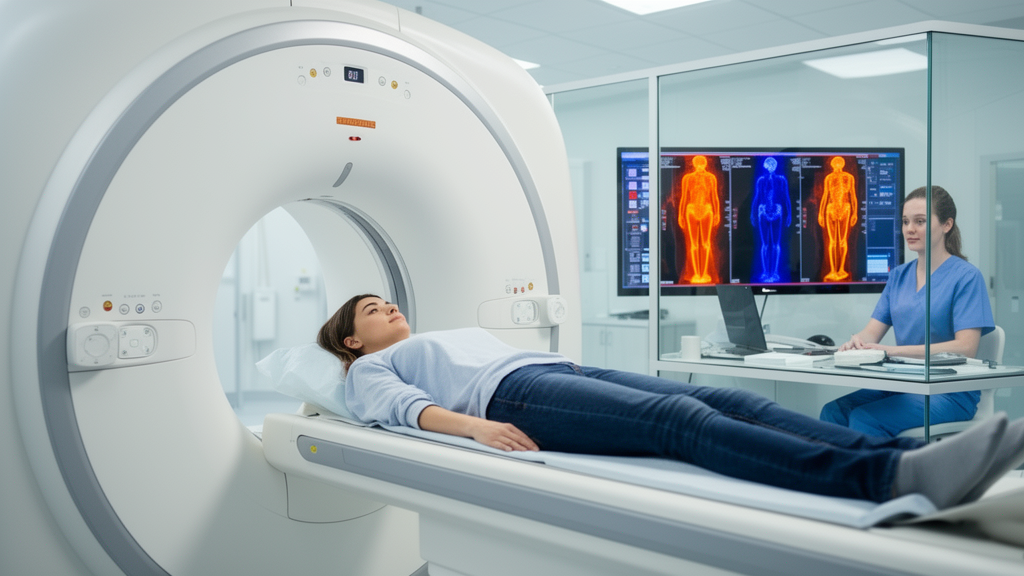
The imaging technique at the heart of the study, positron emission tomography combined with computed tomography, has become a cornerstone of modern cancer care. Patients receive an injection of [18F]-fluorodeoxyglucose, a radioactive glucose analog that is avidly taken up by metabolically active cells. Because cancer cells typically consume glucose at a far higher rate than healthy tissue, they light up on the resulting images, allowing physicians to visualize both the primary tumor and any spread to lymph nodes or distant organs. The PET component reveals metabolic activity, while the CT component provides detailed anatomical context, and the fusion of the two gives clinicians a map of where active disease resides in the body.
In the standard workflow for locally advanced cervical cancer, PET-CT is used twice: once before treatment begins, to establish the stage of the disease, and again several weeks after chemoradiotherapy has concluded, to assess how well the cancer responded. The Swedish team set out to determine whether the information gathered at that second time point could do more than simply confirm whether the tumor had shrunk. They wanted to know whether the pattern of metabolic response could serve as a genuine prognostic instrument, capable of stratifying patients into distinct risk categories that would justify different follow-up strategies or, potentially, additional interventions.
To quantify treatment response, the researchers extracted three complementary parameters from every scan. The first and most widely used is SUVmax, the maximum standardized uptake value, which reflects the peak glucose metabolism within the most active region of a lesion. The second is metabolic tumour volume, or MTV, which measures the total physical volume of tissue exhibiting abnormally high FDG uptake. The third is total lesion glycolysis, or TLG, which combines volume and intensity into a single figure representing the overall metabolic burden carried by the disease. Each parameter captures a different dimension of tumor biology, and the team analyzed all three separately to see whether the more computationally demanding volume-based measures offered any advantage over the simple maximum uptake value.
Using these parameters, the investigators classified each patient’s post-treatment response into one of four categories adapted from established response criteria. A complete metabolic response, or CMR, meant the total resolution of abnormal FDG uptake in all lesions, essentially signaling that no metabolically active cancer could be detected anywhere in the scanned field. A partial metabolic response, or PMR, was defined as a reduction of more than 25 percent in SUVmax, MTV or TLG, indicating that disease remained but had been substantially weakened. Progressive metabolic disease, or PMD, was declared when uptake increased by more than 25 percent or when new FDG-avid lesions appeared, a clear sign that the treatment had failed to contain the cancer. Patients who fit none of these categories were classified as having stable disease. Because the number of events in the PMR and stable disease groups was limited, the researchers combined them into a single intermediate group for statistical analysis.
The results were striking. Taking patients with complete metabolic response as the reference group, those with partial response or stable disease faced roughly 1.2 times the odds of experiencing a recurrence, a modest but measurable elevation in risk. Far more dramatic was the picture for patients whose disease progressed: their odds of recurrence were 1.7 times higher when response was assessed by SUVmax, and 1.8 times higher when assessed by MTV or TLG. In other words, a scan showing growing or newly emerged metabolically active disease after treatment was a red flag that recurrence was substantially more likely, regardless of which of the three parameters was used to make the call.
The survival analysis carried an even starker message. Patients in the intermediate response group had a hazard ratio for death of 4.0 when response was measured by SUVmax, meaning their risk of dying during the follow-up period was four times that of patients who achieved a complete metabolic response. When MTV or TLG served as the response metric, the hazard ratio for this intermediate group was 2.9. For patients with progressive metabolic disease, the hazard ratio soared to 16.0 across all three parameters, a sixteen-fold increase in mortality risk compared with complete responders. The concordance index, a statistical measure of how well a model discriminates between patients with different outcomes, reached 0.84 for SUVmax-based models and 0.86 for models built on MTV or TLG, values that indicate strong predictive performance for any prognostic tool in oncology.
Perhaps the most consequential finding of the study is what it did not find: no meaningful superiority of the sophisticated volume-based parameters over the simple maximum uptake value. MTV and TLG require semi-automated segmentation of tumor volumes and considerably more computational processing, and some researchers have argued that their added information content should translate into better prognostic power. In this cohort, however, the three parameters performed in a nearly identical fashion, with concordance indices differing by only two hundredths. For clinical practice, this is genuinely good news, because it suggests that the prognostic value of post-treatment PET-CT can be unlocked using a parameter that is already routinely reported by nuclear medicine departments worldwide, without the need for new software, additional training or workflow changes.
The implications for patient management are considerable. Patients who achieve a complete metabolic response could potentially be spared intensive surveillance, receiving standard follow-up with the reassurance that their statistical outlook is excellent. Those with partial or stable metabolic response, whose risk is elevated but not extreme, might benefit from closer imaging intervals and a lower threshold for biopsy or salvage interventions. Patients showing progression on the post-treatment scan represent the group with the most urgent need for attention, and the sixteen-fold hazard ratio suggests that early escalation of care, whether through additional systemic therapy or enrollment in clinical trials of novel agents, could be life-extending for this small but high-risk population. The study also reinforces the value of performing a post-treatment PET-CT at all, since the metabolic information it provides clearly carries prognostic weight beyond anatomical assessment alone.
As with all retrospective single-center analyses, the findings come with caveats. The 133 patients were treated at a single Swedish institution, and the classification thresholds, including the 25 percent change criteria, were drawn from established response frameworks rather than derived de novo. Prospective validation in larger and more diverse cohorts will be needed before response category can be formally incorporated into treatment guidelines. Nevertheless, the strength and consistency of the associations, spanning recurrence risk, overall survival and three independent metabolic parameters, make a compelling case that the post-treatment FDG-PET/CT scan is far more than a formality. It is, in effect, a crystal ball of glucose metabolism, offering each patient and her medical team an early, individualized forecast of the road ahead, and pointing the way toward a future in which follow-up care for cervical cancer is tailored not to the average patient but to the biology revealed on a single scan.
Subject of Research: FDG-PET/CT-based treatment response assessment as a predictor of recurrence and survival in locally advanced cervical cancer
Article Title: FDG-PET/CT-based treatment response predicts recurrence and overall survival in locally advanced cervical cancer
Article References: Markus, M., Sartor, H., Bjurberg, M., Minarik, D., & Trägårdh, E. (2026). FDG-PET/CT-based treatment response predicts recurrence and overall survival in locally advanced cervical cancer. BMC Medical Imaging, 26(1), Article 458. https://doi.org/10.1186/s12880-026-02772-8
Image Credits: AI Generated
DOI: 10.1186/s12880-026-02772-8
Keywords: FDG-PET/CT, cervical cancer, treatment response, SUVmax, metabolic tumour volume, total lesion glycolysis, recurrence, overall survival, radiotherapy, nuclear medicine, predictive medicine, oncology
Cite Scienmag News
Nathaniel Bowman. (October 9, 2026). PET Scans After Treatment Reveal Which Cervical Cancer Patients Face Highest Risk. Scienmag. https://scienmag.com/pet-scans-after-treatment-reveal-which-cervical-cancer-patients-face-highest-risk/
Nathaniel Bowman. "PET Scans After Treatment Reveal Which Cervical Cancer Patients Face Highest Risk." Scienmag, 9 October 2026, https://scienmag.com/pet-scans-after-treatment-reveal-which-cervical-cancer-patients-face-highest-risk/. Accessed 9 October 2026.
Nathaniel Bowman. "PET Scans After Treatment Reveal Which Cervical Cancer Patients Face Highest Risk." Scienmag. October 9, 2026. https://scienmag.com/pet-scans-after-treatment-reveal-which-cervical-cancer-patients-face-highest-risk/


