


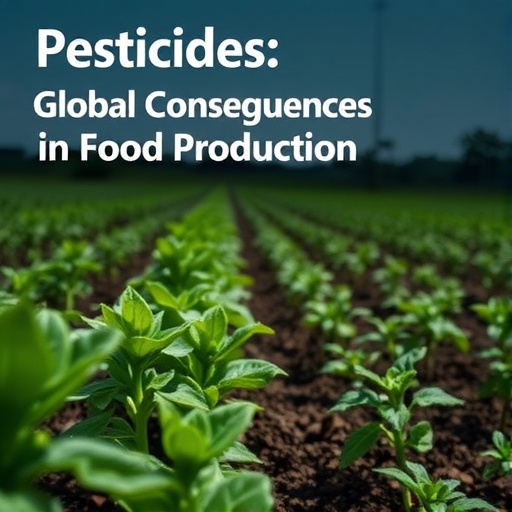
Pesticide usage in modern agriculture has become a topic of increasing concern as its implications extend far beyond the farming fields where they are applied. Globally, an astonishing 3.7 teragrams of pesticides are utilized every year in crop production with the intention of safeguarding yield and maintaining food security. However, this reliance on chemical interventions invites substantial risks to both ecosystem integrity and human health. The complexities arise from understanding not just how pesticides affect local environments, but how their impacts stretch across borders, influencing diverse ecosystems and communities worldwide.
The pathways through which pesticides travel are multifaceted and intricately woven into the agricultural practices of every nation. Once pesticides are applied on crops, they embark on journeys that can endanger aquatic ecosystems, contaminate soil depth, and even affect wildlife populations. These pathways include surface and groundwater flow, atmospheric dispersion, and wildlife migration. Studies reveal that approximately 7.2% of pesticide input is capable of leaching below the root zone, where it may irreversibly reach groundwater sources that could supply drinking water for communities downstream.
Of particular concern is the atmospheric transport of pesticides, highlighting a striking vulnerability in the systems managing pesticide application. Atmospheric droplets, often ranging from 10 to 50 micrometers in size, can drift between 250 meters and several kilometers from the original point of application. This capacity for mobility means that pesticides can settle far from their intended targets, contaminating environments and potentially harming non-target species, including humans who might inadvertently come into contact with these chemicals.
The complex interplay of international food trade significantly influences pesticide application rates across the globe. The demand for agriculture products, particularly fruits and vegetables, which boast the highest instances of pesticide utilization and their associated impacts, further compounds this issue. In fact, alarming statistics reveal that 62% of rice originating from Pakistan contains pesticide residues, while a staggering 85% of harvested fruits and vegetables, particularly in Western countries, retain detectable pesticide levels. This reliance on pesticides is not solely a technical agricultural challenge; it also poses serious health risks to consumers, given that dietary intake of pesticide residues is a direct pathway to human exposure.
Analyzing various agricultural systems, it has become evident that pesticide residues frequently exceed legal safety limits in numerous countries. For instance, in countries such as China, New Zealand, the European Union, and the United States, around 2-4% of domestic foods are reported to flout established guidelines for pesticide residue safety. Such violations underscore the ongoing challenges in effectively monitoring and regulating pesticide concentrations in food, raising urgent questions about consumer safety and regulatory efficacy.
In light of these alarming trends, it becomes essential for international trade mechanisms to incorporate stringent regulations surrounding pesticide usage and to enforce compliance with established residue limits. By doing so, there exists a potential pathway to encourage farming strategies that significantly reduce pesticide reliance while still maximizing yield and economic viability. This shift not only promises to enhance food safety but also prioritizes biodiversity and human health, culminating in a more resilient agricultural landscape.
Future research endeavors should pivot their focus toward better quantifying the transboundary impacts of pesticide use across geospatial and environmental contexts. This can be achieved through advanced modeling techniques that elucidate the intricate fates and transport mechanisms of pesticides in various ecosystems. Greater emphasis should also be placed on environmental monitoring, particularly in the Global South, where agricultural practices often lack the rigorous oversight found in more developed regions.
Enhanced environmental monitoring would provide a clearer picture of pesticide movement and its implications across multiple cross-border ecosystems. The integration of decision support systems that reflect environmental data can facilitate more informed agricultural practices, allowing farmers worldwide to make choices that protect both yield and ecosystem health. By tapping into innovative technologies and methodologies, agriculture can evolve towards systems that align closely with sustainable practices while maintaining productivity.
The significance of global dialogue on pesticide use cannot be overstated. As nations engage in discussions regarding trade, safety standards, and agricultural practices, it becomes imperative that health, safety, and environmental sustainability remain at the forefront. Only through collective, international action can meaningful paradigms be shifted in the pesticide debate, safeguarding not only ecological sensibilities but also human health against the silent threats posed by chemical residues.
Furthermore, public awareness is critical in driving change. As consumers become more informed about the presence of pesticides in their food and the implications for personal and environmental health, there is greater potential for grassroots movements advocating for change. Such actions can manifest in shifts in consumer purchasing practices, as well as increased pressure on agricultural stakeholders to adopt more sustainable methods.
The implications of pesticide usage in agriculture are deeply complex, intertwining with the very fabric of global food systems. Each step taken towards reducing reliance on pesticides can lead to far-reaching benefits, impacting environmental health, biodiversity, and human well-being. As the global population grows and food demand increases, the imperative to rethink agricultural practices has never been stronger. When pesticides are used judiciously and responsibly, they may serve their intended purpose without jeopardizing health and ecosystems. This necessitates a reevaluation of agricultural paradigms, moving towards systems rooted in sustainability, health, and harmony with nature.
Ultimately, the future landscape of agriculture must embrace innovation, challenging existing norms while fostering ecological stewardship. Only by comprehensively addressing the multifactorial impacts of pesticide usage can we hope to cultivate a safe and resilient food production system for future generations.
Cite Scienmag News
Violet Maxwell. (October 4, 2025). Pesticides: Global Consequences in Food Production. Scienmag. https://scienmag.com/pesticides-global-consequences-in-food-production/
Violet Maxwell. "Pesticides: Global Consequences in Food Production." Scienmag, 4 October 2025, https://scienmag.com/pesticides-global-consequences-in-food-production/. Accessed 4 September 2026.
Violet Maxwell. "Pesticides: Global Consequences in Food Production." Scienmag. October 4, 2025. https://scienmag.com/pesticides-global-consequences-in-food-production/


