


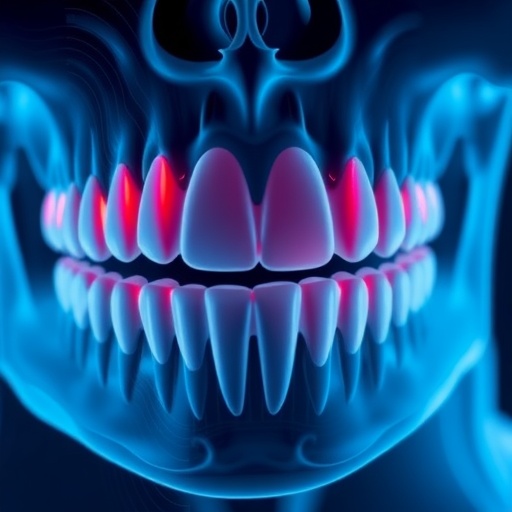
In a groundbreaking study that bridges oral health and systemic muscle function, researchers have unveiled a compelling link between periodontitis—a chronic inflammatory disease of the gums—and skeletal muscle atrophy. The investigation, spearheaded by Shim, Suh, and Kim and published in Nature Communications, uncovers that elevated circulating levels of activin A serve as the mechanistic mediator, orchestrating the deleterious crosstalk between diseased periodontal tissues and distant muscular systems. This revelation not only broadens the horizon of periodontitis-induced pathology but also unveils novel therapeutic targets for muscle-wasting conditions rooted in inflammatory ailments.
Periodontitis has long been recognized as a localized infection resulting in the destruction of tooth-supporting structures, yet its systemic implications have only recently gained scientific traction. The current research elucidates how the persistent inflammatory milieu of periodontitis transcends oral confines and exerts profound detrimental effects on the skeletal musculature. Crucially, activin A, a member of the transforming growth factor-beta (TGF-β) superfamily, emerges as a central bioeffector in this pathological cascade, mediating muscle catabolism through systemic circulation.
Diving into the molecular underpinnings, activin A is classically implicated in tissue remodeling, fibrosis, and inflammatory signaling pathways. The study reveals that in periodontitis-afflicted individuals or murine models, activin A concentrations are significantly elevated in the bloodstream. This heightened activin A bioavailability corresponds with increased muscle protein degradation and suppressed myogenic differentiation, culminating in measurable atrophy. Such findings unveil a previously uncharted endocrine dimension to periodontal disease.
Complementing biochemical analyses, histopathological assessments of skeletal muscle biopsies from subjects with periodontitis disclosed marked fiber size reduction and increased markers of proteolysis, notably upregulated expression of ubiquitin-proteasome system components. These alterations concretely substantiate the clinical manifestation of muscle wasting paralleled with chronic periodontal inflammation. The study’s integrative approach combines clinical observation with rigorous molecular biology techniques, providing robust causative evidence.
Intriguingly, the research also details the signaling cascades downstream of activin A that facilitate muscle degradation. Activin A binds to activin type II receptors on muscle cells, triggering SMAD2/3 phosphorylation cascades that potentiate the transcription of genes involved in muscle catabolism. This mechanism culminates in the atrogenes’ activation, pivotal drivers of muscle protein breakdown. The elucidation of this pathway opens avenues for therapeutic intervention, such as receptor antagonists or ligand traps, to abrogate muscle atrophy.
Beyond mechanistic insights, the study sheds light on the systemic impact of oral infectious diseases, urging a paradigm shift in how clinicians perceive periodontitis. Rather than a localized ailment, periodontitis manifests as a systemic health hazard with implications extending to muscular health and physical functionality. The recognition that oral inflammation propagates molecular mediators affecting distant tissues elevates the importance of maintaining periodontal health far beyond aesthetics or dental preservation.
Experimental interventional therapies further bolster the study’s claims. Mice with induced periodontitis treated with follistatin, a natural activin A inhibitor, demonstrated significant attenuation of muscle atrophy and preservation of muscle fiber integrity. This result underscores the therapeutic potential of targeting activin A signaling pathways to mitigate the muscle-wasting consequences of chronic inflammatory diseases and possibly aging-related sarcopenia exacerbated by systemic inflammation.
Given the intersectional nature of this research, encompassing dentistry, immunology, and muscle physiology, the implications are vast and multidisciplinary. It challenges research and clinical communities to integrate oral health assessments in systemic disease management protocols, particularly in patients exhibiting unexplained muscle wasting or reduced physical performance. Early diagnosis and aggressive management of periodontitis could hence become pivotal in preserving musculoskeletal health.
Adding a translational perspective, activin A serves as a promising biomarker for muscle atrophy in the context of systemic inflammation originating from periodontal disease. Monitoring its circulating levels might enable clinicians to identify patients at risk for muscle degeneration, enabling timely intervention. This biomarker potential aligns with precision medicine paradigms aiming to tailor treatments based on specific molecular profiles.
The epidemiological correlation between periodontitis and diminished muscle mass further emphasizes public health implications. Worldwide prevalence of periodontitis is staggering, and its overlooked systemic effects may contribute to the global burden of frailty and disability, especially among aging populations. Thus, the study’s findings may inform policy-making and health promotion strategies prioritizing oral hygiene as a cornerstone of holistic health.
Moreover, the study provides a compelling framework for future investigations exploring other inflammatory mediators that may synergistically or independently contribute to muscle catabolism in systemic inflammatory states. Understanding this complex network of cytokines and growth factors could catalyze the development of multifaceted therapeutic grids addressing muscle wasting across diverse chronic diseases.
The role of oral microbiota dysbiosis in precipitating elevated activin A levels was also probed, suggesting that microbial metabolites and immune responses within the periodontal niche instigate systemic inflammatory signaling cascades. Targeting microbial community structures through prebiotics, probiotics, or antimicrobials might thereby indirectly mitigate activin A-mediated muscle atrophy, adding a microbial therapeutic angle.
Clinicians should recognize that managing periodontitis is not merely about arresting local infection but also about intercepting systemic pathological processes that undermine muscular integrity and overall health span. This insight advocates for integrated healthcare models fostering collaboration between dental specialists, immunologists, and musculoskeletal experts to optimize patient outcomes.
The study’s innovative methodology, combining advanced proteomics, gene expression profiling, and animal modeling, sets a new standard in exploring inter-organ communication pathways linked to chronic inflammatory diseases. Such approaches facilitate unveiling covert systemic effects of localized pathologies and pave the way for holistic disease understanding.
In sum, the detailed dissection of how periodontitis elevates circulating activin A and precipitates skeletal muscle atrophy represents a transformative advance in biomedicine. It emphasizes the necessity of considering systemic interconnections in disease management and unlocks new frontiers for therapeutic innovation aiming to arrest muscle wasting and improve quality of life. As this nexus of oral health and muscle physiology deepens, the potential to improve clinical prognoses across a spectrum of chronic conditions expands dramatically.
This landmark study not only challenges existing compartmentalized views of disease but also galvanizes integrated scientific inquiry toward unraveling the full physiological impact of periodontal disease. Future clinical trials informed by these insights will determine the efficacy of activin A-targeting agents in preserving muscle health in patients with periodontitis, marking a critical step toward multidisciplinary patient care centered on molecular precision.
Cite Scienmag News
Ophelia Keating. (May 6, 2026). Periodontitis Drives Muscle Atrophy via Activin A. Scienmag. https://scienmag.com/periodontitis-drives-muscle-atrophy-via-activin-a/
Ophelia Keating. "Periodontitis Drives Muscle Atrophy via Activin A." Scienmag, 6 May 2026, https://scienmag.com/periodontitis-drives-muscle-atrophy-via-activin-a/. Accessed 3 September 2026.
Ophelia Keating. "Periodontitis Drives Muscle Atrophy via Activin A." Scienmag. May 6, 2026. https://scienmag.com/periodontitis-drives-muscle-atrophy-via-activin-a/


