


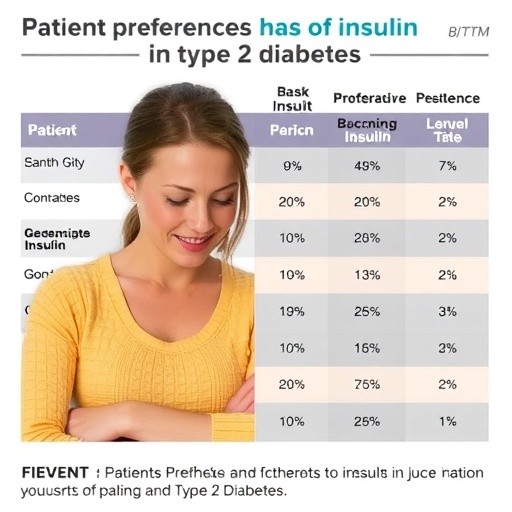
In a groundbreaking study published in the esteemed journal Diabetes Therapy, researchers have embarked on an ambitious quest to unravel the complex landscape of patient preferences regarding basal insulin treatments for adults grappling with Type 2 diabetes. Conducted across four nations—Canada, Spain, France, and Japan—the study employs a discrete choice experiment framework that not only quantifies patient preferences but provides a nuanced understanding of the factors that influence treatment decisions. This approach is critical in a world where the management of chronic diseases like diabetes is often complicated by a myriad of choices and individual patient circumstances.
The growing prevalence of Type 2 diabetes necessitates an urgent reevaluation of how treatment options align with patient values and priorities. Diabetes management is not merely a clinical undertaking; it embodies a deeply personal journey for each patient. The preferences underlying the choice of basal insulin therapies can vary significantly among individuals, shaped by factors such as efficacy, safety, convenience, and quality of life impacts. This research aims to shine a light on those very preferences, thereby enabling healthcare providers to tailor their offerings more closely to what patients want and need.
Utilizing the discrete choice experiment methodology, the study offers insights into how variations in treatment attributes affect patient decision-making. By presenting participants with hypothetical scenarios that reflect real-world choices, researchers are able to dissect the elements of insulin therapies that resonate most with patients. This innovative method has proven invaluable, allowing for a more dynamic understanding of consumer behavior in healthcare—an area traditionally guided by clinical indicators rather than patient perspectives.
As the research unfolds, it elucidates key factors that patients weigh when considering different basal insulins. For example, issues such as frequency of administration, risk of hypoglycemia, and the psychological burden of treatment are front and center in patient deliberations. This finding underscores the necessity for insulin manufacturers to engage in meaningful dialogue with patients to grasp their lived experiences surrounding treatment.
Moreover, by comparing responses across countries, the study reveals cross-cultural differences in preferences that could have significant implications for global health strategies. Canadian participants, for instance, showed a marked preference for insulin formulations that offered greater convenience, while European respondents prioritized safety profiles and minimized side effects. Such contrasts illustrate the essential need for culturally competent healthcare solutions that address the unique needs of diverse patient populations.
The impact of this research extends beyond academic circles; it carries the potential to influence clinical practices and policies surrounding diabetes care. The insights gleaned from this study can inform not only healthcare providers but also policymakers seeking to develop frameworks that optimize diabetes management. By anchoring policy decisions in patient-centric data, stakeholders can foster environments that prioritize treatment satisfaction and improved outcomes.
In practical terms, understanding these preferences paves the way for shared decision-making between patients and clinicians. Patients who feel empowered to express their preferences are likelier to engage actively in their care. This engagement can lead to improved adherence to treatment regimens, ultimately resulting in better health outcomes. Therefore, the implications of this research may have a ripple effect, influencing everything from individual choices to healthcare policy on a grand scale.
As the study gains traction, professionals within the diabetes care community are gearing up for a shift toward more personalized medicine. With increasing recognition that diabetes is not a homogenous condition, there is a growing consensus that treatments must be tailored to individual patient needs. This ongoing research serves as a clarion call for a fundamental transformation in how diabetes treatments are approached, advocating for a model that prioritizes patient voices as integral to clinical decision-making.
In the realm of diabetes management, the distinctions between various insulin products are often obscured by the complexity of treatment regimens. Patients may find themselves overwhelmed by the sheer volume of information and choices at their disposal. This research effectively demystifies those choices by providing clear, data-driven insights into patient preferences. By presenting findings in an accessible manner, the authors of the study are facilitating informed discussions about treatment options and empowering patients to make choices that resonate with their personal health journeys.
A notable aspect of this study is its potential to bridge the gap between clinical research and real-world application. While clinical trials are essential for establishing the safety and efficacy of medications, they often fall short of examining how these treatments perform in day-to-day life. By focusing on patient preferences, this research fills an important void, offering a glimpse into the lived experience of individuals living with Type 2 diabetes.
Importantly, the ramifications of this study extend beyond insulin treatments alone. The framework established through this research could serve as a model for studying patient preferences in other areas of healthcare. As the field of medicine continues to evolve, the integration of patient perspectives will undoubtedly play a crucial role in advancing both individual and public health initiatives.
In conclusion, this study provides a significant contribution to the field of diabetes research by illuminating patient preferences for basal insulin treatments on an international scale. It serves not only as a beacon for healthcare providers and policymakers but also as a vital resource for patients who seek to navigate the complex world of diabetes management. As the discourse surrounding patient-centered care gains momentum, this research stands as a testament to the power of understanding and prioritizing patient needs.
Cite Scienmag News
Ophelia Keating. (August 31, 2025). Patient Preferences for Basal Insulin in Type 2 Diabetes. Scienmag. https://scienmag.com/patient-preferences-for-basal-insulin-in-type-2-diabetes/
Ophelia Keating. "Patient Preferences for Basal Insulin in Type 2 Diabetes." Scienmag, 31 August 2025, https://scienmag.com/patient-preferences-for-basal-insulin-in-type-2-diabetes/. Accessed 3 September 2026.
Ophelia Keating. "Patient Preferences for Basal Insulin in Type 2 Diabetes." Scienmag. August 31, 2025. https://scienmag.com/patient-preferences-for-basal-insulin-in-type-2-diabetes/


