


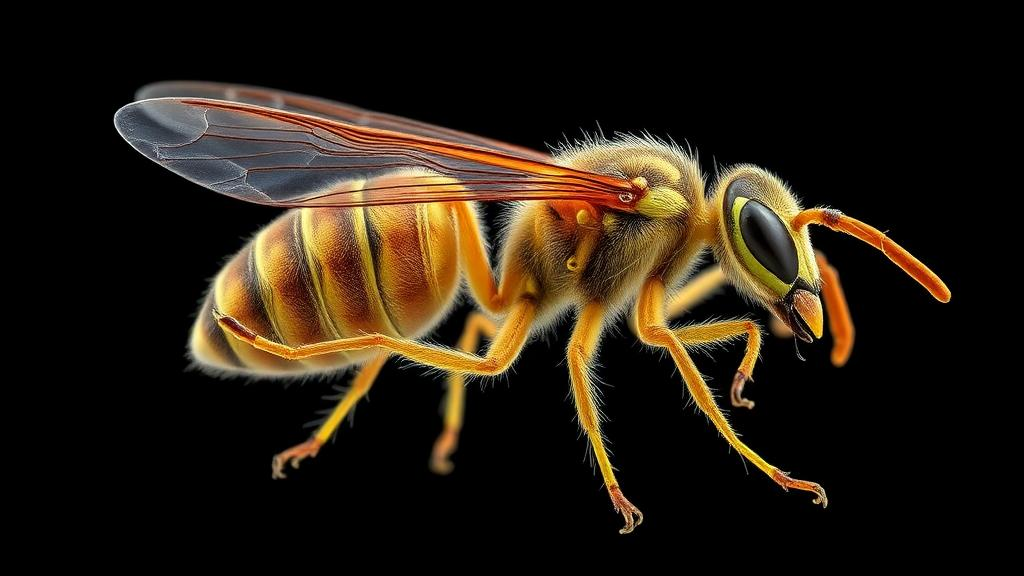
Deep in the tomato fields of the Neotropics, a tiny parasitoid wasp wages a silent war against one of agriculture’s most notorious pests. Now, for the first time, scientists have peered into the chromosomes of Pseudapanteles dignus, a solitary larval endoparasitoid that attacks the tomato leafminer Phthorimaea (= Tuta) absoluta, the devastating moth behind billions of dollars in crop losses worldwide. The findings, published in the journal Comparative Cytogenetics, not only map the genetic architecture of this biological control agent but also rewrite what we thought we knew about chromosome evolution in one of the most species-rich subfamilies of parasitic wasps.
The research team, led by Vladimir Gokhman and colleagues at the Centro de Estudios Parasitológicos y de Vectores (CEPAVE) in La Plata, Argentina, and collaborating institutions in Buenos Aires and Moscow, applied a battery of sophisticated cytogenetic techniques to unravel the karyotype of P. dignus. Using morphometric analysis, C-banding, base-specific fluorochrome staining with DAPI and chromomycin A3, and fluorescence in situ hybridization (FISH) with an 18S rDNA probe, the researchers revealed a remarkably compact and symmetrical chromosome set. The haploid karyotype contains just seven metacentric chromosomes of gradually decreasing size, while the diploid set consists of fourteen chromosomes arranged in seven pairs of similar metacentrics.
This low chromosome number is not just a curiosity—it is a record-breaker. With n = 7 and 2n = 14, P. dignus possesses the lowest chromosome count ever documented in the subfamily Microgastrinae, a group of Braconidae that exceeds 3,000 described species and may harbor up to 43,000 more awaiting description, especially in the tropics. Other members of this subfamily, including species of Cotesia and Microplitis, typically carry haploid chromosome numbers ranging from 9 to 11. According to the team’s phylogenetic reconstruction of karyotype evolution in Braconidae, these higher values prevail in the non-cyclostome lineage of the family, suggesting that the compact n = 7 karyotype of P. dignus is a derived feature—evidence of chromosomal reduction during the evolutionary history of this lineage.
The chromosome set of P. dignus is not only small but also extraordinarily uniform. Relative lengths of the haploid chromosomes range from 16.15 ± 0.44 per cent for the longest to 12.35 ± 0.46 per cent for the shortest, with centromeric indices hovering around 46 to 49 per cent across all seven chromosomes. This homogeneity in chromosome morphology and size indicates a highly symmetrical karyotype, a feature that cytogeneticists associate with relatively undifferentiated chromosome sets. The researchers classified all chromosomes as metacentric following the guidelines of Levan et al., meaning each chromosome carries its centromere near the middle, giving the chromosome set a distinctly biarmed character.
Beneath this uniform surface lies a complex landscape of constitutive heterochromatin. C-banding revealed three distinct patterns within the diploid chromosome set. Three pairs of chromosomes exhibit only centromeric C-positive bands, which are brighter and more conspicuous on two of the pairs than on the third. On two other pairs, strong centromeric bands are accompanied by small interstitial ones. The remaining chromosomes show no C-bands at all. This species-specific distribution of heterochromatin distinguishes P. dignus from other Braconidae studied with C-banding, including Aphidius ervi and Diachasmimorpha longicaudata, which carry predominantly euchromatic or pseudoacrocentric chromosomes with large pericentromeric heterochromatic segments respectively. The researchers suggest that mechanisms such as multiple replication, unequal exchanges, accumulation, or elimination of heterochromatin could account for the variation observed among these four members of the family.
Fluorochrome staining with the AT-specific DAPI and the GC-specific chromomycin A3 painted all chromosomes of P. dignus uniformly, revealing no specific regions enriched in either AT or GC base pairs. This result carries significant implications for understanding the organization of the nucleolus organizing region (NOR), the chromosomal site harboring ribosomal DNA genes. In many insects, CMA3-positive bands co-localize with NORs, indicating that rDNA clusters are typically rich in GC base pairs. However, in P. dignus, the NOR is apparently not associated with CMA3-positive segments, echoing similar findings in the parasitoid D. longicaudata and certain true bugs of the suborder Heteroptera.
FISH with an 18S rDNA probe visualized a single subterminal rDNA cluster on a pair of medium-sized metacentric chromosomes in the diploid karyotype. The location of this cluster apparently co-localizes with the secondary constriction observed on a specific medium-sized chromosome, confirming the identity of the NOR. This finding aligns with the typical pattern in Hymenoptera, where multiple rDNA loci per haploid karyotype have been detected in certain species, but usually only a single rDNA cluster is active. Interestingly, the only previous karyotypic study of Microgastrinae involving in situ hybridization, performed on Cotesia congregata, also revealed a single subterminal rDNA cluster, along with DNA sequences coding for a symbiotic polydnavirus, on shorter arms of two different subtelocentric chromosomes. Despite the difference in chromosome morphology between these two species—all chromosomes of P. dignus are metacentric while C. congregata carries subtelocentrics—the subterminal localization of the NOR is a shared feature.
Most NORs in eukaryotic genomes reside within heterochromatic regions, likely because certain heterochromatin-associated genes can silence repetitive DNA sequences and suppress recombination among them. Based on the length and morphology of the chromosomes of P. dignus, the researchers conclude that the rDNA clusters are located within the C-positive interstitial bands of one of the two chromosome pairs carrying such bands. A similar pattern was previously observed in D. longicaudata, where hybridization signals with the 18S rDNA probe were also detected in heterochromatic regions, though both the regions and the rDNA clusters were CMA3-negative and consequently not enriched in GC base pairs.
Beyond its evolutionary significance, the karyotype of P. dignus carries practical weight for biological control. Several biological and ecological studies have shown that this parasitoid can potentially control the tomato leafminer under natural conditions or through augmentative releases in tomato fields. Knowledge of the genetic aspects of the parasitoid’s life history can contribute to quality mass production of biocontrol agents and, consequently, to optimization of pest control. The laboratory stock maintained at CEPAVE originates from insects reared from cocoons collected on tomato leaves infested with P. absoluta near La Plata, and the researchers generated twenty cohorts by exposing two-day-old fertilized females to twenty larvae of the pest inside leaf mines, maintaining all cultures at 25 °C and 60 to 75 per cent humidity with a 14-hour light and 10-hour dark photoperiod.
The results of this karyotypic study are already being used to verify chromosome-level genome assemblies of Microgastrinae, including those of C. congregata and C. glomerata. Furthermore, both genome assemblies of Microplitis manilae suggest n = 11 for this parasitoid, and since the same haploid number has been reported for two other Microplitis species, these genomic results appear plausible. Although no karyotypically distinct groups of cryptic species of Microgastrinae are currently known, this situation may change as an increasing number of members of this subfamily are examined, similarly to other taxa of parasitic wasps. Chromosomal analysis of Microgastrinae will thus provide further insights into the genetic features of these wasps, offering important information necessary for mass rearing and other aspects of applied use of these parasitoids, while simultaneously illuminating the evolutionary pathways that have shaped chromosome sets across one of the most diverse and economically important groups of insects on Earth.
Subject of Research: Chromosomes of Pseudapanteles dignus (Muesebeck, 1938) and a review of known karyotypes of the subfamily Microgastrinae (Hymenoptera, Braconidae)
Article Title: Chromosomes of Pseudapanteles dignus (Muesebeck, 1938) and a review of known karyotypes of the subfamily Microgastrinae ( Hymenoptera , Braconidae )
Article References: Gokhman, V. E., Luna, M. G., Vallina, C., & Bressa, M. J. (2024). Chromosomes of Pseudapanteles dignus (Muesebeck, 1938) and a review of known karyotypes of the subfamily Microgastrinae (Hymenoptera, Braconidae). Comparative Cytogenetics, 18, 199-211. https://doi.org/10.3897/compcytogen.18.133534
Image Credits: AI Generated
DOI: 10.3897/compcytogen.18.133534
Keywords: Chromosomes, Pseudapanteles, dignus, Muesebeck, review, known, karyotypes, subfamily, Microgastrinae, Hymenoptera, Braconidae, scientific research
Cite Scienmag News
Gavin Prescott. (October 17, 2026). Parasitoid wasp’s chromosomes revealed, reshaping ideas of Microgastrinae evolution. Scienmag. https://scienmag.com/parasitoid-wasps-chromosomes-revealed-reshaping-ideas-of-microgastrinae-evolution/
Gavin Prescott. "Parasitoid wasp’s chromosomes revealed, reshaping ideas of Microgastrinae evolution." Scienmag, 17 October 2026, https://scienmag.com/parasitoid-wasps-chromosomes-revealed-reshaping-ideas-of-microgastrinae-evolution/. Accessed 17 October 2026.
Gavin Prescott. "Parasitoid wasp’s chromosomes revealed, reshaping ideas of Microgastrinae evolution." Scienmag. October 17, 2026. https://scienmag.com/parasitoid-wasps-chromosomes-revealed-reshaping-ideas-of-microgastrinae-evolution/


