


In a groundbreaking study published in the prestigious journal Nature, Professor Sangmin Lee from POSTECH’s Department of Chemical Engineering, along with 2024 Nobel Chemistry Laureate Professor David Baker from the University of Washington, revealed an innovative therapeutic platform that could revolutionize gene delivery systems. Utilizing the capabilities of artificial intelligence (AI), the research team mimicked the complex structures of viruses, paving the way for novel artificial proteins designed to mimic viral behavior effectively. This study signifies a remarkable advancement in the field of bioengineering, emphasizing the potential that AI possesses in the design of nanostructures for medical applications.
Viruses, known for their intricately designed structures, serve as the natural model for gene delivery due to their efficiency in encapsulating genetic material. The spherical protein shells of viruses enable them to replicate and invade host cells, which can lead to diseases. Recognizing the potential for these viral architectures, researchers have long endeavored to create artificial proteins that replicate these abilities. The challenge, however, lies in designing nanocages that can carry sufficient amounts of genetic material while maintaining the multifunctionality characteristic of natural viral proteins.
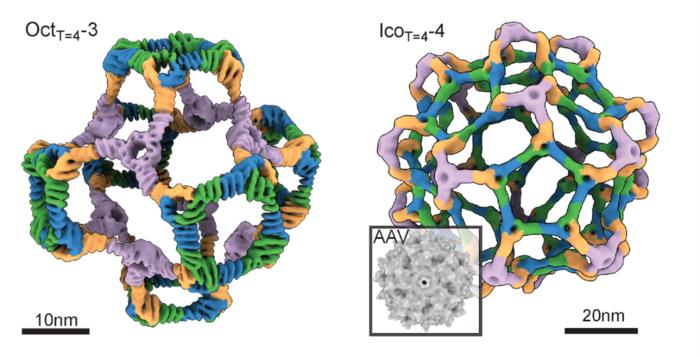
The research team sought to overcome these challenges through the use of AI-driven computational design, which allowed them to break through conventional limitations in nanocage design. Many viruses exhibit symmetrical structures, but they also possess subtle asymmetries that enhance their functionalities. By using advanced AI algorithms, the researchers were able to capture these nuanced features and produce remarkable nanocages in various geometrical shapes, including tetrahedral, octahedral, and icosahedral configurations. This milestone marks a significant advancement in the synthetic biology landscape, showcasing the capacity to engineer proteins with greater complexity and capability.
The team created nanostructures composed of four distinct types of artificial proteins that interconnect to form intricate architectures. Among these structures, the icosahedral nanocage emerged as a key innovation, boasting a diameter of up to 75 nanometers. This threefold increase in capacity for encapsulating genetic material compared to conventional gene delivery vectors—such as adeno-associated viruses (AAV)—marks a groundbreaking leap in gene therapy. Such an enhancement not only expands the potential applications for gene therapy but also significantly improves efficiency and effectiveness in delivering therapeutic genes to targeted cells.
Electron microscopy played a crucial role in validating the success of the designed nanocages, confirming that the structures achieved the expected symmetrical configurations. By demonstrating functional experiments, the research team further established that these AI-designed nanocages are capable of effectively delivering therapeutic payloads to target cells. This aspired functionality opens new avenues for medical applications, including but not limited to innovative gene therapies and enhanced vaccine delivery systems.
Professor Sangmin Lee remarked on the transformative impact of AI in the field of synthetic biology, emphasizing that advancements in technology have ushered in a new epoch for designing proteins tailored to meet humanity’s pressing healthcare challenges. The hope is that the research will not only expedite the development of targeted gene therapies but also catalyze advancements in the next generation of vaccines and other biomedical innovations with far-reaching implications for human health.
Before joining POSTECH in January 2024, Professor Lee amassed valuable experience as a postdoctoral researcher in Professor Baker’s lab at the University of Washington for nearly three years, from February 2021 until late 2023. This collaboration provided a robust foundation for the current research initiative, marrying the expertise of both institutions in a meaningful and impactful manner.
The project received substantial support from the Republic of Korea’s Ministry of Science and ICT, which funds various research initiatives, including the Outstanding Young Scientist Program and the Global Frontier Research Program. Furthermore, additional financial backing from the Howard Hughes Medical Institute (HHMI) in the United States underscored the significance and potential of this investigation within the scientific community.
The implications of this research extend beyond the realm of gene therapy; they also touch upon vaccine development and the broader spectrum of medical treatments. By harnessing the power of AI in the design of nanostructures, researchers stand on the precipice of a new wave of biomedical advancements that could reshape the landscape of therapeutic delivery systems, targeting a wide variety of ailments with unprecedented precision and effectiveness.
The publication of this study and its promising results galvanizes both the scientific community and the public interest in the potential of AI-assisted innovations. With the world looking towards more sophisticated and efficient approaches to health management, the future holds considerable potential for the practical applications of such technologies. As the research progresses, it will be crucial to continue examining the mechanisms through which these artificial protein nanocages can integrate into existing medical frameworks, ensuring that they enhance and complement current therapeutic strategies.
In conclusion, the research led by Professor Sangmin Lee and Professor David Baker represents a significant leap forward in the realm of synthetic biology and therapeutic design. The novel AI-designed nanocages embody the potential to transform gene therapy practices, opening new avenues for medical innovation and excellence. The continuing collaboration among researchers and institutions, coupled with advancements in AI technology, will undoubtedly propel forward the future of biomedicine and healthcare solutions.
Keywords
Life sciences, Proteins, Viruses, Gene therapy, Protein design, Protein structure, Artificial intelligence, Chemical structure, Genetic structure, Viral gene delivery, Vaccine development, Cell therapies.
Cite Scienmag News
Kristina Jarvis. (December 24, 2024). Pandemic Threats Pave the Way for Future Innovations: A Look Ahead. Scienmag. https://scienmag.com/pandemic-threats-pave-the-way-for-future-innovations-a-look-ahead/
Kristina Jarvis. "Pandemic Threats Pave the Way for Future Innovations: A Look Ahead." Scienmag, 24 December 2024, https://scienmag.com/pandemic-threats-pave-the-way-for-future-innovations-a-look-ahead/. Accessed 4 September 2026.
Kristina Jarvis. "Pandemic Threats Pave the Way for Future Innovations: A Look Ahead." Scienmag. December 24, 2024. https://scienmag.com/pandemic-threats-pave-the-way-for-future-innovations-a-look-ahead/


