


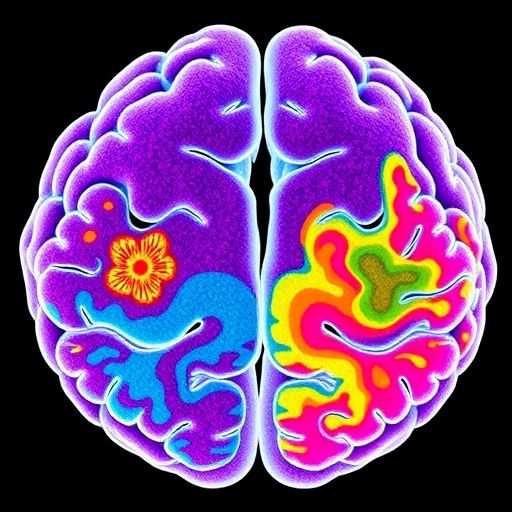
In the relentless battle against cancer, understanding the intricacies of tumor biology remains pivotal. Recent advancements have illuminated a revolutionary frontier in oncology: the creation of 3D multi-omics tumor atlases. These atlases promise to unravel the complex, three-dimensional ecosystem of human tumors, an ecosystem in which an astonishing diversity of cellular players interact dynamically across space and time. As technology propels us beyond traditional two-dimensional analyses, these intricate atlases herald a new era in comprehending tumor evolution, unlocking potential pathways to early detection and targeted interventions that could redefine cancer treatment paradigms.
Tumors are not monolithic masses but highly heterogeneous and spatially organized entities. Within these three-dimensional structures, a myriad of cell types, including malignant cells, stromal elements, immune cells, and vascular components, co-exist and interact in a tightly choreographed yet chaotic manner. This complex web of interactions governs the tumor’s behavior—its growth, progression, potential to invade surrounding tissues, and capability to metastasize. Historically, studies have examined tumors largely through dissociated cells or thin tissue sections, providing snapshots that fail to capture the holistic spatial context of tumor microenvironments and their evolution.
The emergence of spatial multi-omics technologies is revolutionizing this landscape by integrating genomic, transcriptomic, proteomic, and metabolomic data with spatial resolution. By preserving the architectural integrity of tumor tissues, scientists can now map molecular profiles directly onto three-dimensional landscapes. This progression is pivotal because cellular function and fate are often dictated not merely by intrinsic properties but by their spatial context and interaction with neighboring cells and extracellular matrices. The ability to visualize where, when, and how molecular signals propagate within tumors offers unprecedented insights into cancer biology that were previously inaccessible.
Creating 3D tumor atlases entails the integration of these spatially resolved multi-omics data, producing comprehensive maps that delineate tumor cell populations, stromal niches, vascular networks, and immune infiltrates within intact tissue volumes. Such atlases are dynamic, capable of capturing temporal changes across tumor initiation, progression, and metastasis. They enable researchers to track the evolutionary trajectories of cancer cells and their interactions with the microenvironment over time, thus shedding light on the operational principles that govern tumor heterogeneity and adaptation.
An extraordinary challenge in this domain is the sheer scale and complexity of the data generated. Sophisticated computational tools and machine learning algorithms are indispensable for data integration, visualization, and interpretation. These technologies facilitate the reconstruction of high-resolution 3D tumor models and the identification of spatially restricted molecular signatures that could serve as novel biomarkers. Furthermore, this computational prowess enables the dissection of intricate cellular crosstalk, revealing potential vulnerabilities in tumor ecosystems that might be exploited therapeutically.
Among the promising applications of 3D tumor atlases is their role in risk stratification and early cancer detection. By capturing precancerous lesions and the initial molecular changes that precede overt malignancy, these atlases could transform screening practices. Early interventions informed by precise molecular maps may prevent disease progression or enable more effective, less invasive therapeutic strategies, remarkably improving patient outcomes. This proactive approach represents a paradigm shift from reactive treatment to preemptive cancer management.
The tumor microenvironment is another critical aspect illuminated by 3D atlases. Immune cells infiltrate tumors in heterogeneous patterns, with spatial distributions affecting immune evasion and responses to immunotherapy. Mapping these spatial immune landscapes at high resolution allows for a better understanding of immunological “cold” and “hot” tumors, thereby guiding the design and optimization of immunotherapeutic regimens. As immunotherapies become increasingly central to oncology, spatial multi-omics provides a valuable framework for personalizing treatment.
Beyond immune cells, cancer-associated fibroblasts (CAFs) and other stromal components play multifaceted roles in tumor progression and therapy resistance. The structural and functional mapping of CAF subpopulations unveils their diverse contributions within tumor niches. Three-dimensional atlases facilitate the spatial localization of these subpopulations alongside tumor cells, revealing patterns of influence on tumor architecture and therapy responses. Targeting specific stromal components identified in spatial contexts could enhance therapeutic efficacy and overcome resistance mechanisms.
Metastasis—the deadly hallmark of cancer—also gains new investigative tools through 3D spatial omics. By charting the molecular evolution and spatial dissemination of metastatic clones from primary tumors across multiple sites, these atlases delineate the trajectories and mechanisms of cancer spread. Understanding how metastatic niches establish and thrive within distinct tissue microenvironments opens possibilities for intercepting metastasis at early stages, potentially reducing mortality rates associated with late-stage cancer.
The construction of these atlases is bolstered by novel technological platforms, including high-resolution imaging mass cytometry, spatial transcriptomics, and multiplexed immunohistochemistry. These approaches permit the simultaneous assessment of tens to hundreds of molecular markers in situ, preserving spatial contexts at single-cell or subcellular resolutions. Integration of these data types into 3D frameworks requires harmonization of disparate datasets and stringent quality controls to ensure biological validity. Interdisciplinary collaborations among biologists, engineers, and data scientists are therefore crucial to pushing the frontiers of this field.
As these technological horizons expand, so do the challenges associated with clinical translation. Incorporating spatial multi-omics into routine diagnostics involves scaling these complex assays, reducing costs, and ensuring reproducibility and clinical relevance. Robust computational pipelines capable of delivering actionable insights within clinically acceptable timelines are essential. Furthermore, ethical considerations regarding patient data privacy and consent for extensive molecular profiling remain paramount and warrant diligent attention.
The potential impact of 3D multi-omics tumor atlases extends beyond immediate clinical applications, offering new avenues for fundamental cancer research. By providing a spatially resolved molecular atlas of tumor ecosystems, researchers can investigate the fundamental mechanisms driving tumor heterogeneity and resistance evolution. Such insights can unveil novel therapeutic targets that disrupt critical tumor-microenvironment interactions, ultimately fostering innovative drug development strategies.
In sum, the advent of 3D multi-omics tumor atlases represents a transformative leap forward in oncology, bridging the gap between molecular detail and spatial context across tumor ecosystems. These atlases integrate high-dimensional data across multiple scales, from molecular to cellular to tissue architectures, and capture temporal tumor dynamics in unprecedented detail. Their capacity to elucidate the complexity of tumor biology promises revolutionary advances in early detection, personalized therapy, and ultimately, cancer prevention.
As this field continues to unfold, the synergy of cutting-edge technologies, computational innovations, and clinical aspirations will shape a future where cancer interception becomes both precise and proactive. The path forward entails refining atlas generation, enhancing accessibility, and fostering collaborative networks that accelerate translation from bench to bedside. This holistic approach, empowered by spatial multi-omics, may finally tip the scales in favor of patients in the ongoing war against cancer.
Cite Scienmag News
Nathaniel Bowman. (June 15, 2026). 3D Multi-Omics Tumor Atlases: Tech to Clinic. Scienmag. https://scienmag.com/3d-multi-omics-tumor-atlases-tech-to-clinic/
Nathaniel Bowman. "3D Multi-Omics Tumor Atlases: Tech to Clinic." Scienmag, 15 June 2026, https://scienmag.com/3d-multi-omics-tumor-atlases-tech-to-clinic/. Accessed 3 September 2026.
Nathaniel Bowman. "3D Multi-Omics Tumor Atlases: Tech to Clinic." Scienmag. June 15, 2026. https://scienmag.com/3d-multi-omics-tumor-atlases-tech-to-clinic/


