For four decades, RAS proteins were dismissed as undruggable. The family of three genes—KRAS, NRAS and HRAS—carries activating mutations in roughly 30 percent of all human cancers, yet its smooth, picomolar grip on GTP and lack of druggable pockets defeated every conventional medicinal chemistry campaign. That era is now closing. A new review published in Experimental Hematology & Oncology synthesizes the structural biology, pharmacology and clinical data behind daraxonrasib (RMC-6236), a first-in-class, oral pan-RAS(ON) multi-selective tri-complex inhibitor, and maps the resistance landscape that will determine whether its striking early results translate into durable cures.
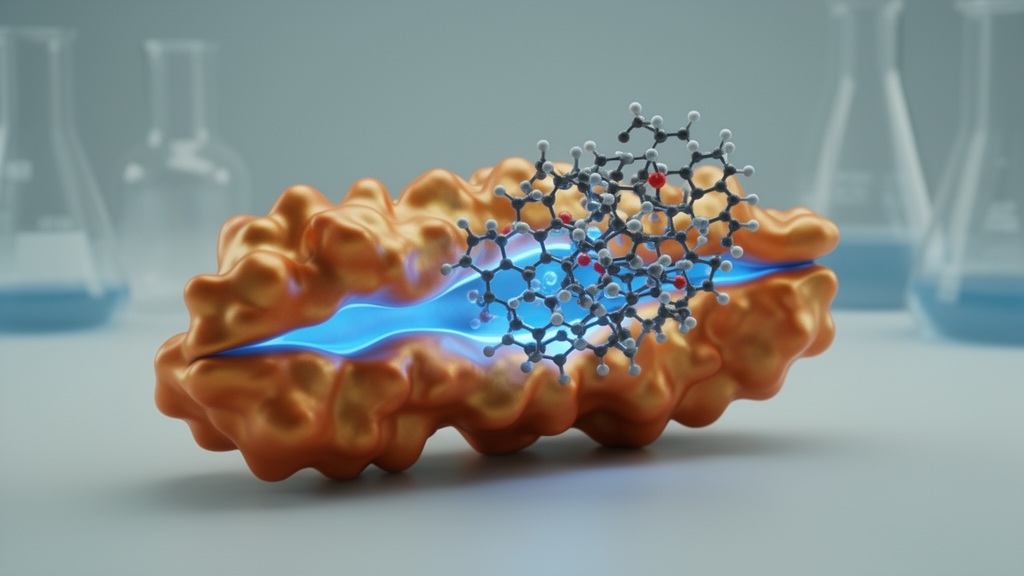
The breakthrough rests on an unusual molecular-glue mechanism. Rather than docking into a pocket on RAS itself, the small molecule first binds cyclophilin A (CYPA), a ubiquitous chaperone. The preformed CYPA–drug binary complex is then captured by RAS in its active, GTP-bound conformation, assembling a ternary complex that sterically blocks effector proteins such as RAF from docking onto the Switch-I and Switch-II regions. Binding is strictly ordered, with distinct equilibrium dissociation constants for each partner: the preclinical analogue RMC-7977, optimized from a sanglifehrin A-derived macrocyclic scaffold, binds CYPA with a Kd of 195 nanomolar and KRAS(G12V) with a Kd of 85 nanomolar. A cation–π interaction with CYPA tryptophan 121 and a through-water hydrogen bond to the KRAS Y32 backbone carbonyl stabilize the assembly, while an open groove along the Q61–G12–G13 axis accommodates the bulky sidechains of diverse oncogenic mutants.
This architecture explains both the breadth and the selectivity of the class. RMC-7977 binds wild-type KRAS, NRAS and HRAS as well as common G12, G13 and Q61 mutants, with all RAS-binding affinities within threefold of wild type, yet shows no measurable binding to GDP-bound RAS and forms tri-complexes competitively with the BRAF RAS-binding domain. Tumor selectivity follows from biology rather than chemistry: cancer cells carrying mutant RAS alleles hold a substantially higher fraction of RAS in the GTP-bound state than normal tissues, so the inhibitor preferentially suppresses mutant-driven tumor growth while sparing wild-type RAS signaling. A further distinction is GAP mimetic activity—structural analysis shows the tri-complex positions catalytic residues to actively promote GTP hydrolysis, restoring GTPase function to G12-mutant RAS and actively depleting the active RAS-GTP pool rather than merely trapping the protein in an inactive state.
Preclinical activity spans a remarkable range of RAS-addicted tumors. In pancreatic ductal adenocarcinoma models, RAS(ON) inhibitors induced profound, T-cell-dependent regressions accompanied by remodeling of the tumor microenvironment, with decreased myeloid cells and increased T-cell and macrophage infiltration. In KRAS-mutant non-small cell lung cancer, sensitivity tracked codon 12 mutations, and a doublet of elironrasib with daraxonrasib drove sustained regressions by maximizing pathway suppression and enhancing immune recognition. NRAS-mutant melanoma models showed regressions driven by MAPK inhibition, MHC class I and PD-L1 upregulation, and T-cell infiltration, with complete responses abolished by depletion of CD4 or CD8 T cells. Strong responses also emerged in KRAS-mutant cholangiocarcinoma xenografts and allografts, colorectal cancer, KRAS-mutant osteosarcoma, appendiceal adenocarcinoma organoids, and neuroblastoma, and even recurrent oncogenic RRAS Q87L and RRAS2 Q72L mutants proved sensitive in preclinical models.
The clinical translation has been rapid. Translational pharmacokinetic and pharmacodynamic modeling predicted that daily doses of 100 and 300 milligrams would achieve tumor control and objective responses respectively, and those predictions were validated in a phase I–II trial, with objective responses observed at the 300-milligram dose in patients with KRAS G12X-mutant lung and pancreatic adenocarcinomas. In a cohort of 168 patients with previously treated pancreatic cancer receiving 300 milligrams or less daily, treatment-related adverse events of any grade occurred in 96 percent of patients, with grade 3 or higher events in 30 percent; the most common included rash, diarrhea, nausea, stomatitis or mucositis, vomiting and fatigue. An acneiform facial rash has been highlighted as a dose-limiting toxicity requiring proactive dermatologic management.
The pivotal result came from the randomized phase III RASCI trial, which enrolled patients with previously treated metastatic pancreatic ductal adenocarcinoma and assigned them to daraxonrasib at 300 milligrams once daily or investigator’s-choice chemotherapy. Daraxonrasib doubled median overall survival and prolonged progression-free survival, with benefit observed irrespective of the specific RAS mutation. This is the first demonstration that a pan-RAS inhibitor significantly extends survival in a randomized trial, and it establishes the drug as a new standard of care in the second-line setting. The development program has already extended into earlier disease: an ongoing phase III trial is evaluating daraxonrasib alone or with gemcitabine plus nab-paclitaxel in first-line metastatic pancreatic cancer, and an adjuvant phase III trial is testing it after neoadjuvant or adjuvant chemotherapy in resected disease. Preliminary responses have also been reported in NRAS-mutant melanoma, though with instructive heterogeneity—one patient derived antitumor benefit while another with a co-occurring MAP2K1 mutation progressed, underscoring concurrent MAPK alterations as determinants of primary resistance.
Resistance, however, is already well charted. Analysis of paired baseline and end-of-treatment samples from 40 patients identified recurrent acquired mutations in 18 cases, converging on two principal mechanisms: disruption of the tri-complex interface essential for drug binding, exemplified by RAS Y64 mutations, and enhancement of the native RAS–RAF interaction, seen with RAS Y71 and kinase-dead or hypoactive BRAF mutations. Preclinical modeling in NRAS-mutant melanoma showed resistance arising through PPIA mutations that abrogate the CYPA chaperone itself, while MAP2K1 mutations appeared in both models and clinical cases. Treatment-emergent amplification of mutant KRAS was detected in roughly one-third of patients at end of treatment in phase 1/2 ctDNA analyses. Beyond genetics, resistant cells sustain proliferation through orthogonal mitogenic pathways, and cytoskeletal remodeling—resistant lines enlarging their cell area without gaining mass—has emerged as a measurable morphological signature of adaptation.
Each resistance node suggests a rational combination partner. Persistent mTORC1 activity, a frequent nongenetic driver of resistance in KRAS-mutant lung and colorectal models, can be blocked by the farnesyl transferase inhibitor darlifarnib, which resensitized relapsing tumors to multiple RAS inhibitors. Co-targeting CDK4 and CDK2 restores sensitivity by inducing G1 arrest and preventing compensatory S-phase entry. Most strikingly, in pancreatic cancer, a triple combination of daraxonrasib, the EGFR-family inhibitor afatinib and the STAT3 degrader SD36 achieved complete regression of orthotopic tumors with no evidence of resistance for more than 200 days after treatment, in genetically engineered mouse models and patient-derived xenografts alike. In colorectal cancer, macrophage-derived PDGF-BB and GDF-15 cooperatively drive resistance through SRC-family kinases, and the multi-kinase inhibitor masitinib restored sensitivity to both trametinib and RMC-6236.
The immune dimension may prove equally consequential. RAS(ON) inhibition upregulates MHC class I, reduces myeloid-derived suppressor cells, shifts macrophages toward an M1-like phenotype and increases cytotoxic T-cell granzyme B expression, and the depth of response in pancreatic models tracked baseline T-cell infiltration, with T-cell-high models reaching roughly 90 percent complete responses. Combining RAS inhibitors with anti-PD-1 boosted cytotoxic infiltration and improved survival in PD-1-resistant models, while KRAS inhibitors primed CTLA-4 blockade by reprogramming regulatory T cells. Pharmacokinetic work adds another practical layer: daraxonrasib is a substrate for the efflux transporters ABCB1 and ABCG2, which limit oral bioavailability and brain penetration, while OATP1A/1B uptake transporters influence hepatic clearance and CYP3A contributes to metabolism—variables with direct implications for drug-drug interactions and for treating the brain metastases that arise in roughly 20 to 40 percent of KRAS-mutant lung cancer patients. A cautionary case also emerged: a patient with NRAS Q61K-mutant melanoma developed chronic bilateral corneal epithelial defects and stromal thinning that healed during a drug holiday and recurred on rechallenge, prompting calls for ophthalmologic surveillance. As the review’s authors conclude, the future of pan-RAS inhibition will rest less on any single agent than on biomarker-driven combinations deployed against an evolving, longitudinally monitored tumor genome.
Subject of Research: Pan-RAS(ON) tri-complex inhibition with daraxonrasib in RAS-mutant cancers
Article Title: Daraxonrasib and the era of pan-RAS inhibition: mechanisms, clinical advances, and resistance landscapes
Article References: Lou, J., & Zhang, D. (2026). Daraxonrasib and the era of pan-RAS inhibition: mechanisms, clinical advances, and resistance landscapes. Experimental Hematology & Oncology, 15(1), Article 100. https://doi.org/10.1186/s40164-026-00833-w
Image Credits: AI Generated
DOI: 10.1186/s40164-026-00833-w
Keywords: daraxonrasib, RAS inhibitors, pancreatic cancer, tri-complex inhibitor, cyclophilin A, drug resistance, KRAS mutations, MAPK pathway, immunotherapy combinations, phase III trial, precision oncology, molecular glue
Cite Scienmag News
Nathaniel Bowman. (October 28, 2026). Pan-RAS inhibitor daraxonrasib doubles survival in pancreatic cancer trial. Scienmag. https://scienmag.com/pan-ras-inhibitor-daraxonrasib-doubles-survival-in-pancreatic-cancer-trial/
Nathaniel Bowman. "Pan-RAS inhibitor daraxonrasib doubles survival in pancreatic cancer trial." Scienmag, 28 October 2026, https://scienmag.com/pan-ras-inhibitor-daraxonrasib-doubles-survival-in-pancreatic-cancer-trial/. Accessed 29 October 2026.
Nathaniel Bowman. "Pan-RAS inhibitor daraxonrasib doubles survival in pancreatic cancer trial." Scienmag. October 28, 2026. https://scienmag.com/pan-ras-inhibitor-daraxonrasib-doubles-survival-in-pancreatic-cancer-trial/