


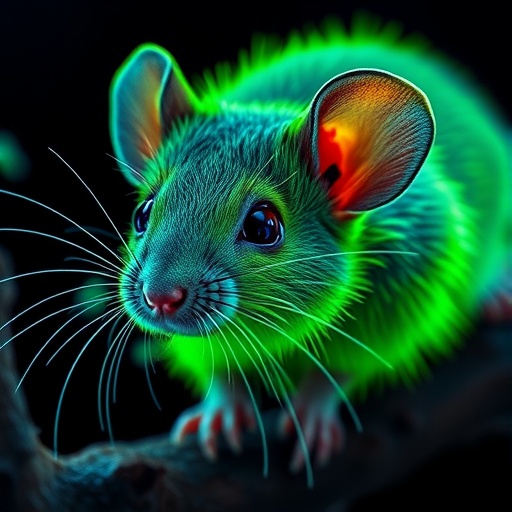
In a groundbreaking study that has captured the attention of parasitologists and pharmacologists alike, researchers have unveiled the promising potential of isopropyltoluene, commonly known as p-cymene, as a therapeutic agent against Toxoplasma gondii infections. This protozoan parasite, notorious for causing toxoplasmosis, presents a significant challenge to the immune-compromised population, especially patients under immunosuppressive therapies such as dexamethasone treatment. The new findings suggest that p-cymene might hold the key to mitigating the debilitating effects of this pathogen, potentially heralding a new era in antiparasitic treatment regimes.
Toxoplasma gondii has long posed a silent yet persistent threat to global health. While often asymptomatic in immunocompetent individuals, its infection can lead to severe complications in those with weakened immune defenses, including fatal encephalitis and systemic disease. Today’s standard treatment options are limited, often accompanied by significant toxicity and resistance concerns, underscoring the urgent need to explore novel compounds with effective antiparasitic profiles and minimal side effects. Enter p-cymene, a natural aromatic hydrocarbon predominantly found in essential oils such as thyme and cumin, now stepping into the spotlight for its unexplored potential as an antiparasitic candidate.
The research conducted by Z.S. Alshehri at an undisclosed institute meticulously evaluated the prophylactic and therapeutic effects of p-cymene against Toxoplasma gondii in a controlled murine model immunosuppressed with dexamethasone. This corticosteroid is widely used to dampen immune responses in various clinical settings but is a double-edged sword as it significantly increases susceptibility to opportunistic infections, including toxoplasmosis. The investigators’ choice of such a model underscores the translational impact of the study, reflecting a relevant clinical scenario emblematic of patients undergoing immunosuppressive therapy.
Central to the investigation was the administration of p-cymene and its influence on parasitic load, host survival, and biochemical markers indicative of infection severity and immune response. The rigorous methodology involved quantitative assessment of parasitemia, including PCR analysis to detect parasite DNA within vital organs such as the brain and liver, both prime targets of Toxoplasma infection. Remarkably, mice treated with p-cymene demonstrated a significant reduction in parasitic burden compared to untreated controls, indicating potent antiparasitic activity.
Beyond its direct anti-parasitic effects, p-cymene exhibited immunomodulatory properties essential to combating Toxoplasma gondii. The compound appeared to temper excessive inflammatory responses typically observed during infection in immunosuppressed hosts without compromising the essential immune functions necessary for pathogen clearance. This delicate balance is critical, as hyperinflammation contributes to tissue damage, while immunosuppression heightens vulnerability. The dual action positions p-cymene as an agent that might stabilize immune homeostasis, reducing collateral damage and improving overall outcomes.
The biochemical evaluation extended to oxidative stress markers, which are pivotal in infection pathophysiology. Oxidative stress exacerbates cellular injury and fosters a milieu conducive to pathogen proliferation. The treatment group exhibited notable attenuation in oxidative stress indicators, such as malondialdehyde, alongside enhanced activity of antioxidant enzymes including superoxide dismutase and catalase. These findings hint at the compound’s capacity to reinforce host antioxidant defenses, offering added protection amid parasitic assault.
Histopathological analysis further corroborated the therapeutic merits of p-cymene, revealing preservation of tissue architecture and minimized inflammatory infiltrates in the liver and brain. While uninhibited Toxoplasma proliferation typically devastates these organs, leading to necrosis and granuloma formation, p-cymene treatment markedly abated these pathological hallmarks. This translates into a tangible clinical advantage, potentially reducing morbidity associated with toxoplasmosis in at-risk populations.
The molecular underpinnings of p-cymene’s action remain an active area of exploration. Preliminary data suggest interference with parasite metabolic pathways, possibly disrupting energy production or replication mechanisms intrinsic to Toxoplasma gondii. Coupled with its immune-modulating and antioxidant effects, this multi-faceted mode of action could confer a robust therapeutic profile resistant to the development of parasitic drug resistance, a persistent problem in current toxoplasmosis management.
In the broader pharmacological context, p-cymene’s natural origin and relative abundance underscore its appeal. Unlike synthetic drugs with complex and costly development pipelines, p-cymene’s derivation from essential oils may facilitate scalable, cost-effective production, enhancing accessibility, particularly in resource-limited settings. Moreover, its favorable safety profile reported in other therapeutic contexts bodes well for rapid translation into clinical applications.
Critically, the study’s model of dexamethasone-induced immunosuppression adds a layer of clinical relevance. Immunosuppressive regimens are increasingly prevalent in treating autoimmune diseases, cancers, and post-transplantation scenarios, where infection risk is a major cause of morbidity and mortality. A therapeutic agent like p-cymene, capable of curbing Toxoplasma gondii infection without further compromising immunity, could revolutionize prophylactic and treatment strategies in these vulnerable populations.
Future investigations are anticipated to refine dosage parameters, explore pharmacokinetics, and conduct trials in larger animal models and ultimately human subjects. Such steps are vital to confirm efficacy and safety while elucidating potential drug-drug interactions, especially important given the complex pharmacotherapies involved in immunosuppressed patients. Additionally, exploring synergistic combinations of p-cymene with existing antiparasitic drugs may unlock enhanced efficacy and reduce the likelihood of resistance.
This study also reaffirms the burgeoning role of phytochemicals in infectious disease therapeutics. Natural products have historically been a fertile ground for drug discovery, and advances in molecular biology and pharmacology now empower researchers to harness these compounds more efficiently. P-cymene exemplifies how revisiting nature’s chemical repertoire can yield novel solutions to persistent global health challenges.
Public health experts express cautious optimism about these findings, recognizing the need for innovative approaches against opportunistic infections that undermine immunosuppressive treatments’ success. The global burden of toxoplasmosis, while often overlooked, is significant, affecting millions worldwide and complicating clinical outcomes across multiple disciplines. Agents like p-cymene could potentially alleviate this burden, reducing healthcare costs and improving quality of life.
In conclusion, this striking research heralds p-cymene as a promising candidate for combating Toxoplasma gondii infections in immunocompromised individuals. Its multifaceted therapeutic effects — encompassing direct antiparasitic action, immune modulation, and oxidative stress mitigation — paint a compelling picture of a novel intervention poised to fill a critical gap in infectious disease management. As the scientific community eagerly awaits further validation, p-cymene stands at the nexus of traditional natural product wisdom and modern biomedical innovation, offering hope in the fight against a stealthy and dangerous pathogen.
Cite Scienmag News
Kristina Jarvis. (August 5, 2025). P-Cymene Fights Toxoplasma in Immunosuppressed Mice. Scienmag. https://scienmag.com/p-cymene-fights-toxoplasma-in-immunosuppressed-mice/
Kristina Jarvis. "P-Cymene Fights Toxoplasma in Immunosuppressed Mice." Scienmag, 5 August 2025, https://scienmag.com/p-cymene-fights-toxoplasma-in-immunosuppressed-mice/. Accessed 3 September 2026.
Kristina Jarvis. "P-Cymene Fights Toxoplasma in Immunosuppressed Mice." Scienmag. August 5, 2025. https://scienmag.com/p-cymene-fights-toxoplasma-in-immunosuppressed-mice/


