


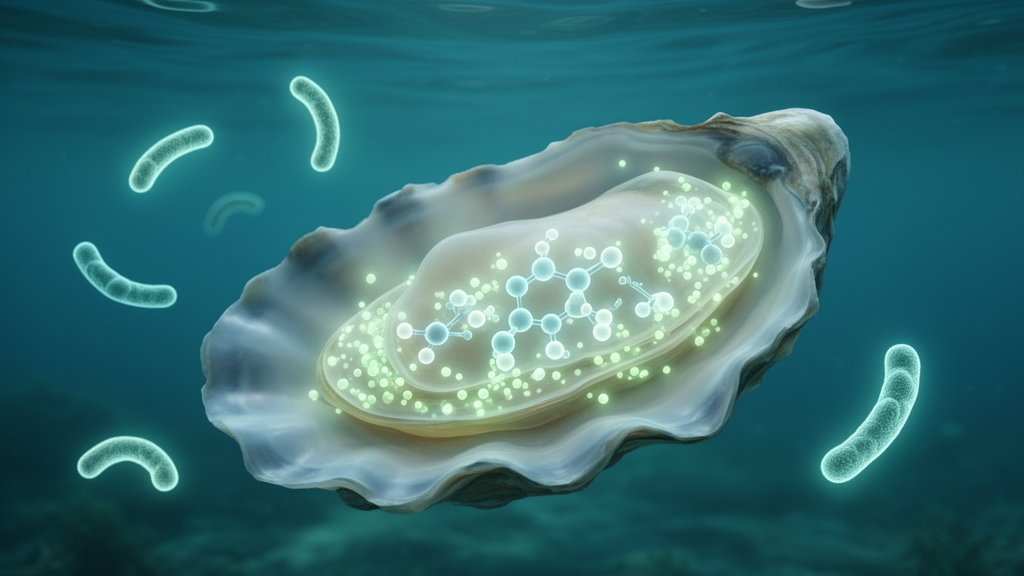
A newly identified gene in the Hong Kong oyster, Crassostrea hongkongensis, has been shown to act as a central regulator of the animal’s immune response to one of the most problematic seafood-borne pathogens, Vibrio parahaemolyticus. The gene, named ChMKK6, encodes a protein kinase belonging to the mitogen-activated protein kinase (MAPK) cascade, a signaling system conserved across animals, plants, and fungi that translates external threats into cellular responses. In a study published in PLOS One, researchers report that silencing ChMKK6 in oysters weakens multiple arms of innate immunity, from inflammatory signaling to antimicrobial activity in the hemolymph, positioning the kinase as a pivotal node in molluscan host defense.
MAPK pathways are layered phosphorylation cascades in which MAP kinase kinases (MKKs), also called MAP2Ks, sit between upstream sensors and downstream MAPKs that ultimately activate transcription factors. MKK6, one of the canonical MKK family members, is well characterized in mammals and other model organisms as an activator of p38-type MAPKs during inflammatory responses to bacterial and viral infection. In bivalves, which rely heavily on innate immunity because they lack the adaptive antibody-based defenses of vertebrates, the precise contribution of MKK6 has remained poorly defined. The new study set out to close that gap by identifying and functionally characterizing an MKK6 ortholog in C. hongkongensis, an economically and ecologically important oyster species cultivated along the southern coast of China.
Molecular cloning revealed that the ChMKK6 complementary DNA spans 2,760 base pairs and contains an open reading frame of 1,032 base pairs, encoding a protein of 344 amino acids. Sequence analysis identified two structural hallmarks of functional MAP kinase kinases: a conserved serine/threonine protein kinase catalytic domain, designated S-TKc, and a C-terminal DVD domain, a short motif characteristic of MKK-family kinases that mediates specific interactions with downstream MAPKs. These features indicate that ChMKK6 possesses the catalytic machinery expected of an active kinase capable of participating in phosphorylation relays.
Comparative sequence analysis reinforced that assignment. Amino acid alignment showed that ChMKK6 shares its highest identity, 99.0 percent, with the MKK6 protein of the Pacific oyster Crassostrea gigas, a closely related species whose genome has been well annotated. A phylogenetic tree constructed from MKK6 sequences further placed ChMKK6 within the cluster of molluscan MKK6 orthologs, consistent with the gene having been conserved through oyster evolution. The near-identity between the two Crassostrea kinases suggests that the immune function described in C. hongkongensis is likely representative of a broadly shared mechanism among oysters.
To understand where ChMKK6 operates in the body, the researchers quantified its expression across oyster tissues using quantitative real-time polymerase chain reaction (qRT-PCR). The gene showed its highest baseline expression in the hepatopancreas, the digestive organ that in bivalves doubles as a major immunological hub, housing dense populations of phagocytic hemocytes and detoxification machinery. That pattern is consistent with a role in surveillance of pathogens ingested with filter-fed seawater, a primary route of exposure to Vibrio species in the marine environment.
More striking was the response to infection. When oysters were experimentally challenged with Vibrio parahaemolyticus, a gram-negative bacterium responsible for acute hepatopancreatic necrosis disease in shellfish and for foodborne gastroenteritis in humans, ChMKK6 transcript levels rose markedly in all tissues examined. A coordinated, organism-wide upregulation of a signaling kinase implies that the MAPK module it anchors is recruited broadly during bacterial invasion rather than being confined to a single organ, echoing the systemic nature of innate immune activation in invertebrates.
To test whether ChMKK6 is merely a correlate of infection or an active participant in immunity, the team used RNA interference to silence the gene and then measured downstream immune readouts. Silencing ChMKK6 significantly suppressed transcription of interleukin-17 (IL17), a cytokine-family signaling molecule central to inflammatory defense against extracellular bacteria. In vertebrates, IL17 drives recruitment and activation of phagocytes and stimulates antimicrobial peptide production; IL17-like signaling has been recognized as a key antibacterial axis in invertebrates as well. The finding that ChMKK6 knockdown dampens IL17 transcription provides a direct functional link between the MAPK cascade and inflammatory gene regulation in the oyster, suggesting that ChMKK6 acts upstream of IL17-mediated immunity.
The consequences of ChMKK6 loss extended beyond cytokine signaling to the enzymatic arsenal that oysters deploy against pathogens. Silencing the gene significantly reduced the activities of five key immune-related enzymes: acid phosphatase (ACP) and alkaline phosphatase (AKP), lysosomal enzymes associated with phagosome digestion and immune cell activation; catalase (CAT) and superoxide dismutase (SOD), antioxidants that manage the reactive oxygen species generated during the respiratory burst that kills engulfed bacteria; and lysozyme (LZM), a bacteriolytic enzyme that directly degrades bacterial cell walls. Simultaneously, malondialdehyde (MDA) content increased in the gill, a marker of lipid peroxidation indicating elevated oxidative damage. Together, these shifts depict a weakened immune state: less enzymatic killing capacity, compromised antioxidant defense, and greater cellular injury at a primary interface with seawater-borne pathogens.
Functional assays at the level of body fluids corroborated the molecular and enzymatic data. The antimicrobial activity of cell-free hemolymph supernatant, the oyster equivalent of blood plasma containing humoral immune factors, was markedly reduced after ChMKK6 silencing. Because hemolymph antimicrobial activity integrates the output of lysozymes, antimicrobial peptides, and other soluble effectors, its decline demonstrates that ChMKK6 influences not only intracellular signaling and gene expression but also the organism’s overall capacity to suppress bacterial growth in its circulation. Collectively, the results establish ChMKK6 as a key player in the immune defense of C. hongkongensis against V. parahaemolyticus, operating through IL17-mediated inflammatory regulation and coordination of humoral and enzymatic effectors.
The study carries practical implications for aquaculture, where vibriosis imposes substantial losses on oyster and shellfish farming worldwide. Understanding the molecular switches that govern bivalve immunity opens avenues for selective breeding of disease-resistant lines, for biomarker-based monitoring of stock health, and potentially for immune-priming interventions that activate MAPK-dependent pathways before pathogen exposure. The work also adds to fundamental knowledge of innate immunity in lophotrochozoans, a major animal lineage in which immune signaling networks remain far less mapped than in insects and mammals. As genomic resources for Crassostrea species continue to expand, kinases such as ChMKK6 provide entry points for tracing the full architecture of MAPK signaling in mollusks and for clarifying how these ancient defense pathways have been adapted to life in microbe-rich coastal waters.
Subject of Research: Identification and functional characterization of the ChMKK6 MAP kinase kinase gene in the immune response of Crassostrea hongkongensis against Vibrio parahaemolyticus
Article Title: Recognition and function analysis of MKK6 in immune reaction against Vibrio Parahaemolyticus in Crassostrea hongkongensis
Article References: Zhu, J., Shao, G., Chen, J., Lin, J., Liang, Q., Yu, F., Wang, Z., Lin, B., Huang, Y., Li, H., & Xu, J. (2026). Recognition and function analysis of MKK6 in immune reaction against Vibrio Parahaemolyticus in Crassostrea hongkongensis. PLOS One, 21(10), e0360613. https://doi.org/10.1371/journal.pone.0360613
Image Credits: AI Generated
DOI: 10.1371/journal.pone.0360613
Keywords: ChMKK6, Crassostrea hongkongensis, Vibrio parahaemolyticus, MAPK signaling pathway, innate immunity, IL17, RNA interference, oyster aquaculture, immune enzymes, hemolymph antimicrobial activity, protein kinase, PLOS One
Cite Scienmag News
Kristina Jarvis. (October 18, 2026). Oyster Kinase ChMKK6 Revealed as Key Switch in Immune Defense Against Vibrio parahaemolyticus. Scienmag. https://scienmag.com/oyster-kinase-chmkk6-revealed-as-key-switch-in-immune-defense-against-vibrio-parahaemolyticus/
Kristina Jarvis. "Oyster Kinase ChMKK6 Revealed as Key Switch in Immune Defense Against Vibrio parahaemolyticus." Scienmag, 18 October 2026, https://scienmag.com/oyster-kinase-chmkk6-revealed-as-key-switch-in-immune-defense-against-vibrio-parahaemolyticus/. Accessed 18 October 2026.
Kristina Jarvis. "Oyster Kinase ChMKK6 Revealed as Key Switch in Immune Defense Against Vibrio parahaemolyticus." Scienmag. October 18, 2026. https://scienmag.com/oyster-kinase-chmkk6-revealed-as-key-switch-in-immune-defense-against-vibrio-parahaemolyticus/


