


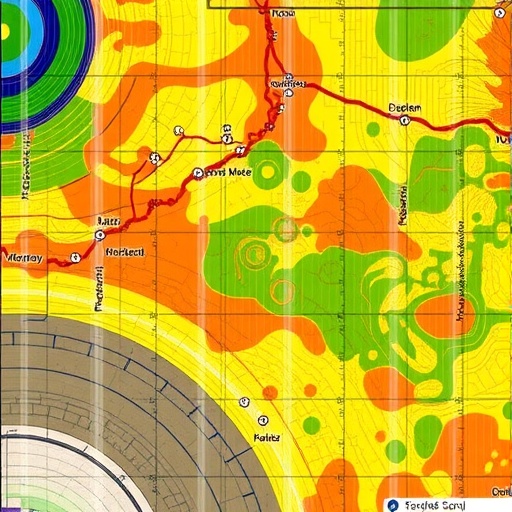
A groundbreaking initiative spearheaded by the University of Bonn promises to revolutionize soil moisture research with the launch of the University of Bonn Soil Moisture Data Catalog (UB-SMDC). This innovative metadata portal addresses a long-standing challenge in earth sciences: the fragmented and scattered nature of soil moisture data. Soil moisture content (SMC) is a critical environmental variable integral to agricultural management, drought prediction, hydrological modeling, and climate studies. Yet, the wealth of available SMC datasets remained siloed across diverse repositories, impeding seamless access and integration.
UB-SMDC serves as a centralized, standards-compliant platform, meticulously cataloging 373 publicly available SMC datasets. Leveraging the robust GeoNetwork platform, the portal adopts the ISO19139 geographic metadata standard to guarantee interoperability and data consistency. This adherence to international metadata standards is pivotal in harmonizing disparate data sources across scales and types, ranging from ground-based measurements to airborne and satellite observations.
A distinctive feature of the UB-SMDC is its controlled metadata taxonomy, which standardizes terminology across key attributes such as spatial and temporal resolution, measurement depth, data format, and processing levels. This structured vocabulary facilitates effective data discovery and cross-comparison—challenges that have traditionally hindered multi-source analyses. Enhanced by map-based visual previews and direct links to original data sources, users can rapidly assess dataset suitability for their research needs.
The catalog is more than a static repository; it embodies a comprehensive analytical framework that characterizes the global soil moisture data landscape. Through a rigorous three-phase methodology encompassing data discovery, catalog design, and metadata synthesis, the UB-SMDC equips researchers with actionable insights into data coverage, quality, and gaps. This approach fosters transparency, reproducibility, and collaborative integration of soil moisture datasets on an unprecedented scale.
By streamlining access to heterogeneous SMC datasets, the UB-SMDC catalyzes advancements in earth system science. Researchers can now undertake more nuanced climate modeling, improve drought response planning, and refine hydrological forecasts by integrating diverse soil moisture inputs. The portal’s open-access nature and standards-driven architecture promote broad adoption across geosciences and remote sensing communities.
This development arrives at a pivotal moment as earth observation technologies continue to generate massive volumes of environmental data. The UB-SMDC sets a compelling example of how digital infrastructures can harness big data to unlock holistic understandings of planetary processes. Its potential to support integrative analyses underscores the growing importance of metadata standardization and centralized data curation in scientific discovery.
The UB-SMDC initiative signals a new era of soil moisture research where data fragmentation no longer impedes progress. By providing a unified gateway to global soil moisture information, it opens pathways to innovative applications and cross-disciplinary research collaborations critical for addressing pressing environmental challenges.
Cite Scienmag News
Violet Maxwell. (July 10, 2026). Overview of Public Soil Moisture Data and the UB-SMDC Portal. Scienmag. https://scienmag.com/overview-of-public-soil-moisture-data-and-the-ub-smdc-portal/
Violet Maxwell. "Overview of Public Soil Moisture Data and the UB-SMDC Portal." Scienmag, 10 July 2026, https://scienmag.com/overview-of-public-soil-moisture-data-and-the-ub-smdc-portal/. Accessed 5 September 2026.
Violet Maxwell. "Overview of Public Soil Moisture Data and the UB-SMDC Portal." Scienmag. July 10, 2026. https://scienmag.com/overview-of-public-soil-moisture-data-and-the-ub-smdc-portal/


