


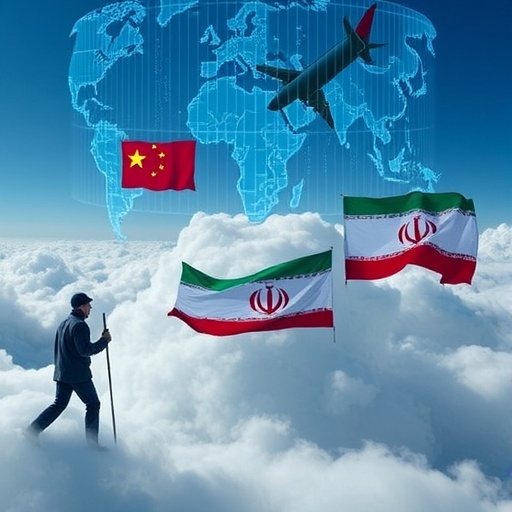
In an era where information flows ceaselessly across digital channels, the cornerstone of democratic societies remains the unfettered access to information on the internet. Nevertheless, this freedom is far from universal. In many parts of the world, state-imposed internet censorship is a pervasive reality, with some regimes deploying advanced technological measures to control, monitor, and restrict online content. To challenge such restrictions, a groundbreaking collaborative study by researchers at Paderborn University and the Technology Innovation Institute in Abu Dhabi has introduced innovative methodologies that exploit vulnerabilities in encryption protocols to bypass internet censorship systems. Their work promises to reshape the landscape of digital freedom by enhancing access to censored online content, especially under stringent regimes like those of China and Iran.
The heart of this research focuses on understanding, dissecting, and manipulating the Transport Layer Security (TLS) protocol, which ordinarily serves as the frontline guardian of secure online communications. This protocol, ubiquitously used by millions worldwide, encrypts data exchanged between users and websites, ensuring confidentiality and integrity. Paradoxically, despite its primary role in securing connections, TLS inadvertently exposes certain metadata that censors exploit. Notably, the initial handshake message in the TLS process is transmitted unencrypted, revealing the target website’s domain name. This exposure allows sophisticated censorship systems, such as China’s notorious ‘Great Firewall,’ to identify and subsequently block access to forbidden sites.
The researchers employed a variety of tactical interventions to obscure or fragment this sensitive TLS handshake data, thereby preventing censorship mechanisms from detecting the user’s intended destination. Among these techniques, TLS fragmentation stands out—where the initial unencrypted request is broken down into minuscule packets that overwhelm or confuse the analytical capabilities of censorship filters. By distributing the TLS ClientHello message into smaller fragments, these filters struggle to reassemble and interpret the underlying data correctly, thereby allowing the encrypted communication to proceed unimpeded. This approach cleverly maintains compatibility with internet servers, so the user experience remains seamless despite the tactical modifications.
Beyond fragmentation, the multidisciplinary team explored additional methods to mask or manipulate the TLS handshake’s handshake parameters. Some approaches involve altering or omitting the Server Name Indication (SNI) from web requests, which censors typically use to identify censored domains. Others implement obfuscation techniques that disguise the encrypted data to mimic benign or allowed traffic, further thwarting censorship detection algorithms. The cumulative effect of these innovations is an adaptive toolkit for circumventing a spectrum of censorship architectures, from the relatively centralized systems in Iran to the multi-layered, highly sophisticated network of China’s Great Firewall.
The significance of this research extends far beyond the technical realm. For individuals living under authoritarian regimes, where internet access translates directly to personal freedom, political expression, and exposure to global ideas, such advancements offer a tangible lifeline. By enabling users to bypass digital barricades erected by state censors, the study contributes to the broader struggle for human rights in cyberspace. However, the researchers caution that this is only one side of an ongoing technological arms race. Governments and censors continuously evolve their repertoire of surveillance and restriction tools, implementing countermeasures such as deep packet inspection, active probing, and protocol fingerprinting to detect and block evasive tactics.
The study’s authors advocate for a sustained and formalized field of ‘censorship research’—an interdisciplinary scholarly domain dedicated to understanding, documenting, and innovating solutions to censorship challenges. This academic approach would ensure that efforts to safeguard digital freedoms keep pace with the accelerating capabilities of censoring entities. The award the team received at the prestigious IEEE Symposium on Security and Privacy in San Francisco underscores the scientific community’s recognition of this work not only as a breakthrough in cybersecurity but also as a vital contribution to global societal well-being.
Technically, the challenge addressed by this study lies in balancing censorship circumvention techniques with the constraints of internet server expectations and internet protocol standards. Any deviation from expected TLS handshake behavior runs the risk of causing connection failures or alerting anomaly detection systems, which might result in outright blocking. Therefore, the researchers meticulously engineered their methods to preserve the integrity of the connection while concealing its metadata from censoring bodies. Ensuring interoperability with diverse web servers worldwide was a key success criterion for their practical tool, aptly referred to as the ‘censor scanner.’
The ‘censor scanner’ is an open-source software platform designed not only to perform targeted encryption modifications but also to provide continuous testing against existing and evolving censorship architectures. By delivering real-time feedback on the effectiveness of various circumvention strategies, the tool empowers developers, activists, and researchers to adapt quickly and maintain access to blocked resources. This dynamic aspect addresses the cat-and-mouse nature of censorship technology, where static solutions are quickly outdated by advancing detection techniques employed by censors.
The researchers’ work effectively dissects the censorship infrastructure of formidable regimes such as China. The study reveals that the Great Firewall is not a monolithic system but rather a complex amalgamation of three distinct subsystems, each responsible for monitoring and filtering different layers of internet traffic. Therefore, effective circumvention necessitates outsmarting all three components simultaneously—a challenging but achievable endeavor through the multi-pronged encryption modifications proposed by the team.
Attention to protocol-level details, such as the handling of TLS ClientHello packet sequencing and segmentation, forms the core of these evasion strategies. When combined with strategies like encrypting or removing SNI fields and mimicking legitimate traffic patterns through protocol obfuscation, the result is a robust mechanism that significantly raises the bar against censorship efficacy. This protocol-level finesse is critical because higher-layer methods, such as VPN or proxy usage, are increasingly detectable and subject to blockades as censors improve their technological arsenal.
While these advances offer promising new avenues for preserving internet freedom, the research team reminds readers that the contest between censorship and access is ongoing and dynamic. As encryption and privacy protocols become more sophisticated globally, authoritarian regimes are likewise investing in cutting-edge surveillance and control technologies. The ongoing development of machine learning-based traffic analysis, quantum computing, and next-generation firewall architectures signals that the landscape of internet censorship will remain a moving target.
Nevertheless, the study serves as a beacon of hope and a guidepost for the future of digital rights protection. Its findings will undoubtedly fuel further academic inquiry, engineering innovation, and advocacy focused on enabling open, unrestricted internet use. In a global context where information barriers often determine political power balances, technological breakthroughs like these provide critical tools for individuals and societies striving for transparency, accountability, and freedom.
With the full study already recognized at an international level, anticipation builds for how its recommendations and tools will be adopted and further developed by the global community. For now, the open-source ‘censor scanner’ invites collaboration, iteration, and deployment, signaling a new chapter in the ongoing fight to keep the internet a truly open space for all.
Cite Scienmag News
Courtney Benton. (June 2, 2025). Overcoming Internet Censorship in Countries Such as China and Iran. Scienmag. https://scienmag.com/overcoming-internet-censorship-in-countries-such-as-china-and-iran/
Courtney Benton. "Overcoming Internet Censorship in Countries Such as China and Iran." Scienmag, 2 June 2025, https://scienmag.com/overcoming-internet-censorship-in-countries-such-as-china-and-iran/. Accessed 3 September 2026.
Courtney Benton. "Overcoming Internet Censorship in Countries Such as China and Iran." Scienmag. June 2, 2025. https://scienmag.com/overcoming-internet-censorship-in-countries-such-as-china-and-iran/


