


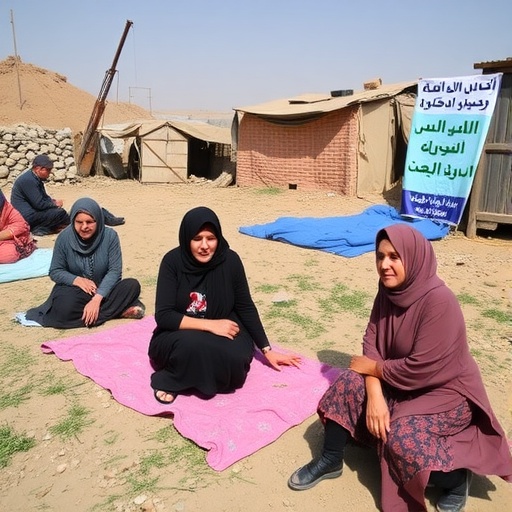
In the midst of prolonged conflict and humanitarian crisis, Syria’s healthcare system has faced unprecedented challenges, deeply impacting disease surveillance and treatment capabilities. A groundbreaking new study sheds light on the epidemiological and clinicopathological landscape of ovarian cancer in Syria from 2017 to 2021, marking the first national, multicenter retrospective analysis during these war-stricken years. This investigation provides a poignant glimpse into the burden of ovarian cancer within a setting where healthcare resources are severely strained and access is often limited.
Ovarian cancer, a malignancy known for its silent progression and late-stage diagnosis globally, presents unique challenges in conflict zones where routine health screenings and timely interventions are scarce. Syria’s prolonged war has disrupted hospital infrastructure, impeded patient access, and caused data scarcity, making this study a critical source of novel insights. By examining patient records from three major university hospitals — Tishreen, Al-Bairouni, and Ibn Rushd — researchers compiled comprehensive data on patient demographics, tumor subtypes, symptomatology, and relevant biomarkers such as CA-125 levels.
The study encompassed 531 newly diagnosed ovarian cancer patients, with ages ranging broadly from young adults of 18 years to the elderly reaching 91. The mean patient age was 53.1 years, paralleling global trends that identify middle-aged women as the most affected demographic. Despite the presumed high burden of ovarian cancer in the general population, in this sample, ovarian cancer accounted for only 1.2% of all cancer cases diagnosed over the study period, signaling a likely underreporting or underdiagnosis phenomenon influenced by war-driven healthcare disruptions.
Histopathological analysis revealed that serous carcinoma dominated the ovarian cancer subtypes, representing more than half (55.4%) of cases. This aligns with international data where high-grade serous carcinoma is the predominant form of ovarian malignancy worldwide. Mucinous and endometrioid carcinomas were the next most common, at 13.8% and 9.7% respectively, showcasing tumor heterogeneity consistent with established oncological classifications.
The study’s laboratory findings underline the importance of CA-125, a well-known serum biomarker often elevated in epithelial ovarian cancers. Elevated CA-125 levels were significantly associated with serous carcinoma, exhibiting an adjusted odds ratio of 2.30. Conversely, lower CA-125 levels correlated with endometrioid cancer, highlighting that although CA-125 is useful diagnostically, its interpretation must consider tumor histology. This biomarker’s role in diagnosis, prognosis, and monitoring remains pivotal, especially in settings with limited imaging resources.
Clinically, abdominal bloating emerged as the most commonly reported presenting symptom, affecting 36.5% of the patient cohort. This symptom’s prominence echoes extensive research identifying nonspecific abdominal or pelvic discomfort as a hallmark of ovarian malignancy’s stealthy progression. Unfortunately, nonspecific symptoms such as bloating often masquerade as benign conditions, delaying diagnosis and worsening outcomes, particularly in regions lacking robust screening protocols.
The relatively low proportion of ovarian cancer cases relative to all cancers in Syria is emblematic of broader systemic challenges. The study suggests that underdiagnosis, late presentation, and barriers to accessing specialized care are exacerbated by the protracted conflict. Women, in particular, may face compounded obstacles due to cultural norms, displacement, and resource scarcity, ultimately skewing epidemiological data and obscuring the true disease burden.
Given these complexities, the authors emphasize the necessity for expanded epidemiological efforts and improved diagnostic infrastructure to capture a more accurate picture of ovarian cancer incidence in Syria. Strengthening cancer registries, promoting awareness, and integrating ovarian cancer screening in primary healthcare—even amid conflict—are critical steps toward mitigating disease impact.
Moreover, this study’s retrospective design and reliance on tertiary hospital data may not encompass rural or internally displaced populations, highlighting the importance of future prospective research initiatives. Such investigations are crucial for unpacking the intricate interplay between war-related factors and cancer epidemiology, potentially guiding tailored interventions.
In addition to epidemiological data, this research underscores the broader implications of healthcare disruption on oncological outcomes. Delayed diagnoses frequently result in advanced-stage presentations with limited treatment options, underscoring a grim consequence of the ongoing conflict on cancer survival rates. International support and targeted healthcare policies could ameliorate these gaps, improving diagnostic and therapeutic accessibility.
The findings also resonate beyond Syrian borders, serving as a case study for how conflict zones affect cancer control globally. This comparative perspective highlights a pressing need for international oncology communities to address cancer care in humanitarian crises, advocating for resilient health systems that accommodate cancer patients even under duress.
Ultimately, this comprehensive study offers a foundational understanding of ovarian cancer’s epidemiology during one of Syria’s most challenging periods. It provides vital data that can inform healthcare planning, resource allocation, and advocacy, driving the agenda for enhanced cancer control strategies amid continuing instability.
The elevated prevalence of serous carcinoma, the nuanced role of CA-125, and the predominance of abdominal bloating as a presenting symptom contribute to refining clinical suspicion in resource-limited settings. These insights could enable clinicians to prioritize differential diagnoses and expedite timely referrals, potentially improving patient outcomes.
While this work addresses critical knowledge gaps, it also opens avenues for multidisciplinary collaborations integrating oncology, public health, and humanitarian medicine. Future research might explore genetic factors, treatment outcomes, and psychosocial barriers to care, deepening understanding in a context marked by adversity yet underscored by scientific resilience.
In summary, the study portrays a striking depiction of ovarian cancer within war-affected Syria, melding clinical findings with epidemiological nuance. It calls for renewed global attention to neglected diseases in fragile contexts and emphasizes the indispensable role of comprehensive cancer surveillance in informing health policy during times of crisis.
The study’s authors poignantly remind us that behind each statistic lies a human story compounded by war, displacement, and limited healthcare access—underscoring that combating ovarian cancer in Syria demands concerted effort, innovative strategies, and unwavering commitment.
Cite Scienmag News
Nathaniel Bowman. (August 22, 2025). Ovarian Cancer Trends in War-Torn Syria. Scienmag. https://scienmag.com/ovarian-cancer-trends-in-war-torn-syria/
Nathaniel Bowman. "Ovarian Cancer Trends in War-Torn Syria." Scienmag, 22 August 2025, https://scienmag.com/ovarian-cancer-trends-in-war-torn-syria/. Accessed 4 September 2026.
Nathaniel Bowman. "Ovarian Cancer Trends in War-Torn Syria." Scienmag. August 22, 2025. https://scienmag.com/ovarian-cancer-trends-in-war-torn-syria/


