


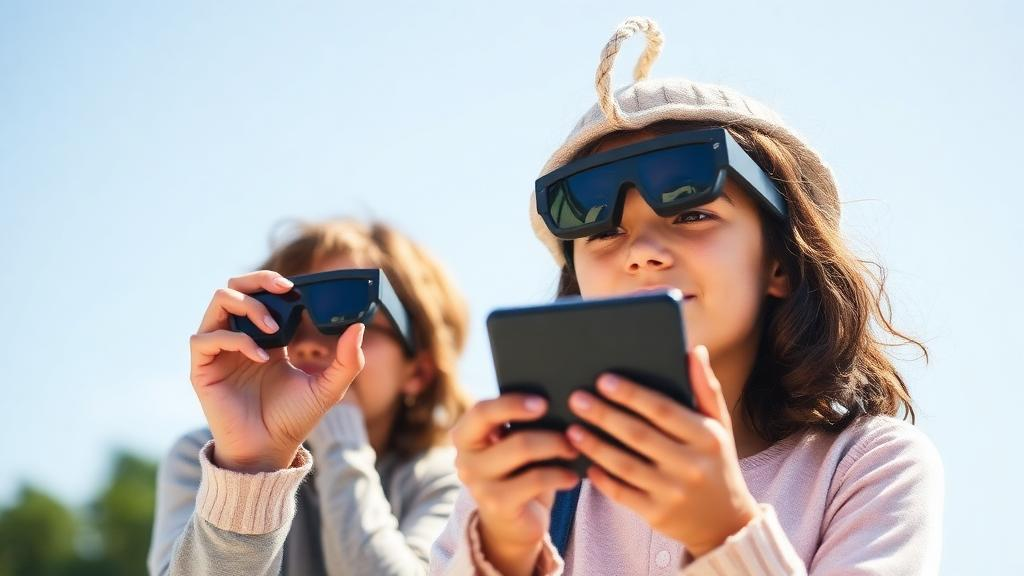
A sweeping new study of nearly 9,000 school-aged children and adolescents in southwestern China has delivered one of the clearest snapshots yet of how modern childhood lifestyles shape the risk of myopia, the nearsightedness that has become one of the fastest-growing public health challenges on the planet. The research, published in BMC Public Health by a team from Leshan Normal University, found that a staggering 76.19 percent of the 8,762 students examined were myopic, a figure that underscores just how deeply the condition has penetrated school populations in East Asia. But buried within that alarming headline number is a more actionable story: three everyday behaviors—time spent outdoors, hours in front of screens, and the length of a child’s nightly sleep—emerged as statistically significant levers that could bend the curve of this epidemic.
The study, led by Jian Yang and colleagues, was conducted between May and November 2025 in Leshan, a prefecture-level city in Sichuan Province. Rather than surveying a convenience sample of a single school, the researchers employed a multistage stratified random cluster sampling design, a rigorous approach that divides the target population into strata and then randomly selects clusters within them. This method helps ensure that the participants reflect the broader population of primary and secondary school students aged 6 to 18, rather than an unrepresentative slice. The scale matters: with thousands of participants drawn across age groups, the statistical power to detect modest but meaningful associations between lifestyle factors and refractive error is far greater than in smaller, single-school studies that have dominated the myopia literature.
Defining myopia precisely is a deceptively tricky business, and the researchers took a pragmatic approach. A student was classified as myopic if the spherical equivalent refractive error—the basic measure of how much a lens must bend light to focus on the retina—was less than −0.50 diopters in at least one eye, as assessed by non-cycloplegic autorefraction. Autorefraction instruments measure how light reflects off the back of the eye to calculate the eye’s focusing state, offering a fast and objective reading across large cohorts. The absence of cycloplegia, the temporary paralysis of the focusing muscle that prevents children from accidentally accommodating during measurement, is a known limitation because it can slightly overestimate myopia in younger children. Nevertheless, the technique is widely used in population screening and allows comparisons across the many studies that have adopted the same protocol.
Information on the three lifestyle exposures of interest was gathered through standardized questionnaires completed with input from parents or guardians, who also provided data on potential confounding variables such as age, sex, and other demographic characteristics. The researchers then turned to multivariable logistic regression, the workhorse statistical technique for estimating the odds of a binary outcome—here, being myopic or not—as a function of multiple predictors simultaneously. By adjusting for confounders, the model isolates the contribution of each lifestyle factor from the others and from background characteristics, producing odds ratios with 95 percent confidence intervals that indicate both the direction and the reliability of each association.
The results paint a coherent picture of risk and protection. Students who reported more than one hour of outdoor physical activity per day had significantly lower odds of myopia, with an odds ratio of 0.849 and a confidence interval of 0.766 to 0.942. In plain terms, after accounting for other factors, daily outdoor activity beyond the one-hour threshold was associated with roughly a 15 percent reduction in the odds of being myopic. This finding aligns with a substantial body of international evidence suggesting that bright outdoor light stimulates retinal dopamine release, a neurotransmitter that appears to restrain the excessive axial elongation of the eyeball that underlies myopia. The eye grows too long relative to its optical power, and incoming light focuses in front of the retina rather than on it; outdoor illumination, which can reach tens of thousands of lux on a sunny day compared with a few hundred indoors, is thought to interrupt that pathological growth signal.
On the risk side, two behaviors stood out. Screen time exceeding two hours per day was associated with higher odds of myopia, with an odds ratio of 1.135 (95 percent confidence interval: 1.022 to 1.259), a modest but statistically reliable elevation of roughly 13 percent. The mechanisms here are likely multifaceted. Prolonged near work, whether on a tablet, phone, or computer, keeps the ciliary muscle contracted to focus at close range, and sustained accommodation has long been suspected of promoting axial elongation in developing eyes. Reduced blink rates, close viewing distances, and the simple displacement of outdoor time by indoor screen use may all contribute. Importantly, the questionnaire-based measurement of screen time cannot disentangle these mechanisms, but the dose threshold of two hours provides a concrete benchmark that parents, schools, and policymakers can act upon.
Insufficient sleep emerged as the second significant risk factor, with an odds ratio of 1.139 (95 percent confidence interval: 1.032 to 1.257) for children who did not get adequate sleep. The connection between sleep and myopia is less intuitively obvious than the outdoor light story, but several plausible pathways exist. Sleep deprivation may disrupt circadian rhythms that regulate eye growth, since axial length itself exhibits diurnal fluctuation, typically being longest around midday and shortest in the early morning. Chronic sleep restriction could also increase evening screen exposure and indoor near work, although the multivariable adjustment was designed to separate these overlapping behaviors. Whatever the precise mechanism, the finding adds myopia prevention to the long list of health benefits already attributed to adequate childhood sleep, from cognitive performance to metabolic health.
The 76.19 percent prevalence recorded in Leshan is striking even by the standards of East Asia, where myopia rates among urban schoolchildren have climbed relentlessly over recent decades. In some Chinese cities, prevalence among high school students has been reported to exceed 80 percent, and projections suggest that half of the world’s population could be myopic by mid-century if current trends continue. The public health stakes extend well beyond the inconvenience of wearing glasses. High myopia, generally defined as refractive error beyond −6.00 diopters, dramatically increases the lifetime risk of pathologic complications including retinal detachment, myopic macular degeneration, glaucoma, and cataract—conditions that can cause irreversible vision loss in adulthood. Every case of myopia prevented or delayed in childhood therefore carries compounding value across a lifetime.
The authors of the study are careful to frame their conclusions appropriately. Because the design is cross-sectional, capturing behaviors and refractive status at a single point in time, the associations cannot establish causation. It is possible, for instance, that children who already struggle to see the board spend more time on close-up screen activities, or that unmeasured factors such as parental myopia, genetics, and socioeconomic conditions influence both lifestyle and refractive outcomes. The researchers explicitly call for longitudinal studies to clarify whether increasing outdoor time, limiting screens, and extending sleep actually reduce myopia incidence, rather than merely correlating with it. Intervention trials conducted in China and elsewhere, which have assigned additional outdoor time to entire schools and observed slower myopia onset, provide encouraging precedent, but the specific roles of screen time and sleep still require prospective confirmation.
Even with those caveats, the convergence of three modifiable behaviors in a single large dataset gives the findings immediate practical weight. The one-hour outdoor benchmark echoes recommendations already embedded in Chinese national policy, which mandates daily outdoor activity in schools, and the two-hour screen threshold offers a simple, memorable limit for families navigating an increasingly digital childhood. The sleep finding reinforces guidance from pediatric health bodies that school-aged children need roughly nine or more hours of nightly rest, depending on age. As the researchers conclude, promoting healthy lifestyle behaviors—more daylight, less screen glow, and longer nights of sleep—represents a low-cost, scalable strategy for myopia prevention and control, one that could be implemented in classrooms and households worldwide while the scientific community works to confirm the causal pathways that these compelling associations hint at.
Subject of Research: Associations of outdoor physical activity, screen time, and sleep with myopia in school-aged children
Article Title: Associations of outdoor physical activity, screen time, and sleep characteristics with myopia among primary and secondary school students
Article References: Yang, J., Song, X., Huang, Z., Zheng, Y., He, X., & Mo, M. (2026). Associations of outdoor physical activity, screen time, and sleep characteristics with myopia among primary and secondary school students. BMC Public Health. https://doi.org/10.1186/s12889-026-29776-x
Image Credits: AI Generated
DOI: 10.1186/s12889-026-29776-x
Keywords: myopia, outdoor physical activity, screen time, sleep duration, children and adolescents, refractive error, cross-sectional study, public health, axial elongation, vision health, logistic regression, BMC Public Health
Cite Scienmag News
Ophelia Keating. (October 12, 2026). Outdoor Time Protects Young Eyes as Screens and Sleep Loss Drive Myopia Surge. Scienmag. https://scienmag.com/outdoor-time-protects-young-eyes-as-screens-and-sleep-loss-drive-myopia-surge/
Ophelia Keating. "Outdoor Time Protects Young Eyes as Screens and Sleep Loss Drive Myopia Surge." Scienmag, 12 October 2026, https://scienmag.com/outdoor-time-protects-young-eyes-as-screens-and-sleep-loss-drive-myopia-surge/. Accessed 12 October 2026.
Ophelia Keating. "Outdoor Time Protects Young Eyes as Screens and Sleep Loss Drive Myopia Surge." Scienmag. October 12, 2026. https://scienmag.com/outdoor-time-protects-young-eyes-as-screens-and-sleep-loss-drive-myopia-surge/


