


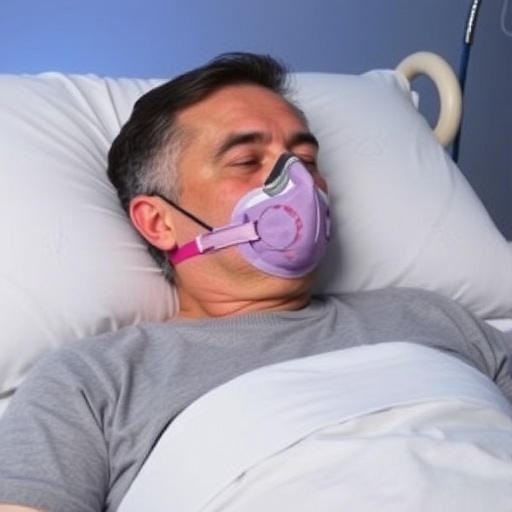
Obstructive sleep apnea, a disorder in which the upper airway repeatedly collapses during sleep, may be entering a new era of treatment. A randomized clinical trial of a proximal hypoglossal nerve stimulation system suggests that electrical activation of the nerve closer to its origin can improve breathing, oxygenation, daytime alertness and sleep-related quality of life in people who cannot tolerate positive airway pressure. The findings, presented in the OSPREY trial and discussed in a new article in ENT Discovery, could significantly widen access to implantable neurostimulation for patients who have historically been excluded from existing devices.
Obstructive sleep apnea affects millions of adults worldwide and is associated with repeated interruptions in breathing, intermittent drops in blood oxygen, fragmented sleep and increased respiratory effort. Over time, untreated disease can contribute to excessive daytime sleepiness, impaired concentration, hypertension, cardiovascular disease and metabolic complications. Positive airway pressure remains the standard first-line therapy because it can mechanically splint the airway open throughout the night. Yet many patients struggle with masks, pressure discomfort, air leakage, nasal symptoms, claustrophobia or the inconvenience of using the equipment every night. Even when the treatment is medically effective, poor long-term adherence can sharply reduce its practical benefit.
Implantable hypoglossal nerve stimulation has offered an alternative for carefully selected patients. Conventional distal stimulation systems generally target a branch of the hypoglossal nerve that activates the genioglossus, the principal tongue-protruding muscle. When stimulated during sleep, the genioglossus moves the tongue forward and helps prevent it from falling backward against the throat. This approach can be highly effective, but access has often depended on narrow eligibility criteria. Patients may be required to undergo drug-induced sleep endoscopy, a procedure used to observe the airway during a sleep-like state, and those with complete concentric collapse of the pharynx may be excluded. Body mass index restrictions can further limit access, leaving a substantial group of patients without an implantable option.
The system examined in OSPREY uses a different anatomical strategy. Rather than stimulating a distal branch selectively, it delivers electrical impulses to the main hypoglossal nerve trunk through a multi-contact electrode array positioned more proximally. The hypoglossal nerve contains motor fibers that control several muscles involved in tongue and upper-airway movement. By engaging the nerve before its branches divide, proximal stimulation is intended to activate both tongue protrusors and retractors rather than focusing primarily on forward tongue movement. The result is a broader neuromuscular response that may increase tongue stiffness, reinforce the hyoid complex and support the lateral walls of the pharynx.
That distinction is important because obstructive sleep apnea is not caused by one uniform form of airway collapse. In some patients, the tongue is the dominant source of obstruction. In others, the soft palate, lateral pharyngeal walls, tongue base and structures surrounding the hyoid bone may narrow the airway together. A therapy that activates multiple muscle groups could provide stabilization across a wider range of collapse patterns. Rather than functioning only as a mechanical “pull-forward” maneuver, proximal stimulation is designed to create a more globally supported upper airway by increasing neuromuscular tone and reducing the tendency of the throat to collapse when negative inspiratory pressure develops during sleep.
The OSPREY trial enrolled adults with moderate-to-severe obstructive sleep apnea who were unable to tolerate positive airway pressure. Conducted across 23 centers in the United States, the study included participants with a mean baseline apnea-hypopnea index of approximately 36 events per hour, indicating frequent disruptions of breathing during sleep. The trial used a body mass index cutoff of 35 kilograms per square meter, a threshold that allowed participation by a broader group than some earlier neurostimulation studies. Notably, the investigators did not require drug-induced sleep endoscopy to screen participants and did not exclude individuals with complete concentric pharyngeal collapse, two design features that could expand the population considered eligible for implantation.
Participants were randomized in a 2:1 ratio to receive either active stimulation beginning one month after implantation or delayed activation that served as a control condition. The primary assessment occurred at seven months, allowing investigators to compare outcomes in people receiving active neurostimulation with those who had undergone implantation but had not yet begun therapy. More than half of the actively treated participants achieved a clinically meaningful response based on the apnea-hypopnea index, the standard measure of the number of apneas and hypopneas occurring per hour of sleep. Improvements were also reported in oxygen desaturation, nocturnal hypoxemia, respiratory arousal frequency, daytime sleepiness and sleep-related quality of life.
The trial’s delayed-activation design was intended to help distinguish the effect of stimulation from the effects of surgery, patient expectations or the natural variability of sleep apnea. Participants in the control group crossed over to active treatment after month seven. By month 13, these patients showed comparable improvements after stimulation was activated, supporting the conclusion that the clinical gains were linked to the neurostimulation itself rather than simply to implantation or participation in a clinical study. This crossover evidence is particularly relevant in sleep medicine, where night-to-night changes in sleep position, alcohol exposure, nasal congestion and sleep duration can influence apnea severity.
The device was implanted through an outpatient procedure and showed a favorable safety profile during 13 months of follow-up, according to the trial report. The system has now received U.S. regulatory approval, marking a potentially important expansion of the neurostimulation landscape for obstructive sleep apnea. The findings do not mean that every patient with sleep apnea will be a candidate for proximal stimulation, nor do they replace positive airway pressure as the established first-line treatment. Instead, they suggest that the anatomical and physiological boundaries used to select patients for airway neuromodulation may be broader than previously assumed. Longer follow-up will be needed to determine the durability of treatment, battery performance, the stability of therapeutic responses and outcomes in routine clinical practice.
The OSPREY results also point toward a future in which stimulation is tailored to the mechanics of each patient’s airway. Multi-contact electrodes could eventually permit clinicians to adjust which portions of the hypoglossal nerve are activated, how strongly they are stimulated and when pulses are delivered during the breathing cycle. Combining nerve stimulation with detailed airway imaging, sleep physiology and individualized programming may allow treatment to target several collapse sites simultaneously. For millions of people who remain undertreated because conventional therapy is intolerable or because existing implants impose restrictive selection rules, the study offers a striking possibility: the next generation of sleep-apnea therapy may not simply push the tongue forward, but reinforce the entire upper airway as an integrated neuromuscular system.
News Publication Date: 10-Jun-2026
Web References: https://doi.org/10.15302/ENTD.2026.060003
References: OSPREY randomized trial, published in Annals of Internal Medicine in April 2026; article published in ENT Discovery.
Cite Scienmag News
Drew Townsend. (August 21, 2026). OSPREY trial broadens neurostimulation treatment options for obstructive sleep apnea. Scienmag. https://scienmag.com/osprey-trial-broadens-neurostimulation-treatment-options-for-obstructive-sleep-apnea/
Drew Townsend. "OSPREY trial broadens neurostimulation treatment options for obstructive sleep apnea." Scienmag, 21 August 2026, https://scienmag.com/osprey-trial-broadens-neurostimulation-treatment-options-for-obstructive-sleep-apnea/. Accessed 3 September 2026.
Drew Townsend. "OSPREY trial broadens neurostimulation treatment options for obstructive sleep apnea." Scienmag. August 21, 2026. https://scienmag.com/osprey-trial-broadens-neurostimulation-treatment-options-for-obstructive-sleep-apnea/


