


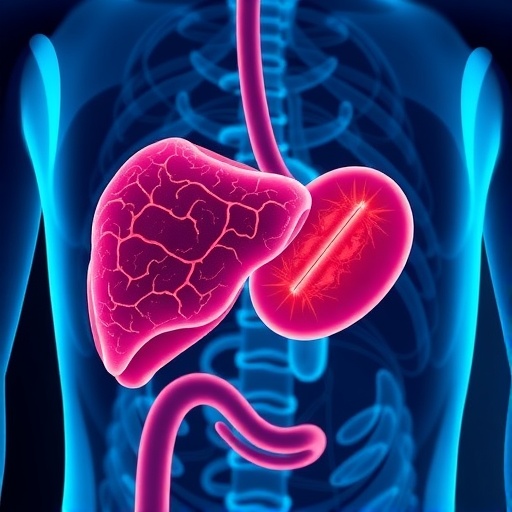
Hepatocellular carcinoma (HCC), a primary malignancy of the liver, poses significant challenges in clinical management, particularly within the intermediate and advanced stages of the disease. As this aggressive cancer type continues to rise in prevalence, driven by factors such as viral hepatitis infections and the growing rates of non-alcoholic fatty liver disease, the urgency for innovative treatment strategies has never been more critical. In a groundbreaking study led by prominent researchers—Lu, Li, and Pan—an in-depth network meta-analysis has been conducted to explore the optimal sequencing of locoregional and systemic therapies for patients battling these advanced stages of HCC. The findings promise to reshape therapeutic approaches and improve survival outcomes.
In the comprehensive analysis published in the “Journal of Cancer Research and Clinical Oncology,” the authors meticulously scrutinized various treatment methodologies, comparing the efficacy of locoregional therapies—like radiofrequency ablation and transarterial chemoembolization—with systemic therapies, including targeted agents and immunotherapies. The objective was clear: to enhance the understanding of how the timing and order of these therapies could maximize patient outcomes. This systematic evaluation synthesized data from several studies, allowing the authors to provide robust insights based on a larger clinical picture.
One of the most significant aspects of this analysis was the detailed exploration of local versus systemic interventions. Locoregional therapies have long been a staple in the treatment arsenal for HCC due to their ability to deliver targeted action with minimal systemic exposure. However, as the research suggests, combining these with systemic therapies like sorafenib or lenvatinib might yield synergistic effects, potentially enhancing overall survival rates. The goal was not simply to identify which therapy worked best but to discern how the timing of each intervention could be optimized.
Furthermore, the authors dove into the intricacies of diagnosing HCC, highlighting how early detection can be incredibly beneficial. Increased knowledge about biomarkers and imaging techniques has prompted discussions on adopting personalized treatment regimens tailored to the patient’s disease stage and overall health. The emphasis on individualized medicine is paramount, as what works for one patient may be less effective for another, underscoring the necessity for precision in HCC management.
The study also showcased the evolving landscape of therapeutic options available for HCC. With advancements in research, new systemic therapies have emerged, offering hope where traditional options may have fallen short. Immunotherapy, in particular, has garnered considerable attention for its ability to harness the body’s immune system to fight cancer cells, and the network meta-analysis evaluated how these newer treatments could be sequenced with traditional interventions.
Interestingly, the researchers faced challenges related to the variability in treatment protocols across different clinical trials. The heterogeneity of patient populations and therapeutic strategies necessitated careful consideration in drawing conclusions. However, by employing advanced statistical techniques, they successfully integrated heterogeneous data, providing stronger, more generalized recommendations for treatment sequences that could apply broadly across diverse patient demographics.
The implications of this study are profound, extending beyond the individual patient to influence healthcare systems at large. Optimizing treatment sequences not only represents a potential pathway to improved survival rates but also plays a role in cost management within healthcare. By streamlining therapies, healthcare providers can reduce unnecessary interventions that could burden patients financially and emotionally.
Equally as important as treatment sequencing is the conversation surrounding patient quality of life. The meta-analysis took into consideration factors beyond mere survival rates, delving into the side effects and overall quality of life that patients experience during treatment. This holistic approach reflects a growing trend within oncology to treat a patient as a whole rather than focusing solely on tumor burden.
Furthermore, as the clinical landscape becomes increasingly competitive with novel agents and treatment strategies entering the market, this meta-analysis provides a precedent for future research. It sets the stage for ongoing investigations into how these therapies can be continuously optimized. The authors advocate for prospective studies that could validate their findings, emphasizing the continual evolution of clinical practice as new data become available.
In summary, the findings from Lu and colleagues represent a significant advancement in the quest to conquer HCC. As the analysis outlines, an informed approach to targeting therapy combinations, timing, and patient-specific considerations could dramatically affect treatment trajectories. The researchers advocate for ongoing collaboration across the medical community to share insights and refine approaches, ensuring that patients receive the best possible care tailored to their unique circumstances.
In conclusion, hepatocellular carcinoma management is at a pivotal moment, and through studies like this one, the path towards more effective, individualized treatment strategies is becoming clearer. As we stand on the brink of what could be a significant paradigm shift in cancer care, all eyes will be on how these findings are translated into practical applications that could benefit patients worldwide.
Lu, W., Li, Z., Pan, C. et al. Optimal sequencing of locoregional and systemic therapies for intermediate and advanced hepatocellular carcinoma: a network meta-analysis.
J Cancer Res Clin Oncol 151, 196 (2025). https://doi.org/10.1007/s00432-025-06233-7
Cite Scienmag News
Nathaniel Bowman. (August 30, 2025). Optimizing Therapies for Intermediate to Advanced Liver Cancer. Scienmag. https://scienmag.com/optimizing-therapies-for-intermediate-to-advanced-liver-cancer/
Nathaniel Bowman. "Optimizing Therapies for Intermediate to Advanced Liver Cancer." Scienmag, 30 August 2025, https://scienmag.com/optimizing-therapies-for-intermediate-to-advanced-liver-cancer/. Accessed 4 September 2026.
Nathaniel Bowman. "Optimizing Therapies for Intermediate to Advanced Liver Cancer." Scienmag. August 30, 2025. https://scienmag.com/optimizing-therapies-for-intermediate-to-advanced-liver-cancer/


