

Sunday, July 26, 2026
Science
No Result
View All Result
  • Login
  • HOME
  • SCIENCE NEWS
  • CONTACT US
  • HOME
  • SCIENCE NEWS
  • CONTACT US
No Result
View All Result
Scienmag
No Result
View All Result
Home Science News Psychology & Psychiatry

Optimizing Stimulation Networks in Substantia Nigra for Schizophrenia Hallucinations

July 26, 2026
in Psychology & Psychiatry
Reading Time: 2 mins read
0
Optimizing Stimulation Networks in Substantia Nigra for Schizophrenia Hallucinations

Optimizing Stimulation Networks in Substantia Nigra for Schizophrenia Hallucinations

65
SHARES
587
VIEWS
Share on FacebookShare on Twitter
ADVERTISEMENT

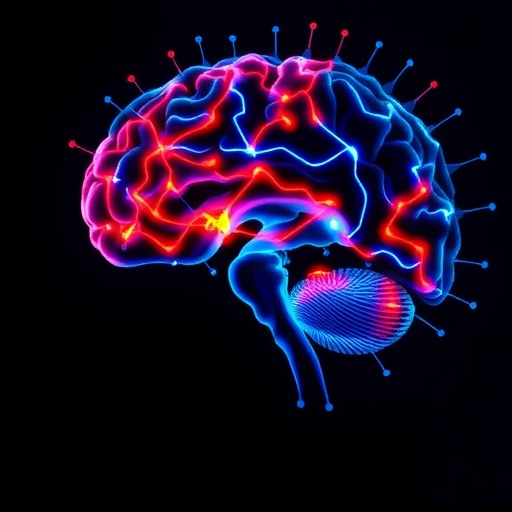
A new study shines a spotlight on how targeted deep brain stimulation (DBS) could help treat one of schizophrenia’s most distressing symptoms: auditory verbal hallucinations. In a paper published in Translational Psychiatry, researchers report that stimulation is not just about turning on a device—it is about where and which connected brain networks are engaged.

The team focused on the substantia nigra pars reticulata (SNr), a midbrain structure involved in motor control, reinforcement learning, and complex circuit dynamics. While DBS has been explored for psychiatric conditions, pinpointing effective SNr targets and mapping the relevant neural pathways has remained a major challenge.

Using a combination of clinical outcomes and stimulation-related analysis, the authors examined stimulation sites inside and around the SNr and evaluated how different network patterns correlated with symptom improvement. Their approach emphasizes that hallucination-related circuitry likely depends on distributed pathways rather than a single anatomical point.

The findings suggest that specific SNr stimulation locations can produce more favorable results than others, implying a topographic organization within the target region for therapeutic effects. In other words, subtle shifts in electrode placement may substantially change the functional networks that receive stimulation.

Beyond local effects, the researchers evaluated network-level connectivity, identifying circuit patterns that appear linked to reduced hallucination severity. This network perspective supports the idea that auditory verbal hallucinations emerge from abnormal communication across cortical and subcortical systems—and that DBS may work by rebalancing those interactions.

Importantly, the study provides practical guidance for DBS programming and future trial design. By highlighting both effective stimulation zones and their network signatures, the work could help clinicians move from broadly selected targets to more individualized, mechanism-informed stimulation strategies.

For patients, this direction offers hope that neuromodulation could become more precise and potentially more effective. For the field, it provides a framework for translating circuit science into refined therapeutic interventions.

With DBS continuing to expand beyond traditional neurological indications, these results strengthen the growing view that psychiatric neuromodulation should be optimized at both anatomical and network scales—turning “effective stimulation” into a measurable, reproducible objective.

Subject of Research: Deep brain stimulation for auditory verbal hallucinations in schizophrenia (substantia nigra pars reticulata).

Article Title: Effective stimulation sites and networks for substantia nigra pars reticulata deep brain stimulation for auditory verbal hallucinations in schizophrenia.

Article References: Kim, M.J., Butala, A., Salimpour, Y. et al. Translational Psychiatry (2026). https://doi.org/10.1038/s41398-026-04298-7

Image Credits: AI Generated

DOI: https://doi.org/10.1038/s41398-026-04298-7

Tags: brain network connectivity in schizophreniacircuit-based treatment approaches for psychosiscircuit-level analysis in psychiatric neuromodulationdeep brain stimulation for psychiatric disordersfunctional brain networks in hallucination managementneural network modulation for symptom reductionneural pathways involved in hallucinationsoptimizing electrode placement for DBSSchizophrenia auditory hallucinationssubstantia nigra pars reticulata neural circuitrytargeted neuromodulation in mental healthtopographic organization of stimulation sites
Share26Tweet16
Previous Post

Manganese reactive species and enzymes work together to fuel litter hotspots

Next Post

Mass Spectrometry Imaging Tracks Different Starting Steps of Benzalkonium Degradation

Related Posts

Early Parenting Shapes Neural Reward Responses From Childhood to Adolescence
Psychology & Psychiatry

Early Parenting Shapes Neural Reward Responses From Childhood to Adolescence

July 26, 2026
How Emotional Learning Biases Shape Everyday Food Choices
Psychology & Psychiatry

How Emotional Learning Biases Shape Everyday Food Choices

July 26, 2026
Electroconvulsive Therapy Rewires Brain Structural and Functional Networks in Depression
Psychology & Psychiatry

Electroconvulsive Therapy Rewires Brain Structural and Functional Networks in Depression

July 26, 2026
Children tailor curiosity to individuals when objects seem useful or special
Psychology & Psychiatry

Children tailor curiosity to individuals when objects seem useful or special

July 26, 2026
Coordinated Vascular and Glial Cell Response in Pig Sepsis Model
Psychology & Psychiatry

Coordinated Vascular and Glial Cell Response in Pig Sepsis Model

July 26, 2026
Rannasangpei crocin-1 improves valproate-induced autism-like behaviors by reducing oxidative stress
Psychology & Psychiatry

Rannasangpei crocin-1 improves valproate-induced autism-like behaviors by reducing oxidative stress

July 19, 2026
Next Post
Mass Spectrometry Imaging Tracks Different Starting Steps of Benzalkonium Degradation

Mass Spectrometry Imaging Tracks Different Starting Steps of Benzalkonium Degradation

  • Mothers who receive childcare support from maternal grandparents show more

    Mothers who receive childcare support from maternal grandparents show more parental warmth, finds NTU Singapore study

    27656 shares
    Share 11059 Tweet 6912
  • University of Seville Breaks 120-Year-Old Mystery, Revises a Key Einstein Concept

    1061 shares
    Share 424 Tweet 265
  • Bee body mass, pathogens and local climate influence heat tolerance

    682 shares
    Share 273 Tweet 171
  • Researchers record first-ever images and data of a shark experiencing a boat strike

    546 shares
    Share 218 Tweet 137
  • Groundbreaking Clinical Trial Reveals Lubiprostone Enhances Kidney Function

    531 shares
    Share 212 Tweet 133
Science

Embark on a thrilling journey of discovery with Scienmag.com—your ultimate source for cutting-edge breakthroughs. Immerse yourself in a world where curiosity knows no limits and tomorrow’s possibilities become today’s reality!

RECENT NEWS

  • Continental fern savannah wildfires driven by end-Triassic greenhouse warming
  • Scientists uncover molecular mechanisms of Pirsonia diadema infection in diatoms
  • Cerebral Venous Flow Controls Brain Pressure and Clearance Through Meningeal Lymphatics
  • Metasurface Platform Enables Independent, Concurrent Emissivity Control in MWIR and LWIR

Categories

  • Agriculture
  • Anthropology
  • Archaeology
  • Athmospheric
  • Biology
  • Biotechnology
  • Blog
  • Bussines
  • Cancer
  • Chemistry
  • Climate
  • Earth Science
  • Editorial Policy
  • Marine
  • Mathematics
  • Medicine
  • Pediatry
  • Policy
  • Psychology & Psychiatry
  • Science Education
  • Social Science
  • Space
  • Technology and Engineering

Subscribe to Blog via Email

Enter your email address to subscribe to this blog and receive notifications of new posts by email.

Join 5,146 other subscribers

© 2025 Scienmag - Science Magazine

Welcome Back!

Login to your account below

Forgotten Password?

Retrieve your password

Please enter your username or email address to reset your password.

Log In
No Result
View All Result
  • HOME
  • SCIENCE NEWS
  • CONTACT US

© 2025 Scienmag - Science Magazine

Discover more from Science

Subscribe now to keep reading and get access to the full archive.

Continue reading
