

Sunday, August 16, 2026
Science
No Result
View All Result
  • Login
  • HOME
  • SCIENCE NEWS
  • CONTACT US
  • HOME
  • SCIENCE NEWS
  • CONTACT US
No Result
View All Result
Scienmag
No Result
View All Result
Home Science News Technology and Engineering

Mass Spectrometry Imaging Tracks Different Starting Steps of Benzalkonium Degradation

July 26, 2026
in Technology and Engineering
Reading Time: 2 mins read
0
Mass Spectrometry Imaging Tracks Different Starting Steps of Benzalkonium Degradation

Mass Spectrometry Imaging Tracks Different Starting Steps of Benzalkonium Degradation

65
SHARES
587
VIEWS
Share on FacebookShare on Twitter
ADVERTISEMENT

A new study has used high-resolution mass spectrometry imaging to map how benzalkonium—an antiseptic and common disinfectant—begins to break down inside wastewater biofilms. The work, published in Communications Engineering, reveals that biotransformation does not proceed uniformly across microbial communities. Instead, the earliest steps are spatially partitioned, indicating that microenvironments within biofilms strongly steer chemical fate.

Biofilms are complex, layered microbial structures that trap pollutants and create chemical gradients. In wastewater systems, those gradients can include oxygen availability, nutrient concentration, and surface-bound versus oxygen-sheltered zones. Because benzalkonium is designed to disrupt living cells, understanding exactly where and how microbes start transforming it is critical for predicting its persistence and downstream toxicity.

To visualize benzalkonium processing in situ, the researchers employed mass spectrometry imaging, a technique that couples chromatographic separation principles with pixel-by-pixel chemical detection. This approach allowed them to link changes in benzalkonium-related molecular features to specific regions within the biofilm matrix rather than relying only on bulk measurements.

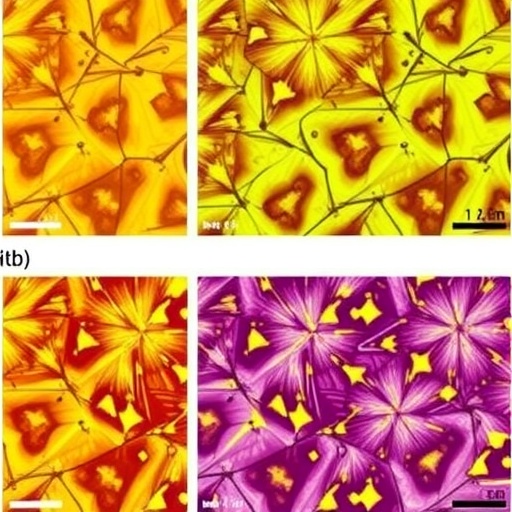
The imaging results show that the initial transformation steps are “allocated” differently across the biofilm. Some zones display signatures consistent with early biotransformation pathways, while other areas retain higher levels of the parent compound. This pattern suggests that enzymatic activity and access to reactive intermediates vary with local conditions.

The team interprets these observations as evidence that different subpopulations or metabolic states within the biofilm contribute to benzalkonium breakdown. Microbes living near nutrient-rich interfaces may start the process differently than those embedded deeper in the structure, where diffusion limits and oxygen constraints alter metabolic chemistry.

A key implication is that pollutant fate models based on well-mixed assumptions may miss important spatial bottlenecks. If benzalkonium transformation begins only in particular biofilm microdomains, then removal efficiency and intermediate formation can change over time as the biofilm architecture evolves.

The study also highlights how contact between a quaternary ammonium biocide and microbial surfaces can shape uptake and transformation. By tracking where chemical changes first appear, researchers can better identify which biological niches are responsible for initiating degradation.

Overall, the findings provide a viral-style snapshot of how “hidden geography” inside wastewater biofilms governs contamination chemistry. As imaging methods become more sensitive, similar strategies could map the early processing of other disinfectants and antimicrobial compounds in engineered ecosystems.

Subject of Research: Mass spectrometry imaging of benzalkonium biotransformation in wastewater biofilms

Article Title: Mass spectrometry imaging reveals different allocation of the starting steps of benzalkonium biotransformation in wastewater biofilms.

Article References: Qiu, M., Larsson, Y., McKenzie, J. et al. Communications Engineering (2026). https://doi.org/10.1038/s44172-026-00731-3

Image Credits: AI Generated

DOI: https://doi.org/10.1038/s44172-026-00731-3

Tags: biodegradation pathways of disinfectantschemical gradients in biofilmsenzyme activity localization in biofilmsin situ visualization of pollutant breakdownMass spectrometry imaging of benzalkonium degradation in wastewater biofilmsmass spectrometry imaging techniques in environmental sciencemicrobial community heterogeneitymicroenvironment influence on microbial pollutant processingpollutant fate and transport in microbial communitiesspatial distribution of microbial biotransformationspatially resolved chemical analysis in biofilmswastewater disinfection byproduct formation
Share26Tweet16
Previous Post

Optimizing Stimulation Networks in Substantia Nigra for Schizophrenia Hallucinations

Next Post

Early Parenting Shapes Neural Reward Responses From Childhood to Adolescence

Related Posts

KAIST develops semiconductor neuron that harnesses noise to selectively process signals
Technology and Engineering

KAIST develops semiconductor neuron that harnesses noise to selectively process signals

August 16, 2026
Imagining natural and extra robotic thumbs together strengthens kinesthetic sensorimotor networks
Technology and Engineering

Imagining natural and extra robotic thumbs together strengthens kinesthetic sensorimotor networks

August 15, 2026
Epoxy-Engineered PZT Nanocomposite Sensor Array Enables Noise-Resistant Health and Swallowing Monitoring
Technology and Engineering

Epoxy-Engineered PZT Nanocomposite Sensor Array Enables Noise-Resistant Health and Swallowing Monitoring

August 15, 2026
Scientists Increasingly Rely on Black-Box Tools They Neither Control Nor Understand
Technology and Engineering

Scientists Increasingly Rely on Black-Box Tools They Neither Control Nor Understand

August 15, 2026
NIH Pediatric Research Funding Trends and Structural Patterns, 2015–2024
Technology and Engineering

NIH Pediatric Research Funding Trends and Structural Patterns, 2015–2024

August 15, 2026
Anxiety and Mood Disorders Across Lifespan in Very Preterm and Term-Born Individuals
Technology and Engineering

Anxiety and Mood Disorders Across Lifespan in Very Preterm and Term-Born Individuals

August 15, 2026
Next Post
Early Parenting Shapes Neural Reward Responses From Childhood to Adolescence

Early Parenting Shapes Neural Reward Responses From Childhood to Adolescence

  • Mothers who receive childcare support from maternal grandparents show more

    Mothers who receive childcare support from maternal grandparents show more parental warmth, finds NTU Singapore study

    27656 shares
    Share 11059 Tweet 6912
  • University of Seville Breaks 120-Year-Old Mystery, Revises a Key Einstein Concept

    1061 shares
    Share 424 Tweet 265
  • Bee body mass, pathogens and local climate influence heat tolerance

    682 shares
    Share 273 Tweet 171
  • Researchers record first-ever images and data of a shark experiencing a boat strike

    546 shares
    Share 218 Tweet 137
  • Groundbreaking Clinical Trial Reveals Lubiprostone Enhances Kidney Function

    531 shares
    Share 212 Tweet 133
Science

Embark on a thrilling journey of discovery with Scienmag.com—your ultimate source for cutting-edge breakthroughs. Immerse yourself in a world where curiosity knows no limits and tomorrow’s possibilities become today’s reality!

RECENT NEWS

  • Tropical Forest Biomass Responds to Diverse Climate Controls
  • Survey-Based Model Reveals How Preparedness Constraints Shape Cholera Transmission in Sudan
  • Waste-Based Retrofits Improve Thermal Performance in North Sinai Social Housing
  • KAIST develops semiconductor neuron that harnesses noise to selectively process signals

Categories

  • Agriculture
  • Anthropology
  • Archaeology
  • Athmospheric
  • Biology
  • Biotechnology
  • Blog
  • Bussines
  • Cancer
  • Chemistry
  • Climate
  • Earth Science
  • Editorial Policy
  • Marine
  • Mathematics
  • Medicine
  • Pediatry
  • Policy
  • Psychology & Psychiatry
  • Science Education
  • Social Science
  • Space
  • Technology and Engineering

Subscribe to Blog via Email

Success! An email was just sent to confirm your subscription. Please find the email now and click 'Confirm Follow' to start subscribing.

Join 5,149 other subscribers

© 2025 Scienmag - Science Magazine

Welcome Back!

Login to your account below

Forgotten Password?

Retrieve your password

Please enter your username or email address to reset your password.

Log In
No Result
View All Result
  • HOME
  • SCIENCE NEWS
  • CONTACT US

© 2025 Scienmag - Science Magazine
