


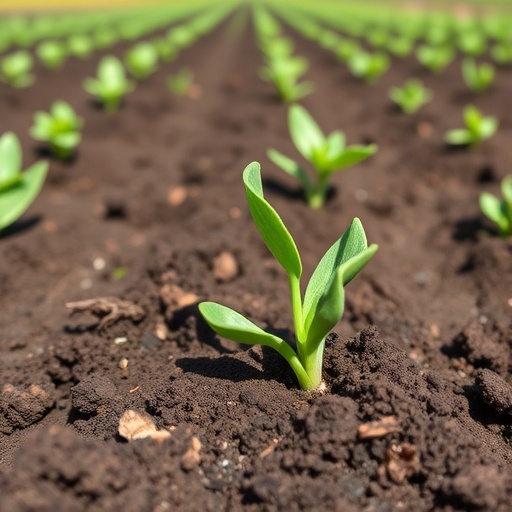
In the dynamic and complex realm of soil ecosystems, the soil microbiome emerges as a foundational pillar supporting plant health and agricultural productivity. Recent research led by experts from the University of Illinois Urbana-Champaign and Cornell University has unveiled critical insights into how sustainable soil management practices can enhance crop defense mechanisms via modulation of soil microbiome functions. These findings not only advance our scientific understanding but also lay the groundwork for transforming farming approaches to achieve ecological resilience and pest suppression naturally.
The study meticulously integrated socio-ecological modeling with cutting-edge microbiological analysis to explore the intricate interaction between farmer beliefs, their soil management choices, and the resultant effects on the microbiome’s functional capacity. By surveying 85 organic farmers across New York State and analyzing soil samples in the laboratory, the researchers bridged the gap between theoretical knowledge and pragmatic, on-the-ground practices, offering a comprehensive view of how human perceptions can ultimately influence ecosystem health.
Laboratory DNA sequencing of soil samples provided a detailed catalog of microbial communities thriving under different management regimes. This analysis enabled the team to correlate specific agricultural tactics with the prevalence and diversity of beneficial soil microbes. Importantly, the study extended beyond mere microbial profiling; functional assays using microbial extracts blended with potting soil permitted experimental assessment of plant defenses against insect pests, specifically aphids, under controlled conditions.
Field experiments often grapple with numerous uncontrolled variables that obscure direct cause-effect relationships. By transitioning parts of their study into a laboratory setting, researchers isolated the influence of soil microbiomes on plant health outcomes. This methodological innovation sharpened the precision in attributing pest resistance to shifts in microbial community structure and function, fostering a clearer understanding of microbiome-mediated pathways.
Three distinct agricultural practices were identified as instrumental in cultivating soil microbiomes that bolster plant defenses. First, no-tillage farming or the use of permanent raised beds maintained soil integrity and microbial habitat continuity. This approach minimizes soil disruption, thereby preserving microbial niches critical for symbiotic plant relationships. Second, the integration of cover crops comprising winter rye, sorghum, millet, and Sudan grass introduced varied plant root exudates and organic matter that stimulate microbial diversity and activity. Third, targeted irrigation strategies involving drip or hand watering, in contrast to broadcast methods, moderated soil moisture in ways conducive to favorable microbiome dynamics.
Conversely, the study showed that insecticide and pesticide applications detrimentally affected soil microbial communities and, by extension, undermined natural plant defenses. Repeated chemical disturbances over three years reduced the soil microbiome’s pest-suppressive potential, underscoring the ecological cost of such interventions. Compost amendments exhibited nuanced effects dependent upon the initial microbial baseline, suggesting that organic matter applications may require careful tailoring to existing soil conditions for optimal microbiome enhancement.
A key feature of this research lies in its interdisciplinary approach. By integrating economic analysis with microbiological and ecological data, the study shed light on the motivations guiding farmers’ adoption of certain practices. Farmer beliefs about soil microbiome benefits emerged as a stronger predictor of management choices than purely economic incentives. This highlights the significance of knowledge and perception in sustainable agriculture transitions and signals pathways to more effective farmer outreach and education.
Further extending this work, the team is investigating how providing farmers with personalized microbiome data and offering cost-share financial incentives influence adoption rates of microbiome-supportive practices. Programs like those under USDA’s Natural Resources Conservation Service currently subsidize techniques such as no-till farming and cover cropping, and understanding behavioral drivers will enhance the efficacy and reach of such initiatives, thereby promoting greater ecological stewardship on agricultural lands.
While the prospect of directly linking soil microbial community composition to individualized management recommendations remains an aspirational goal, technological and scientific challenges persist. Rapid, in-field microbiome assessment tools like biosensors are under development but not yet widely deployed. Moreover, the extensive complexity and functional redundancy within microbial ecosystems demand sophisticated interpretative frameworks to discern actionable insights for farmers.
Importantly, pest suppression represents only one facet of the soil microbiome’s multifarious ecological roles. Many other functions—nutrient cycling, disease suppression, soil structure maintenance, and resilience to environmental perturbations—are still underexplored. Preserving microbial diversity is essential not only for current agricultural challenges but also to safeguard ecosystem adaptability amid future uncertainties shaped by climate change and evolving pest pressures.
This research embodies a transformative step in coupling human behavioral science with microbial ecology to promote sustainable agriculture. By demonstrating the tangible connections between farmer cognition, soil management, and microbiome-mediated crop protection, it illuminates new avenues for innovation in agricultural policy and practice. The synergy between economic incentives and education offers a compelling blueprint to foster widespread adoption of ecologically sound farming that harmonizes productivity with environmental integrity.
The published findings, available in npj Sustainable Agriculture, advance a paradigm in which soil health is understood as an integrated socio-ecological system. Continued interdisciplinary collaboration and technological development will be crucial to unlock the vast potential of microbiome-informed agriculture, ultimately enabling farmers to harness natural biological resources for sustainable pest management and enhanced crop resilience.
News Publication Date: 22-Dec-2025
Web References:
- DOI: https://doi.org/10.1038/s44264-025-00109-6
- University of Illinois Urbana-Champaign: https://illinois.edu/
- Cornell University: https://www.cornell.edu/
- USDA Natural Resources Conservation Service: https://www.nrcs.usda.gov/
References: Bloom, E., Casteel, C., Atallah, S., et al. (2025). Sustainable soil management practices are associated with increases in crop defense through soil microbiome changes. npj Sustainable Agriculture. DOI: 10.1038/s44264-025-00109-6
Cite Scienmag News
Morgan Morrow. (February 11, 2026). Optimizing Management Practices Boosts Soil Microbiome Functions to Strengthen Plant Defense. Scienmag. https://scienmag.com/optimizing-management-practices-boosts-soil-microbiome-functions-to-strengthen-plant-defense/
Morgan Morrow. "Optimizing Management Practices Boosts Soil Microbiome Functions to Strengthen Plant Defense." Scienmag, 11 February 2026, https://scienmag.com/optimizing-management-practices-boosts-soil-microbiome-functions-to-strengthen-plant-defense/. Accessed 3 September 2026.
Morgan Morrow. "Optimizing Management Practices Boosts Soil Microbiome Functions to Strengthen Plant Defense." Scienmag. February 11, 2026. https://scienmag.com/optimizing-management-practices-boosts-soil-microbiome-functions-to-strengthen-plant-defense/


