


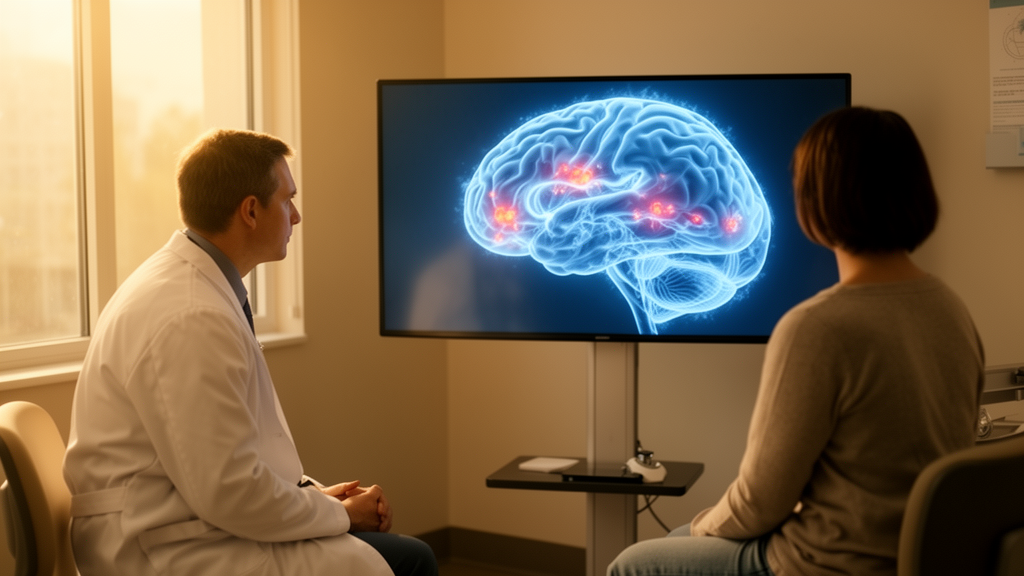
Schizophrenia affects roughly one percent of the global population, and the World Health Organization estimates that about 20 million people live with the disorder worldwide. Despite more than a century of research, diagnosis still rests on clinical interviews guided by the DSM-5 and ICD-11, with clinicians judging symptoms such as hallucinations, delusions, avolition, and disorganized thinking largely by observation. There is no blood test, no scan, and no universally accepted biological marker that confirms the illness. That diagnostic subjectivity leaves room for bias, inconsistency, and misclassification, particularly in early-stage or atypical presentations, and it is precisely the gap that artificial intelligence has been recruited to fill. Now, a comprehensive systematic review published in Frontiers in Systems Biology maps the fast-moving field of explainable artificial intelligence, or XAI, and asks whether machines that can show their reasoning might finally earn psychiatry’s trust.
The review, which followed PRISMA 2020 guidelines and screened more than 3,300 records from six databases before including 330 studies, makes clear why the black-box problem matters so much in this field. Machine learning models can already predict diagnosis, treatment response, and relapse risk from structural and functional MRI, diffusion tensor imaging, EEG, speech, electronic health records, and genetic data. But deep neural networks that achieve high accuracy often cannot explain which features drove their decisions. In medicine, where an incorrect prediction can carry serious consequences and where regulatory frameworks such as the GDPR emphasize accountability and explainability, that opacity is a barrier to clinical adoption. XAI aims to bridge the gap between complex algorithms and human clinical reasoning by revealing influential features and decision pathways.
The technical toolkit is diverse. Model-specific techniques such as Grad-CAM generate class-specific heatmaps that highlight diagnostically important regions in medical images, with Grad-CAM++ improving localization when multiple pathological areas overlap. Model-agnostic approaches such as SHAP and LIME can explain nearly any machine learning model by quantifying the contribution of individual features, though at substantial computational cost. Layer-wise Relevance Propagation and Deep Taylor Decomposition trace predictions through layers of computation to produce detailed relevance maps, while counterfactual explanations show how small changes in input would flip a prediction, supporting a form of causal reasoning. Explanations can be global, describing model behavior across an entire dataset, or local, explaining why one particular patient was flagged as high risk. Newer directions combine XAI with self-supervised and federated learning to protect privacy, and with multimodal fusion frameworks that dynamically weight contributions from MRI, EEG, genomics, and clinical data.
In neuroimaging, the results are striking but nuanced. One deep learning model trained on grey matter volume features from 925 participants across nine international centers achieved an average AUC of 82 percent under leave-one-center-out validation, rising to 83 percent when white matter and cerebrospinal fluid features were added, with peak performance of 96 percent at the best-performing site after ComBat harmonization corrected for scanner differences. Crucially, SHAP analysis revealed that the model relied on biologically plausible regions, including the thalamus, pallidum, amygdala, hippocampus, and postcentral gyrus, findings consistent with the existing literature. Grey matter volume contributed most to classification, while the other structural measures added only marginal gains. Earlier studies reported similarly impressive numbers: a VGG16-based convolutional network with transfer learning reached 84.3 percent accuracy on fMRI data, and an ensemble framework called EMPaSchiz achieved 87 percent accuracy using resting-state fMRI from antipsychotic-naïve patients.
EEG offers a cheaper and more scalable alternative, capturing abnormal neural oscillations with millisecond temporal resolution. Traditional machine learning pipelines using wavelet decomposition, entropy measures, and connectivity features have achieved accuracies between roughly 80 and 99 percent, while deep architectures including CNNs, BiLSTM models, and graph convolutional networks have reported results above 95 percent. One study combining XGBoost, SVM, and AdaBoost with SHAP analysis reached 93 percent accuracy, with interpretable features including IQ, sex, and specific EEG wave patterns. But the review’s authors urge caution: some of the highest reported figures come from small, homogeneous datasets vulnerable to data leakage, and performance that looks implausibly perfect in cross-validation rarely survives contact with external cohorts. Meta-analytic estimates are more sobering, with pooled MRI-based classification showing sensitivity of about 79 percent and specificity of about 80 percent.
Some of the most original work moves beyond the brain scan entirely. In the Italian SPECTRA project, researchers are combining speech, emotion, and locomotion data to identify treatment-resistant schizophrenia, a condition affecting roughly 30 percent of patients that is often diagnosed too late for clozapine to be started promptly. Using multi-camera motion capture and a dual-transformer architecture to reconstruct three-dimensional skeletal movement, the team identified 16 quantifiable gait markers associated with the illness. A SHAP-based visualization renders the model’s reasoning as a color-coded matrix, with red regions marking body joints and video frames that push the prediction toward schizophrenia and blue regions marking those that pull against it, allowing clinicians to inspect exactly which movements the algorithm found telling. Features such as head posture, walking speed, arm sway, and step-length variability, drawn from prior clinical work, anchor the analysis in measurable behavior.
Language and handwriting offer another window. Formal thought disorder is a core feature of schizophrenia, and recent findings suggest that specific PANSS items such as conceptual disorganization and unusual thought content predict treatment resistance. A new 16-item screening instrument for schizophrenic features in writing, validated in 157 participants, produced markedly higher scores in patients than controls and reached 93 percent sensitivity and specificity at a cutoff of 2, with discriminant analysis classifying cases with roughly 90 percent accuracy. On the treatment side, researchers combined the Personalized Advantage Index with Bayesian Rule Lists, an XAI method that generates transparent if-then rules with explicit cutoffs. Applied to a randomized trial of paliperidone, the framework identified a treatment-indicated subgroup whose effect size reached a Cohen’s d of 1.51, far exceeding the 0.82 seen in the overall sample, while consistently naming disturbance of volition and uncooperativeness as key predictors.
Where might AI contribute most immediately? The review argues that continuous monitoring, rather than one-time diagnosis, is the field’s most realistic near-term value. Smartphone-based digital phenotyping has demonstrated that statistically significant behavioral anomalies can precede relapse, and a 2025 study using the CrossCheck dataset forecast mental states hours to days in advance from passive sensor data using XGBoost and LSTM models. Digital medicine systems have already shifted real outcomes: in a phase 3b mirror-image trial, aripiprazole tablets with ingestible sensors were associated with reduced psychiatric hospitalization and a 26.5 percentage-point improvement in medication coverage during the first three months. Yet the evidence is mixed elsewhere. The Actissist trial, a powered randomized study of a CBT-informed app for early psychosis, failed to beat digital symptom monitoring, a reminder that digital delivery alone does not guarantee clinical benefit.
The authors are unsparing about the field’s weaknesses. Risk-of-bias analysis of a representative subset found high overall risk in eight of thirteen studies, largely from overfitting and inadequate validation. Diagnostic models mostly separate patients from healthy controls, an easier problem than distinguishing schizophrenia from overlapping psychiatric syndromes. Regulatory space remains nearly empty: FDA materials note that more than 1,200 AI-enabled medical devices have been authorized, but none for mental health indications, and generative AI chatbots raise specific concerns that they may validate or amplify delusional content in vulnerable users. Patient perspectives on trust, privacy, and acceptance are almost entirely absent from the literature.
The review closes with a concrete roadmap. Within one to three years, the field needs standardized multicenter datasets and clinically meaningful explainability metrics such as explanation fidelity, stability, and actionability. Within three to five years, prospective studies should test workflow integration and clinician trust against reporting standards including CONSORT-AI and STARD-AI, while within a decade, diagnostic systems should demonstrate externally validated AUCs of at least 0.90, clinician agreement with explanations above 80 percent, a 15 to 20 percent improvement in relapse prediction, and measurable gains in patient-centered outcomes such as adherence and quality of life, all under the transparency and oversight requirements of the EU AI Act. The verdict on explainable AI in schizophrenia is clear-eyed: scientifically promising, particularly for multimodal prediction and continuous monitoring, but clinically immature. The next decade will be judged not by headline accuracy figures but by whether these transparent systems reduce relapse, improve functioning, and earn the trust of clinicians and patients alike, as an adjunct to expert psychiatric care rather than a replacement for it.
Subject of Research: Explainable artificial intelligence for transparent clinical decision-making in schizophrenia
Article Title: Explainable artificial intelligence (XAI) in schizophrenia: enhancing transparency in clinical decision-making
Article References: Srivastava, K., & Srivastava, R. (2026). Explainable artificial intelligence (XAI) in schizophrenia: enhancing transparency in clinical decision-making. Frontiers in Systems Biology, 6, Article 1898853. https://doi.org/10.3389/fsysb.2026.1898853
Image Credits: AI Generated
DOI: 10.3389/fsysb.2026.1898853
Keywords: explainable AI, schizophrenia, machine learning, SHAP, LIME, Grad-CAM, neuroimaging, EEG, digital phenotyping, precision psychiatry, treatment-resistant schizophrenia, clinical decision support
Cite Scienmag News
Glenn Wilkins. (October 17, 2026). Opening the Black Box: How Explainable AI Could Transform Schizophrenia Care. Scienmag. https://scienmag.com/opening-the-black-box-how-explainable-ai-could-transform-schizophrenia-care/
Glenn Wilkins. "Opening the Black Box: How Explainable AI Could Transform Schizophrenia Care." Scienmag, 17 October 2026, https://scienmag.com/opening-the-black-box-how-explainable-ai-could-transform-schizophrenia-care/. Accessed 17 October 2026.
Glenn Wilkins. "Opening the Black Box: How Explainable AI Could Transform Schizophrenia Care." Scienmag. October 17, 2026. https://scienmag.com/opening-the-black-box-how-explainable-ai-could-transform-schizophrenia-care/


