


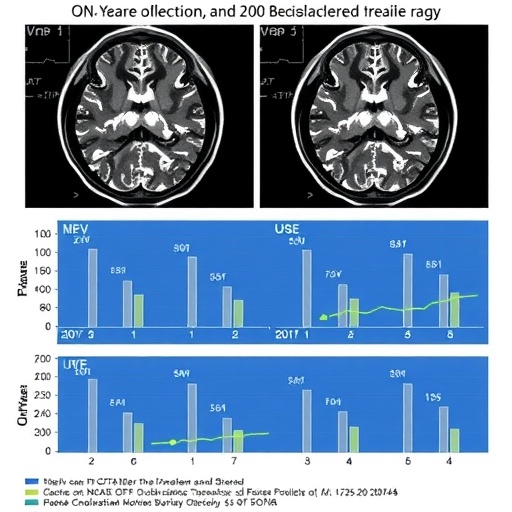
Acute ischemic stroke has traditionally been treated with caution when brain imaging shows a large established infarct, a condition commonly described as a “large-core” stroke. In these patients, much of the tissue supplied by a blocked artery may already be irreversibly injured by the time they reach medical care. A randomized clinical trial reported in JAMA is examining whether mechanically removing the clot from the brain’s circulation can still provide meaningful benefits for these patients, and whether those benefits remain evident one year after the stroke.
The study compares two treatment strategies: intra-arterial thrombectomy and medical management. Thrombectomy is an endovascular procedure in which physicians guide a catheter through the arteries, usually from the groin or wrist, toward the blocked vessel in the brain. A stent retriever, suction catheter, or combination of devices is then used to capture and remove the clot, with the goal of restoring blood flow. Medical management may include treatments such as intravenous thrombolysis when eligible, blood-pressure control, management of brain swelling, prevention of complications, and intensive neurological care.
The central scientific question is whether reperfusion remains useful after a large volume of brain tissue has already undergone infarction. Stroke severity is determined not only by the location of the arterial blockage but also by the amount of tissue that has been damaged. Imaging techniques such as computed tomography, CT angiography, and perfusion imaging can estimate the infarct core and identify the occluded artery. Historically, patients with extensive core injury were frequently excluded from thrombectomy trials because clinicians feared that restoring blood flow could trigger hemorrhagic transformation or worsen swelling in already damaged tissue.
That treatment paradigm has been challenged by newer evidence showing that some patients with large infarct cores may retain enough viable tissue, functional reserve, or strategically important brain regions to benefit from reperfusion. The JAMA trial extends that question beyond the immediate hospitalization and early recovery period by examining safety and efficacy outcomes at one year. Long-term follow-up is particularly important because early neurological improvement does not always translate into sustained independence, while complications such as recurrent stroke, disability, seizures, institutionalization, or delayed medical problems can influence the ultimate value of an intervention.
The trial’s randomized design is intended to reduce the influence of factors that can distort comparisons between treatment groups. In observational studies, patients who receive thrombectomy may differ systematically from those treated without the procedure: they may arrive earlier, have access to specialized stroke centers, possess fewer medical complications, or be considered more likely to recover. Randomization distributes both known and unknown prognostic factors across the groups, allowing investigators to estimate the effect of the treatment strategy more reliably. The one-year analysis therefore offers a broader assessment than a short-term measure based only on hospital discharge or 90-day disability.
For patients and families, efficacy may be reflected in functional outcomes, including the ability to walk, communicate, perform daily activities, and live independently. Investigators may also evaluate ordinal shifts across disability scales rather than focusing only on whether a patient reaches a single threshold of independence. Safety assessment is equally critical and can include symptomatic intracranial hemorrhage, fatal bleeding, malignant cerebral edema, recurrent ischemic events, procedure-related complications, and death. Because large-core infarcts involve substantial injured tissue, the balance between restoring circulation and provoking bleeding or swelling is a central clinical concern.
The findings could influence how emergency stroke systems triage patients who were previously considered poor candidates for intervention. If thrombectomy produces durable functional gains without an unacceptable increase in serious complications, advanced imaging criteria and treatment windows may be broadened. That could make rapid vascular imaging and transfer to comprehensive stroke centers even more important. Conversely, if long-term outcomes show limited benefit or significant harm, the results would help clinicians refine selection criteria and avoid exposing vulnerable patients to an invasive procedure unlikely to improve their lives.
The study was authored by Albert J. Yoo, MD, PhD, of California Neurointerventional Surgeons in Riverside, California, who is listed as the corresponding author. Its DOI is 10.1001/jama.2026.12814. The trial addresses one of the most consequential unresolved questions in modern stroke care: whether reopening a blocked artery can still matter when imaging already reveals extensive irreversible injury. By following participants for a full year, the research moves the discussion beyond technical success and early neurological change toward the outcomes that determine whether a treatment delivers lasting value.
Web References: https://doi.org/10.1001/jama.2026.12814
References: JAMA. DOI: 10.1001/jama.2026.12814.
Cite Scienmag News
Reid Dalton. (August 3, 2026). One-Year Outcomes After Endovascular Treatment for Large Acute Ischemic Strokes. Scienmag. https://scienmag.com/one-year-outcomes-after-endovascular-treatment-for-large-acute-ischemic-strokes/
Reid Dalton. "One-Year Outcomes After Endovascular Treatment for Large Acute Ischemic Strokes." Scienmag, 3 August 2026, https://scienmag.com/one-year-outcomes-after-endovascular-treatment-for-large-acute-ischemic-strokes/. Accessed 5 September 2026.
Reid Dalton. "One-Year Outcomes After Endovascular Treatment for Large Acute Ischemic Strokes." Scienmag. August 3, 2026. https://scienmag.com/one-year-outcomes-after-endovascular-treatment-for-large-acute-ischemic-strokes/


