


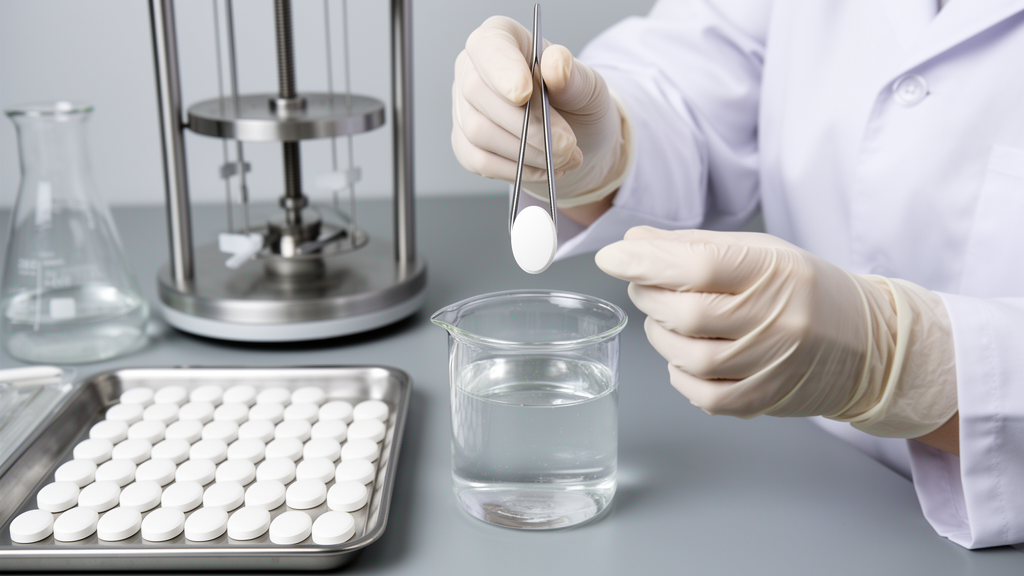
A single-dose crossover study in 24 healthy men has found that an experimental once-daily gastroretentive formulation of gabapentin, developed by Sun Pharmaceuticals under the brand name Gabantin GRS, was bioequivalent to the marketed extended-release product Gralise when both were taken with food. The open-label trial, published in Drugs in R&D, reported that the geometric mean ratios for the key pharmacokinetic parameters all fell comfortably within the regulatory acceptance window of 0.80 to 1.25, and that neither formulation produced any serious adverse events.
Gabapentin is an unusual drug to formulate. Structurally similar to the inhibitory neurotransmitter GABA, it does not act on GABA receptors at all. Instead it binds the alpha-2-delta subunit of voltage-dependent calcium channels, reducing calcium influx and dampening the release of excitatory neurotransmitters, which blunts the abnormal neuronal hyperexcitability that underlies neuropathic pain. Approved by the US Food and Drug Administration in 1993 as an anticonvulsant, it has since become a mainstay for neuropathic pain conditions including post-herpetic neuralgia, and clinical guidelines from bodies such as the Canadian Pain Society, NICE and the Neuropathic Pain Special Interest Group list gabapentinoids among first-line options for neuropathic pain management.
The pharmacokinetic challenge is gabapentin’s absorption profile. The drug is taken up by a saturable transporter located in the upper gastrointestinal tract, which creates a short absorption window and makes bioavailability nonlinear. Immediate-release formulations therefore require thrice-daily dosing of 600 mg to match the drug’s short elimination half-life of 5 to 7 hours, with plasma peaks appearing 2 to 3 hours after administration. Conventional extended-release designs struggle for a different reason: the dosage form often transits past the absorption window before the drug has fully released, cutting bioavailability. A gastroretentive system that floats on gastric contents, swelling to roughly five to six times its initial volume once activated by gastrointestinal fluids, is designed to hold the tablet in the stomach for more than 8 hours and deliver a biphasic release, an initial rapid phase followed by sustained release.
The test product in the new study, Gabantin GRS 600 mg extended-release tablet, uses Sun Pharma’s patented Gastro Retentive Innovative Device, or GRID, technology. Gabapentin is present both in an immediate-release outer layer and in an extended-release core, and specialized coatings enable floatation on gastric contents when the tablet is ingested with food. The investigators compared this once-daily test tablet against Gralise, a 600 mg gabapentin tablet distributed by Almatica Pharma LLC, in healthy human male adults under fed conditions.
The trial was an open-label, balanced, randomized, two-treatment, two-period, two-sequence, single-dose crossover study. Each of the 24 enrolled subjects received a single 600 mg oral dose of either the test or the reference product in Period 1, followed by the other treatment in Period 2 after a 12-day washout. The protocol was approved by the Jamia Hamdard Institutional Ethics Committee on 8 October 2021, and informed consent was obtained from all subjects before the study began. Although the study was open-label, the laboratory analysts did not have access to the randomization scheme, and the sequence effect was tested and found to be nonsignificant for all pharmacokinetic parameters, which the authors say confirms the absence of any carryover effect between periods.
Dosing conditions were tightly controlled to reflect how the gastroretentive formulation is meant to be used clinically. Subjects were housed in a Clinical Pharmacology Unit at least 48 hours before dosing and received a standardized schedule of meals, culminating in a high-fat, high-calorie dinner of 800 to 1000 kcal, with the dose administered 30 minutes after that meal. Water intake was restricted from 1 hour before to 1 hour after dosing apart from 240 mL given with the tablet, and subjects remained sitting or ambulatory for the first 2 hours afterwards. A total of 46 blood samples of 2 mL each were drawn from every subject in each period, from pre-dose through 36 hours post-dose, and gabapentin was quantified in K3EDTA plasma using a validated ultra-high-performance liquid chromatography-tandem mass spectrometry method with an analytical range of 10.2 to 8032.5 ng/mL.
All 24 subjects completed the study and were included in the pharmacokinetic and statistical analyses. The test formulation’s plasma concentration rose gradually over roughly 7 to 9.5 hours, peaking at 4229.28 ng/mL at 8.25 hours, while the reference product peaked at 4629.60 ng/mL at 7.50 hours, and both profiles then declined gradually in a pattern the authors describe as consistent with extended-release characteristics. Median time to peak concentration was 8.250 hours for the test product versus 7.500 hours for the reference, a slight difference the authors note. The percentage of the area under the curve extrapolated beyond the last quantifiable concentration stayed below the 20 percent acceptability threshold for all subjects.
The bioequivalence criteria were met for all three primary parameters. The percentage ratio of test to reference was 0.9171 (90 percent confidence interval 0.826 to 1.0183) for AUC0-t, 0.9191 (90 percent CI 0.8279 to 1.0203) for AUC0-infinity, and 0.9135 (90 percent CI 0.8324 to 1.0026) for Cmax, each with the entire 90 percent confidence interval inside the 0.80 to 1.25 acceptance range. The observed statistical power exceeded 90 percent, and the authors state that the findings indicate a single oral dose of the Gabantin GRS 600 tablet is bioequivalent to Gralise in subjects under fed conditions and can be used interchangeably. Mean half-life values for the two formulations were consistent with the known elimination half-life of gabapentin, and the authors caution that in extended-release and gastroretentive formulations continued drug release may influence the terminal portion of the concentration-time curve, so the estimated terminal half-life may be an apparent rather than a purely elimination-driven value; no formal assessment of flip-flop kinetics was performed.
Safety findings were reassuring within the limits of a small single-dose study. One adverse event, a fever, was reported after administration of the test product; it was rated moderate in severity, non-serious, and unlikely to be related to the study drug, and the subject was treated with oral paracetamol and recovered without sequelae. No subjects experienced adverse events after the reference product, no serious adverse events occurred, and no adverse events led to discontinuation. Hematological and biochemical parameters, vital signs and clinical examinations showed no significant changes during the study period.
The authors are careful about what the trial does and does not show. The study was conducted at a single center and enrolled only healthy adult males, all of them Asian, which the authors acknowledge may restrict generalizability and limit the ability to capture variability across more diverse populations; they call for larger, multi-center studies in more diverse populations to strengthen external validity. They also note that while the gastroretentive extended-release formulation may offer pharmacokinetic advantages associated with prolonged gastric retention and sustained drug release, comparative adherence and efficacy studies are still required to support the claim that the tablet could help overcome the limitations of current products for patients who need once-daily gabapentin therapy. Within those boundaries, the trial delivers a clear, regulated-endpoint result: taken with a meal, the new once-daily gastroretentive gabapentin tablet delivered drug exposure statistically indistinguishable from the marketed extended-release reference, with a comparable safety profile in the healthy men studied.
Subject of Research: Bioequivalence of a once-daily gastroretentive gabapentin extended-release tablet versus Gralise in healthy males under fed conditions
Article Title: Gabapentin Extended Release Tablets in Healthy Subjects Under Fed Conditions: A Randomized, Open-Label, Two-Treatment, Two-Period, Two-Sequence, Single Dose, Crossover, Comparative Bioavailability Study
Article References: Kumar, S., Khuroo, A., Gurule, S. J., Mehra, S., Tiwari, H. K., Zala, Y., Kamala, V. R. R., Kandukuri, M., Dharmadhikari, S., Devkare, P., & Khandhedia, C. (2026). Gabapentin Extended Release Tablets in Healthy Subjects Under Fed Conditions: A Randomized, Open-Label, Two-Treatment, Two-Period, Two-Sequence, Single Dose, Crossover, Comparative Bioavailability Study. Drugs in R&D, 26(2), 187-196. https://doi.org/10.1007/s40268-026-00547-8
Image Credits: AI Generated
DOI: 10.1007/s40268-026-00547-8
Keywords: gabapentin, bioequivalence, extended-release, gastroretentive drug delivery, pharmacokinetics, neuropathic pain, post-herpetic neuralgia, crossover study, Sun Pharmaceuticals, Gralise, fed conditions, Drugs in R&D
Cite Scienmag News
Ophelia Keating. (October 29, 2026). Once-Daily Gabapentin Gastroretentive Tablet Matches Gralise in Fed Bioequivalence Trial. Scienmag. https://scienmag.com/once-daily-gabapentin-gastroretentive-tablet-matches-gralise-in-fed-bioequivalence-trial/
Ophelia Keating. "Once-Daily Gabapentin Gastroretentive Tablet Matches Gralise in Fed Bioequivalence Trial." Scienmag, 29 October 2026, https://scienmag.com/once-daily-gabapentin-gastroretentive-tablet-matches-gralise-in-fed-bioequivalence-trial/. Accessed 4 November 2026.
Ophelia Keating. "Once-Daily Gabapentin Gastroretentive Tablet Matches Gralise in Fed Bioequivalence Trial." Scienmag. October 29, 2026. https://scienmag.com/once-daily-gabapentin-gastroretentive-tablet-matches-gralise-in-fed-bioequivalence-trial/




