

Wednesday, July 29, 2026
Science
No Result
View All Result
  • Login
  • HOME
  • SCIENCE NEWS
  • CONTACT US
  • HOME
  • SCIENCE NEWS
  • CONTACT US
No Result
View All Result
Scienmag
No Result
View All Result
Home Science News Medicine

Ocean Sounds During ROP Exams Improve Physiology, Pain, and Comfort in Preemies

July 29, 2026
in Medicine, Pediatry
Reading Time: 2 mins read
0
Ocean Sounds During ROP Exams Improve Physiology, Pain, and Comfort in Preemies

Ocean Sounds During ROP Exams Improve Physiology, Pain, and Comfort in Preemies

65
SHARES
587
VIEWS
Share on FacebookShare on Twitter
ADVERTISEMENT

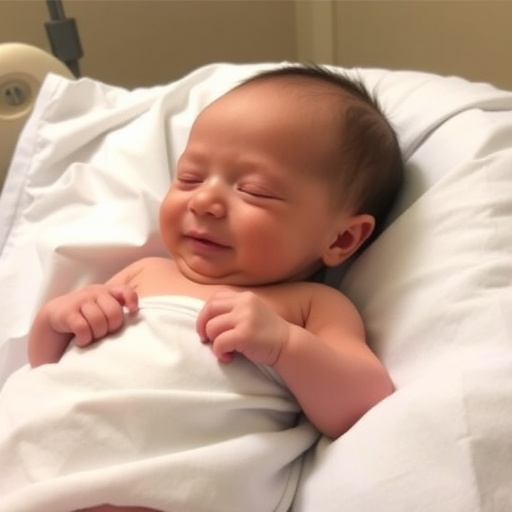
Premature infants undergoing retinopathy of prematurity (ROP) screening can experience repeated stress responses during examinations—an issue that matters because even brief discomfort may amplify physiological instability in this vulnerable population. In a new randomized controlled trial, researchers tested whether ocean sounds delivered during ROP procedures could reduce pain, improve comfort, and buffer stress-related body responses.

The study focused on infants receiving scheduled eye examinations, a clinical moment that often involves bright lighting, handling, and procedures that can trigger measurable changes in vital signs. While pharmacologic approaches exist, they carry practical and safety considerations, especially when repeated interventions are needed over time.

To evaluate the intervention, investigators compared outcomes in infants exposed to recorded ocean sounds during ROP examinations against a control group without the soundscape. The trial design aimed to separate the acoustic effect from other aspects of care by using a structured, examination-time audio protocol.

Pain and comfort were assessed using established clinical measures suitable for neonates, capturing behavioral and observational indicators rather than relying solely on subjective reports. Alongside these endpoints, the team monitored physiological parameters commonly used to quantify stress in newborns, including markers that can reflect autonomic activation during painful or anxiety-provoking events.

Although the precise magnitude of changes varies across studies of neonatal sound exposure, the central question here was whether a soothing, low-frequency, noninvasive auditory environment could dampen the physiological “fight-or-flight” pattern often seen during procedures. The ocean sound treatment was selected to be immersive yet simple to deploy in a busy NICU setting.

The findings indicate that ocean sounds can meaningfully alter the procedure-related experience of premature infants, supporting the idea that environmental sensory inputs may modulate pain perception and comfort. If confirmed and refined in additional trials, such approaches could become a low-cost adjunct to routine ROP care.

Beyond potential comfort benefits, the work highlights a broader theme in neonatal medicine: supportive interventions that act through the sensory environment may help reduce procedure-related stress without medication exposure. This is particularly relevant as NICUs increasingly adopt family-centered and developmental care strategies.

For clinicians, the study offers a practical pathway toward improving bedside experiences during ROP screening. For families, it suggests that small changes in the care environment—like controlled soundscapes—may translate into calmer examinations for their infants.

Overall, this randomized controlled trial strengthens the evidence base for nonpharmacological comfort strategies in premature infants and sets the stage for future studies to optimize timing, duration, and sound characteristics.

Subject of Research: Premature infants undergoing retinopathy of prematurity (ROP) examinations; pain, comfort, and physiological stress responses
Article Title: Effect of ocean sounds played during retinopathy of prematurity examinations on physiology, pain, and comfort levels: a randomized controlled trial.
Article References: Arslan, G., Geçkil, E., Şatırtav Akdeniz, G. et al. Effect of ocean sounds played during retinopathy of prematurity examinations on physiology, pain, and comfort levels: a randomized controlled trial. J Perinatol (2026). https://doi.org/10.1038/s41372-026-02839-y
Image Credits: AI Generated
DOI: https://doi.org/10.1038/s41372-026-02839-y
Keywords:

Tags: auditory stimulation in premature infantsimpact of environmental sounds on preemiesinfant comfort improvement strategiesneonatal anxiety and pain relief techniquesneonatal pain managementneonatal vital signs monitoring during proceduresnon-pharmacologic interventions in neonatesocean sounds therapy for preemiesphysiological stability during neonatal examinationsrandomized controlled trial in neonatologyROP screening stress reductionsensory interventions to mitigate procedural painsound therapy for infant stress
Share26Tweet16
Previous Post

De-escalation Trials in Multiple Myeloma: Advances From Past to Future

Next Post

Process Mapping Informs Design Strategies to Curb Inappropriate HFNC Use

Related Posts

Short ACE2 Isoform Increases in Adipose Tissue of Women With Obesity
Medicine

Short ACE2 Isoform Increases in Adipose Tissue of Women With Obesity

July 29, 2026
Mitochondria plaques in Alzheimer’s linked to buildup and lysosomal dysfunction
Medicine

Mitochondria plaques in Alzheimer’s linked to buildup and lysosomal dysfunction

July 29, 2026
Conformations of Neuronal Na+, K+-ATPase Isoforms and a Disease-Causing Variant
Medicine

Conformations of Neuronal Na+, K+-ATPase Isoforms and a Disease-Causing Variant

July 29, 2026
American College of Lifestyle Medicine urges remission as chronic disease goal
Medicine

American College of Lifestyle Medicine urges remission as chronic disease goal

July 29, 2026
Study tracks mosaic chromosome changes to reveal factors shaping blood cell clones
Medicine

Study tracks mosaic chromosome changes to reveal factors shaping blood cell clones

July 29, 2026
Scoping Review Highlights Silent Struggles From Internalizing Disorders After HIE
Medicine

Scoping Review Highlights Silent Struggles From Internalizing Disorders After HIE

July 29, 2026
Next Post
Process Mapping Informs Design Strategies to Curb Inappropriate HFNC Use

Process Mapping Informs Design Strategies to Curb Inappropriate HFNC Use

  • Mothers who receive childcare support from maternal grandparents show more

    Mothers who receive childcare support from maternal grandparents show more parental warmth, finds NTU Singapore study

    27656 shares
    Share 11059 Tweet 6912
  • University of Seville Breaks 120-Year-Old Mystery, Revises a Key Einstein Concept

    1061 shares
    Share 424 Tweet 265
  • Bee body mass, pathogens and local climate influence heat tolerance

    682 shares
    Share 273 Tweet 171
  • Researchers record first-ever images and data of a shark experiencing a boat strike

    546 shares
    Share 218 Tweet 137
  • Groundbreaking Clinical Trial Reveals Lubiprostone Enhances Kidney Function

    531 shares
    Share 212 Tweet 133
Science

Embark on a thrilling journey of discovery with Scienmag.com—your ultimate source for cutting-edge breakthroughs. Immerse yourself in a world where curiosity knows no limits and tomorrow’s possibilities become today’s reality!

RECENT NEWS

  • Psychosocial Stress Increases Opioid Self-Administration in Healthy People, Trial Finds
  • Short ACE2 Isoform Increases in Adipose Tissue of Women With Obesity
  • Quorum sensing enables nitrite-oxidizing bacteria to fuel nitritation via altruism
  • Gut Microbiota Limits Intestinal Fat Uptake by Altering Bile Phosphatidylcholine in Mice

Categories

  • Agriculture
  • Anthropology
  • Archaeology
  • Athmospheric
  • Biology
  • Biotechnology
  • Blog
  • Bussines
  • Cancer
  • Chemistry
  • Climate
  • Earth Science
  • Editorial Policy
  • Marine
  • Mathematics
  • Medicine
  • Pediatry
  • Policy
  • Psychology & Psychiatry
  • Science Education
  • Social Science
  • Space
  • Technology and Engineering

Subscribe to Blog via Email

Enter your email address to subscribe to this blog and receive notifications of new posts by email.

Join 5,147 other subscribers

© 2025 Scienmag - Science Magazine

Welcome Back!

Login to your account below

Forgotten Password?

Retrieve your password

Please enter your username or email address to reset your password.

Log In
No Result
View All Result
  • HOME
  • SCIENCE NEWS
  • CONTACT US

© 2025 Scienmag - Science Magazine

Discover more from Science

Subscribe now to keep reading and get access to the full archive.

Continue reading
