

Monday, October 26, 2026
Science
No Result
View All Result
  • Login
  • HOME
  • SCIENCE NEWS
  • CONTACT US
  • HOME
  • SCIENCE NEWS
  • CONTACT US
No Result
View All Result
Scienmag
No Result
View All Result
Home Science News Medicine

Observational Lanzhou cohort links low zinc, selenium intake to preeclampsia odds

October 26, 2026
in Medicine
Daisy Hatcher
By Daisy Hatcher Scienmag Editorial Profile - Food Safety and Toxicology
Reading Time: 3 mins read
0
Observational Lanzhou cohort links low zinc, selenium intake to preeclampsia odds

Observational Lanzhou cohort links low zinc, selenium intake to preeclampsia odds

65
SHARES
587
VIEWS
Share on FacebookShare on Twitter
ADVERTISEMENT

The study included 8,746 pregnant women, comprising 282 cases of preeclampsia and 8,464 controls. Multivariable models found inverse associations for both trace elements across the intake ranges observed, while restricted cubic spline analyses indicated that several relationships were nonlinear and that particularly low intake was associated with elevated odds. The findings do not establish that raising intake of either nutrient would prevent preeclampsia.

The analysis used data collected through a prospective birth cohort but compared women who developed preeclampsia with controls drawn from the same cohort in a case-control design. Preeclampsia is a major cause of maternal and perinatal mortality. Zinc and selenium were investigated because they are key antioxidants involved in antioxidant defence, immune regulation and vascular function, and previous studies have suggested that these micronutrients may influence placental health.

The researchers examined total dietary intake during two stages: before conception and during pregnancy. Unconditional logistic regression was used to estimate odds ratios and 95% confidence intervals after adjustment for potential confounding factors. The multivariable results showed significantly higher odds of preeclampsia among women with lower zinc and selenium intake both before and during pregnancy.

The inverse associations were more pronounced in subgroup analyses involving severe and early-onset cases. Evidence of nonlinearity was strongest for preconception zinc, for which the P value for nonlinearity was below 0.001. The corresponding values were 0.0416 for pregnancy zinc and 0.0277 for preconception selenium.

For selenium intake during pregnancy, however, the nonlinear term did not reach statistical significance, with P = 0.0824. Taken together, the spline findings support nonlinear associations within the observed intake ranges, particularly for the three exposures that produced statistically significant nonlinearity tests. Joint analyses added information about whether low intake of the two nutrients together was associated with different odds from patterns involving other intake combinations.

Women with low dietary intake of both zinc and selenium had higher odds of preeclampsia than women with high intake of both nutrients. The study did not detect a statistically significant multiplicative interaction between zinc and selenium, so the combined results do not demonstrate that one nutrient modifies the association of the other or that a specific joint mechanism accounts for the observed pattern. The stronger findings among severe and early-onset cases likewise describe differences in the stratified associations without establishing why those differences occurred.

Because this was an observational cohort-based case-control analysis, the results identify associations rather than causal effects, and their scope is limited to the participants and intake range examined in urban Lanzhou. The investigators said the implications of combined zinc and selenium intake patterns warrant further investigation, leaving the central conclusion unchanged: within this cohort, low dietary intake of both trace elements was linked to higher odds of preeclampsia, with no statistically significant interaction detected between the nutrients.

Subject of Research: Associations between dietary zinc and selenium intake around conception and during pregnancy and preeclampsia odds in a Lanzhou birth cohort

Article Title: Association of preconception and pregnancy dietary zinc and selenium intake with preeclampsia risk: results from a large birth cohort study

Article References: Tian, Q., Fu, H., Yang, C., Cao, L., Wang, Z., Mao, B., & Yang, L. (2026). Association of preconception and pregnancy dietary zinc and selenium intake with preeclampsia risk: results from a large birth cohort study. BMC Public Health. https://doi.org/10.1186/s12889-026-29914-5

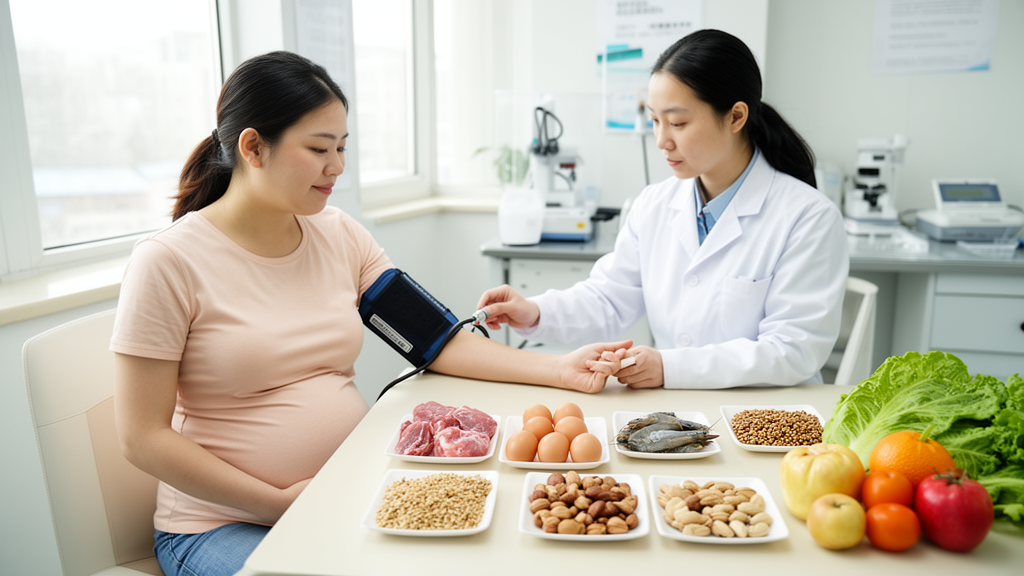
Image Credits: AI Generated

DOI: 10.1186/s12889-026-29914-5

Keywords: preeclampsia, zinc, selenium, dietary intake, pregnancy, preconception, birth cohort, maternal health, micronutrients, Lanzhou, Association, dietary

Cite Scienmag News

Daisy Hatcher. (October 26, 2026). Observational Lanzhou cohort links low zinc, selenium intake to preeclampsia odds. Scienmag. https://scienmag.com/observational-lanzhou-cohort-links-low-zinc-selenium-intake-to-preeclampsia-odds/


Daisy Hatcher. "Observational Lanzhou cohort links low zinc, selenium intake to preeclampsia odds." Scienmag, 26 October 2026, https://scienmag.com/observational-lanzhou-cohort-links-low-zinc-selenium-intake-to-preeclampsia-odds/. Accessed 26 October 2026.

Daisy Hatcher. "Observational Lanzhou cohort links low zinc, selenium intake to preeclampsia odds." Scienmag. October 26, 2026. https://scienmag.com/observational-lanzhou-cohort-links-low-zinc-selenium-intake-to-preeclampsia-odds/

Tags: associationbirth cohortCase-control analysis of dietary factors in pregnancyDietaryDietary antioxidants and maternal vascular functiondietary intakeEarly-onset and severe preeclampsia risk factorsLanzhouMaterMaternal healthMaternal immune regulation and placental healthmicronutrientsNonlinear relationships between micronutrient intake and pregnancy outcomesNutritional epidemiology of preeclampsiapreconceptionpreeclampsiaPregnancyPregnancy micronutrient intake and preeclampsia riskProspective birth cohort studies on maternal nutritionseleniumTrace element deficiencies and pregnancy complicationszincZinc and selenium role in pregnancy health
Share26Tweet16
Previous Post

Scoping review identifies gaps in measuring adults’ online social capital

Next Post

South Korean nurse educators report role conflicts and support gaps

Related Posts

Scoping review identifies gaps in measuring adults’ online social capital
Medicine

Scoping review identifies gaps in measuring adults’ online social capital

October 26, 2026
Consultation narratives frame responsibility for Australia’s tobacco endgame
Medicine

Consultation narratives frame responsibility for Australia’s tobacco endgame

October 26, 2026
Six-cohort study links digital participation to part of socioeconomic health gap
Medicine

Six-cohort study links digital participation to part of socioeconomic health gap

October 26, 2026
Internet use associated with modest health differences in older adults
Medicine

Internet use associated with modest health differences in older adults

October 26, 2026
Autoimmune disease linked to greater dengue severity in Colombian cohort
Medicine

Autoimmune disease linked to greater dengue severity in Colombian cohort

October 26, 2026
Aboriginal early years workers identify priorities for infant nutrition and active play
Medicine

Aboriginal early years workers identify priorities for infant nutrition and active play

October 26, 2026
Next Post
South Korean nurse educators report role conflicts and support gaps

South Korean nurse educators report role conflicts and support gaps

  • Mothers who receive childcare support from maternal grandparents show more optimized

    Mothers who receive childcare support from maternal grandparents show more parental warmth, finds NTU Singapore study

    27656 shares
    Share 11059 Tweet 6912
  • University of Seville Breaks 120-Year-Old Mystery, Revises a Key Einstein Concept

    1061 shares
    Share 424 Tweet 265
  • Bee body mass, pathogens and local climate influence heat tolerance

    682 shares
    Share 273 Tweet 171
  • Researchers record first-ever images and data of a shark experiencing a boat strike

    546 shares
    Share 218 Tweet 137
  • Groundbreaking Clinical Trial Reveals Lubiprostone Enhances Kidney Function

    531 shares
    Share 212 Tweet 133
Science

Embark on a thrilling journey of discovery with Scienmag.com—your ultimate source for cutting-edge breakthroughs. Immerse yourself in a world where curiosity knows no limits and tomorrow’s possibilities become today’s reality!

RECENT NEWS

  • BCG vaccine reduces tau pathology and improves memory in dementia-model mice
  • South Korean nurse educators report role conflicts and support gaps
  • Observational Lanzhou cohort links low zinc, selenium intake to preeclampsia odds
  • Scoping review identifies gaps in measuring adults’ online social capital

Categories

  • Agriculture
  • Anthropology
  • Archaeology
  • Athmospheric
  • Biology
  • Biotechnology
  • Blog
  • Bussines
  • Cancer
  • Chemistry
  • Climate
  • Earth Science
  • Editorial Policy
  • Marine
  • Mathematics
  • Medicine
  • Pediatry
  • Policy
  • Psychology & Psychiatry
  • Science Education
  • Science News
  • Social Science
  • Space
  • Technology and Engineering

Subscribe to Blog via Email

Enter your email address to subscribe to this blog and receive notifications of new posts by email.

Join 5,151 other subscribers

© 2025 Scienmag - Science Magazine

Welcome Back!

Login to your account below

Forgotten Password?

Retrieve your password

Please enter your username or email address to reset your password.

Log In
No Result
View All Result
  • HOME
  • SCIENCE NEWS
  • CONTACT US

© 2025 Scienmag - Science Magazine

Discover more from Science

Subscribe now to keep reading and get access to the full archive.

Continue reading