


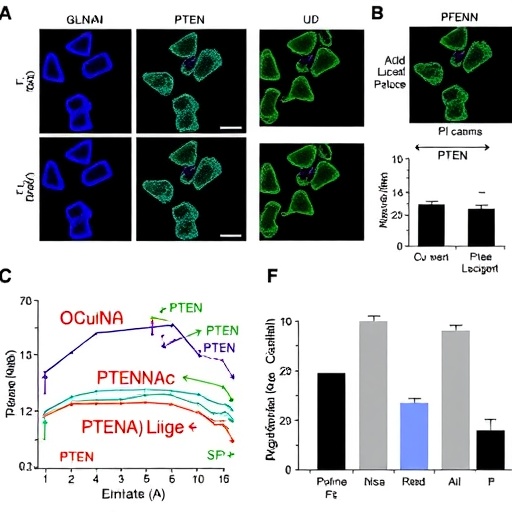
In an illuminating breakthrough in liver cancer research, scientists at Soochow Medical College have uncovered a crucial molecular mechanism that drives the aggressive progression of hepatocellular carcinoma (HCC) linked to Metabolic Dysfunction-Associated Steatotic Liver Disease (MASLD). This discovery spotlights O-GlcNAc transferase (OGT), a pivotal enzyme catalyzing a dynamic post-translational modification known as O-GlcNAcylation, as a key promoter of liver tumor growth through targeted degradation of the tumor suppressor PTEN. The findings offer promising avenues for novel therapeutic interventions aimed at a devastating form of liver cancer resistant to current treatments.
O-GlcNAcylation, a reversible modification where a single N-acetylglucosamine molecule is added to serine or threonine residues on proteins, regulates multiple cellular processes, including metabolism, transcription, and cell proliferation. This modification is orchestrated by two enzymes: O-GlcNAc transferase (OGT), responsible for attaching O-GlcNAc groups, and O-GlcNAcase (OGA), which removes them. The balance maintained by these enzymes is critical for cellular homeostasis, and dysregulation has been implicated in metabolic diseases and cancer.
The research team, under the leadership of Dr. Jianming Li and Dr. Jing Huang, conducted a comprehensive analysis that identified an upregulation of OGT in MASLD-HCC patient tissues. Intriguingly, this elevation correlated strongly with more advanced tumor stages, highlighting OGT’s potential as a biomarker for disease progression. The study leveraged patient data alongside sophisticated liver-specific Ogt knockout mouse models and xenograft systems to establish a causal role of OGT in facilitating liver tumor growth.
Central to their findings was the identification of the tumor suppressor PTEN as a direct substrate for OGT-mediated O-GlcNAcylation. PTEN, known for its lipid phosphatase activity that antagonizes the PI3K/Akt signaling pathway, plays a fundamental role in controlling cell survival and proliferation. The modifications by OGT occur specifically at the threonine 382 (T382) residue of PTEN, a site also intricately involved in phosphorylation dynamics that stabilize PTEN’s function.
By modifying PTEN at T382, OGT disrupts a critical phosphorylation event that normally shields PTEN from degradation. This O-GlcNAcylation thereby promotes PTEN ubiquitination, marking it for rapid proteasomal degradation. Simultaneously, the modification impairs PTEN’s intrinsic phospholipase activity. The net effect is a loss of PTEN’s tumor-suppressive function, unleashing unchecked activation of the PI3K/Akt pathway, a master regulator of cell growth and survival known to propel oncogenesis.
The tumor microenvironment, characterized by lipid accumulation and hypoxia—a hallmark of MASLD—further amplifies this malignant axis. Under such stressed conditions, OGT expression surges, enhancing PTEN O-GlcNAcylation and weakening cellular defense mechanisms against tumorigenesis. This environmental synergy drives a feed-forward loop where metabolic dysfunction fuels cancer progression at the molecular level.
Therapeutically, the study explored the effects of targeting OGT using a small-molecule inhibitor named OSMI-1. Treatment with OSMI-1 in liver cancer models markedly suppressed tumor growth, underscoring OGT’s potential as a druggable target. Strikingly, combining OGT inhibition with LY294002, a well-characterized PI3K inhibitor, produced an additive effect that profoundly impeded tumor proliferation. This combinatorial strategy paves the way for metabolic and signaling axis dual blockade in MASLD-associated HCC.
The implications of this research extend beyond MASLD-HCC, offering a paradigm wherein metabolic enzymes like OGT modulate tumor suppressor stability and function via intricate post-translational modifications. Such insights enrich our understanding of the crosstalk between metabolism and oncogenic signaling, positioning O-GlcNAcylation as a critical regulatory node in cancer biology.
This study employed meticulous biochemical assays, mass spectrometry, and in vivo modeling to dissect the molecular underpinnings of OGT’s role in liver cancer. The researchers validated the direct interaction between OGT and PTEN and mapped the modification site with precision, unveiling how this single post-translational change can pivotally alter PTEN’s trajectory and stability within the cell.
Furthermore, the research emphasizes the importance of the tumor microenvironment’s metabolic landscape in shaping epigenetic and post-translational modifications that favor tumor progression. The elevation of OGT under lipid-rich, hypoxic conditions exemplifies how aberrant metabolism can hijack regulatory enzymes to undermine tumor suppressors, ultimately rewiring signaling cascades in favor of malignancy.
In conclusion, the innovative work led by Drs. Li and Huang delineates a novel oncogenic mechanism whereby OGT-mediated O-GlcNAcylation of PTEN fosters MASLD-HCC development. Their findings not only elevate OGT as a biomarker and therapeutic target but also advocate for combinational strategies aimed at both metabolic regulators and downstream proliferative signals to curb liver cancer. This research holds transformative potential for improving prognosis and treatment outcomes in patients suffering from MASLD-related hepatocellular carcinoma.
News Publication Date: 14-Oct-2025
Web References: http://dx.doi.org/10.1002/mog2.70042
Cite Scienmag News
Nathaniel Bowman. (October 15, 2025). O-GlcNAc Transferase Drives Metabolic Dysfunction-Linked Liver Cancer by Accelerating PTEN Degradation. Scienmag. https://scienmag.com/o-glcnac-transferase-drives-metabolic-dysfunction-linked-liver-cancer-by-accelerating-pten-degradation/
Nathaniel Bowman. "O-GlcNAc Transferase Drives Metabolic Dysfunction-Linked Liver Cancer by Accelerating PTEN Degradation." Scienmag, 15 October 2025, https://scienmag.com/o-glcnac-transferase-drives-metabolic-dysfunction-linked-liver-cancer-by-accelerating-pten-degradation/. Accessed 4 September 2026.
Nathaniel Bowman. "O-GlcNAc Transferase Drives Metabolic Dysfunction-Linked Liver Cancer by Accelerating PTEN Degradation." Scienmag. October 15, 2025. https://scienmag.com/o-glcnac-transferase-drives-metabolic-dysfunction-linked-liver-cancer-by-accelerating-pten-degradation/


