


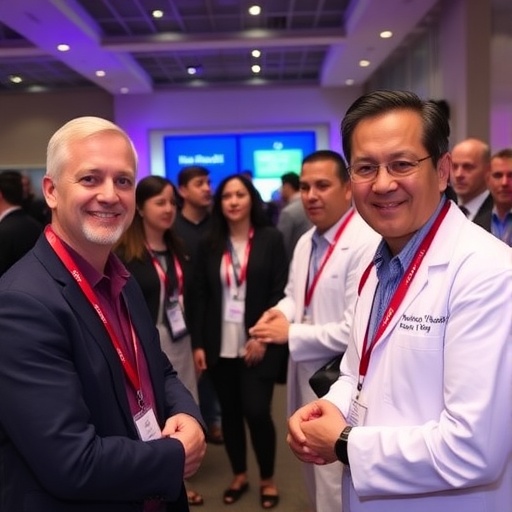
At the forefront of oncology research, NYU Langone Health’s Perlmutter Cancer Center, a National Cancer Institute–designated Comprehensive Cancer Center, has unveiled a series of groundbreaking clinical findings at the 2026 American Society of Clinical Oncology (ASCO) Annual Meeting in Chicago. These studies offer deep insights into treatment advancements and disparities in cancer care, highlighting the center’s commitment to precision medicine and transformative patient outcomes.
One of the most pivotal contributions comes from the clinical trials led by Dr. Janice Mehnert, which explore innovative adjuvant therapies in Merkel cell carcinoma (MCC), a notoriously aggressive and rare skin cancer. Her randomized Phase 3 trial, known as EA6174 or STAMP, investigated the postoperative efficacy of pembrolizumab, an immune checkpoint inhibitor, in preventing cancer recurrence. Although the overall relapse-free survival improvement narrowly missed statistical significance, the dramatic reduction in distant metastatic progression heralds a potential paradigm shift in MCC management, particularly when paired with radiation therapy administered prior to immunotherapy initiation. This nuanced sequencing effect demands further exploration to optimize therapeutic windows and survival benefits.
In an extensive epidemiological study on lung cancer, Dr. Daniel J. Becker and colleagues have illuminated the troubling socio-economic inequities that persist following the introduction of U.S. Preventive Services Task Force (USPSTF) screening guidelines in 2013. By harnessing a comprehensive national database encompassing nearly one million cases over nearly two decades, their analysis reveals that earlier-stage lung cancer detection and survival have improved broadly, yet the gains disproportionately favor wealthier populations. The widening survival gap underscores systemic barriers in healthcare access, screening uptake, and post-diagnosis supportive infrastructure, calling for targeted policies to bridge these disparities and democratize the benefits of early intervention.
Turning to prostate cancer, cutting-edge computational biology methodologies have ushered in a new era of prognostication for metastatic castration-resistant prostate cancer (mCRPC). Led by Dr. David R. Wise, researchers have developed a machine-learning model that integrates transcriptional regulatory activity with genomic alterations and clinical variables, outperforming conventional gene expression signatures. This biologically informed approach elucidates complex tumor phenotypes associated with aggressive and treatment-resistant disease states. Such integrative models offer promise not only in refining risk stratification but also in guiding personalized therapeutic strategies that can dynamically adapt to tumor evolution and heterogeneity.
Meanwhile, immunotherapy timing emerges as a critical variable affecting patient outcomes in triple-negative breast cancer (TNBC). A retrospective cohort analysis spearheaded by Dr. Iris Zhi at Perlmutter Cancer Center-Long Island evaluated the circadian impact of immune checkpoint blockade infusion schedules on neoadjuvant treatment efficacy. The data suggest that earlier administration of immunotherapy doses correlates with significantly reduced recurrence risk and improved pathological complete response rates. These findings hint at the profound influence of circadian biology on immune system modulation and highlight the potential clinical utility of chronotherapy frameworks to heighten immunotherapeutic effectiveness in aggressive breast cancers.
In the realm of cellular therapies, the ongoing phase 1/2 EVEREST-2 trial introduces an innovative “logic-gated” CAR T-cell platform, A2B543, targeted against mesothelin-expressing solid tumors. Dr. Salman R. Punekar reported that this investigational approach seeks to balance tumor specificity and safety by integrating multi-input gating mechanisms designed to limit off-tumor toxicity, a persistent challenge that has impeded CAR T-cell expansion beyond hematologic malignancies. Early safety and tolerability outcomes are promising, and the trial’s multi-cohort enrollment encompassing pancreatic, ovarian, lung, and colorectal cancers could significantly broaden CAR T-cell application horizons if efficacy is demonstrated.
Central to all these endeavors is the Perlmutter Cancer Center’s integrated precision oncology model, which synergizes clinical care, molecular research, and bioinformatics expertise. This collaborative ecosystem empowers clinicians and scientists to accelerate translational discoveries and deliver personalized interventions that adapt to tumor biology and patient heterogeneity. Dr. Anirban Maitra, director of the center, emphasizes the imperative of multidisciplinary teamwork in propelling clinical innovation and ensuring equitable patient access to cutting-edge therapies and clinical trials.
Moreover, the research presented at ASCO 2026 collectively stresses the dual importance of biological complexity and social determinants in shaping cancer outcomes. While advances in molecular characterization and targeted therapies herald improved survival for many, disparities persist at the population level due to socio-economic factors that limit screening access, diagnostic precision, and comprehensive care. Strategies integrating technological innovations with public health interventions are urgently needed to close these gaps and ensure all patients benefit from progress.
The detailed investigations into prognostic biomarkers, immune modulation timing, and novel therapeutic constructs reflect a broader shift towards systems biology-informed oncology. By deciphering gene regulatory networks and temporal treatment dynamics, researchers are refining therapeutic windows and identifying combinatorial strategies that mitigate resistance and optimize efficacy. These multidisciplinary studies not only expand the scientific frontier but also translate into actionable clinical innovations for patients with rare tumors and advanced disease.
NYU Langone Health’s commitment extends beyond research to education and dissemination, with faculty leading numerous poster presentations and educational sessions at the ASCO meeting. The breadth and depth of their work convey a robust pipeline of discovery from bench to bedside. As these emerging data integrate into clinical practice guidelines, they hold the potential to improve survival outcomes and quality of life for diverse patient populations facing formidable cancer diagnoses.
The momentum generated at ASCO by Perlmutter Cancer Center’s research exemplifies the transformative potential of precision medicine in oncology. By leveraging genomic insights, immunological timing, and advanced therapeutics, these efforts are redefining the contours of cancer treatment. The promising early results encourage continued clinical trial enrollment and multidisciplinary collaboration, paving the way for a new standard of care that is both scientifically sophisticated and deeply patient-centered.
News Publication Date: 2026
Web References:
- https://nyulangone.org/locations/perlmutter-cancer-center
- https://nyulangone.org/doctors/1962617472/janice-mehnert
- https://nyulangone.org/doctors/1639361546/daniel-j-becker
- https://nyulangone.org/doctors/1336438258/david-r-wise
- https://nyulangone.org/doctors/1548573660/iris-zhi
- https://nyulangone.org/doctors/1730454034/salman-r-punekar
Cite Scienmag News
Nathaniel Bowman. (May 29, 2026). NYU Langone Health’s Perlmutter Cancer Center Researchers Unveil Latest Discoveries at 2026 ASCO Annual Meeting. Scienmag. https://scienmag.com/nyu-langone-healths-perlmutter-cancer-center-researchers-unveil-latest-discoveries-at-2026-asco-annual-meeting/
Nathaniel Bowman. "NYU Langone Health’s Perlmutter Cancer Center Researchers Unveil Latest Discoveries at 2026 ASCO Annual Meeting." Scienmag, 29 May 2026, https://scienmag.com/nyu-langone-healths-perlmutter-cancer-center-researchers-unveil-latest-discoveries-at-2026-asco-annual-meeting/. Accessed 3 September 2026.
Nathaniel Bowman. "NYU Langone Health’s Perlmutter Cancer Center Researchers Unveil Latest Discoveries at 2026 ASCO Annual Meeting." Scienmag. May 29, 2026. https://scienmag.com/nyu-langone-healths-perlmutter-cancer-center-researchers-unveil-latest-discoveries-at-2026-asco-annual-meeting/


