


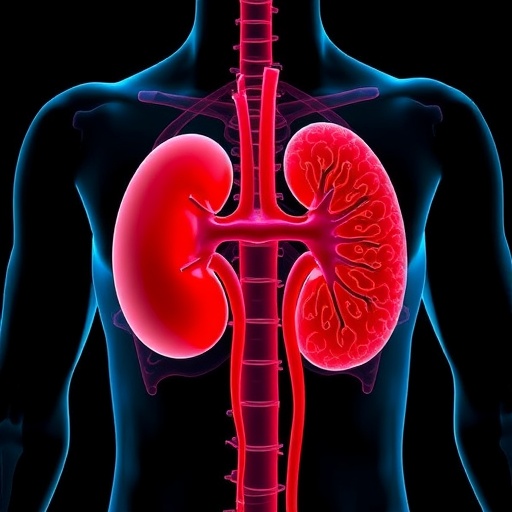
People with diabetes who develop both heart failure and end-stage kidney disease face one of medicine’s most difficult cardiovascular challenges. Their risk of hospitalization, arrhythmia, myocardial infarction and premature death is substantially elevated, while treatment choices are narrowed by severely impaired kidney function. A new study published in Nature Communications examines whether glucagon-like peptide-1 receptor agonists, widely known as GLP-1 drugs, may offer a different cardiovascular outlook from dipeptidyl peptidase-4 inhibitors in this especially vulnerable population.
The analysis, led by PY Liu, CK Shih and MHC Hsieh, focuses on patients with diabetes who had reached end-stage kidney disease and were also living with heart failure. Rather than relying on a conventional comparison of people who happened to receive different medicines, the researchers used an “emulated target trial.” This approach applies the logic of a randomized clinical trial to existing patient data, defining treatment groups, follow-up periods and outcomes as though participants had been randomly assigned to competing therapies.
That design matters because treatment decisions in routine care are rarely random. Physicians may prescribe a GLP-1 receptor agonist to patients who are younger, more obese, or perceived to have a different cardiovascular profile than those receiving a DPP-4 inhibitor. These underlying differences can distort the apparent effects of a drug. By emulating a target trial, investigators attempt to reduce such biases and estimate what might happen if comparable patients initiated one treatment rather than the other.
GLP-1 receptor agonists and DPP-4 inhibitors both influence the body’s incretin system, but they do so in very different ways. GLP-1 receptor agonists directly activate the GLP-1 receptor, stimulating glucose-dependent insulin release and suppressing inappropriate glucagon secretion. They also slow gastric emptying and can reduce appetite, often leading to meaningful weight loss. DPP-4 inhibitors work by preventing the breakdown of naturally produced incretin hormones. Their glucose-lowering effect is generally more modest, and most members of this class are considered weight neutral.
The cardiovascular question is more complicated in patients receiving dialysis or living with end-stage kidney disease. Kidney failure changes drug clearance, fluid balance, blood pressure regulation and mineral metabolism. It also creates a state of chronic inflammation and vascular stress that can accelerate atherosclerosis and weaken the heart. Heart failure adds another layer of danger: excess fluid, reduced cardiac output and repeated hospital admissions can interact with diabetes and kidney dysfunction in a self-reinforcing cycle.
Researchers are therefore interested in whether the broader biological effects of GLP-1 receptor agonists could translate into cardiovascular benefits beyond blood-sugar control. Potential pathways include weight reduction, improved blood pressure, better metabolic regulation and effects on vascular inflammation. Some GLP-1 medicines have already demonstrated cardiovascular benefits in broader populations with diabetes, but patients with end-stage kidney disease and heart failure have often been underrepresented in major randomized trials. Evidence from this group has consequently remained limited and difficult to generalize.
The study’s comparison with DPP-4 inhibitors is clinically relevant because these drugs are commonly used when treatment must be adapted to advanced kidney disease. DPP-4 inhibitors are generally easy to administer and have a low risk of hypoglycemia when used without insulin or insulin-releasing drugs. However, their effects on body weight and cardiovascular risk are typically less pronounced than those associated with GLP-1 receptor agonists. Determining whether that difference remains meaningful in dialysis-dependent patients could influence how clinicians approach diabetes management when cardiac risk is already extreme.
Because the investigation is observational, its findings must be interpreted with care even when sophisticated statistical methods are used. An emulated target trial can reproduce many features of a randomized study, but it cannot completely eliminate hidden confounding. Differences in frailty, nutritional status, dialysis access, adherence, symptom severity or clinicians’ prescribing preferences may still affect the results. In addition, cardiovascular outcomes can be shaped by competing risks, including infection, sudden death and complications directly related to kidney failure.
The importance of the research lies in addressing a gap at the intersection of three major diseases rather than examining diabetes in isolation. As the use of GLP-1 receptor agonists expands worldwide, clinicians increasingly need evidence about patients who were excluded from or sparsely represented in pivotal trials. The Nature Communications study offers a real-world framework for evaluating whether the choice between GLP-1 receptor agonists and DPP-4 inhibitors is associated with different cardiovascular outcomes among people with diabetes, heart failure and end-stage kidney disease. Its conclusions may help guide future randomized trials and more individualized treatment, while reminding patients and physicians that promising associations are not the same as definitive proof of causation.
Cite Scienmag News
Jerry Hayes. (August 1, 2026). GLP-1 Versus DPP-4 Drugs: Cardiovascular Outcomes in Diabetic Kidney Failure Patients. Scienmag. https://scienmag.com/glp-1-versus-dpp-4-drugs-cardiovascular-outcomes-in-diabetic-kidney-failure-patients/
Jerry Hayes. "GLP-1 Versus DPP-4 Drugs: Cardiovascular Outcomes in Diabetic Kidney Failure Patients." Scienmag, 1 August 2026, https://scienmag.com/glp-1-versus-dpp-4-drugs-cardiovascular-outcomes-in-diabetic-kidney-failure-patients/. Accessed 5 September 2026.
Jerry Hayes. "GLP-1 Versus DPP-4 Drugs: Cardiovascular Outcomes in Diabetic Kidney Failure Patients." Scienmag. August 1, 2026. https://scienmag.com/glp-1-versus-dpp-4-drugs-cardiovascular-outcomes-in-diabetic-kidney-failure-patients/


