


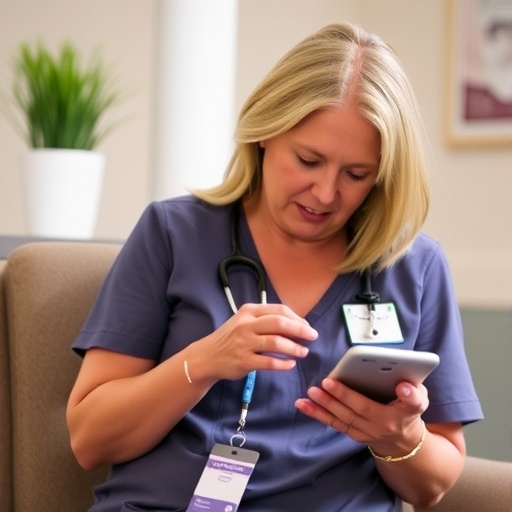
In the rapidly evolving landscape of healthcare technology, mobile health (mHealth) interventions have emerged as a promising approach to enhance patient care and outcomes. A recent systematic review and meta-analysis conducted by researchers Zhang, Hong, and Chen sheds new light on the effectiveness of nurse-led mHealth interventions for adult cancer patients. The study, published in the journal BMC Nursing, provides compelling evidence supporting the implementation of these digital health strategies in clinical practice, potentially transforming the management of symptoms among this vulnerable population.
mHealth interventions leverage mobile devices to deliver health-related services, including patient education, symptom monitoring, and real-time communication with healthcare providers. Particularly for cancer patients, who often face a complex array of symptoms, staying connected to healthcare professionals through mHealth applications can significantly improve their overall experience. The systematic review included numerous studies that scrutinized various aspects of nurse-led mHealth interventions, drawing insightful conclusions about their efficacy in alleviating cancer-related symptoms.
The meta-analysis revealed that patients who engaged with nurse-led mHealth interventions reported notable improvements in key symptom outcomes. These interventions often included symptom tracking functionalities, educational components, and tailored responses from nursing staff. By integrating technology into patient care, nurses could provide timely interventions that addressed patients’ symptoms and concerns, ultimately leading to enhanced treatment adherence and quality of life.
One of the critical benefits of mHealth interventions lies in their accessibility and ease of use. The study found that many patients felt more empowered to manage their symptoms when they had immediate access to health information and nursing support through their mobile devices. This empowerment is particularly significant for cancer patients who may feel overwhelmed by their diagnoses and treatment regimens. The ability to communicate with healthcare professionals at any time fosters a sense of stability and reassurance.
Moreover, these interventions often incorporate various educational resources, enabling patients to better understand their condition and treatment choices. The review emphasized how nurse-led models could facilitate patient education, which plays a vital role in symptom management. By ensuring that patients are well-informed, nurses can help mitigate fears and anxieties associated with treatment, thus improving patients’ overall mental health and wellbeing.
The landscape of oncology care is continually changing, largely driven by innovations in technology and the increasing recognition of the need for holistic patient care. The findings of this study contribute to the growing body of literature that supports incorporating nurse-led mHealth interventions in oncology practice. Nurses are uniquely positioned to lead these initiatives, given their proximity to patients and comprehensive understanding of clinical care.
In addition to symptom management, the study examined other beneficial outcomes associated with mHealth interventions. For instance, they may reduce the frequency of hospital visits, a crucial factor in resource-limited settings where access to healthcare services can be challenging. By facilitating self-management, patients can potentially avoid unnecessary hospitalizations, leading to a more efficient use of healthcare resources. This aspect is particularly critical during times of public health emergencies, where minimizing hospital traffic can reduce risk factors for both patients and healthcare providers.
While the results are promising, the review does highlight several challenges associated with the implementation of mHealth interventions in clinical settings. Issues such as technological literacy among patients, data privacy concerns, and the need for robust infrastructure must be addressed to harness the full potential of these solutions. The participation of nursing professionals in the design and execution of mHealth interventions is essential to ensure that these tools are user-friendly and cater to the specific needs of cancer patients.
Looking to the future, the continued evolution of mHealth technology holds great promise for cancer care. The integration of artificial intelligence and machine learning may further enhance the capabilities of these interventions, allowing for personalized symptom management and real-time analytics. These advancements can empower healthcare professionals, particularly nurses, to make more informed decisions based on the data collected from patients’ interactions with the mHealth applications.
It is important to acknowledge that while technology can provide valuable support, it should not replace the human element of nursing care. The compassionate touch of a nurse remains irreplaceable, and mHealth interventions should be viewed as complementary tools that enhance, rather than supersede, traditional care practices. The research indicates that the most effective implementations of mHealth will likely be those that seamlessly integrate digital solutions with the holistic approaches that nurses provide.
The study conducted by Zhang and colleagues contributes to a growing movement aimed at leveraging technology to enhance patient-centered care in oncology. As healthcare continues to face new challenges, particularly in the wake of the COVID-19 pandemic, innovative solutions like nurse-led mHealth interventions present a viable pathway to elevate care for some of the most vulnerable patient populations.
In conclusion, the systematic review and meta-analysis present a strong case for adopting nurse-led mHealth interventions as a means to improve symptom outcomes in adult cancer patients. These studies highlight a significant shift towards technology-driven healthcare solutions, emphasizing the essential role of nursing in navigating this transitional landscape. As we move forward, the findings underscore the importance of fostering collaborations between technology developers and healthcare professionals to create effective, user-friendly, and impactful mHealth solutions.
With ongoing research and development, the future of nurse-led mHealth interventions looks bright, holding the potential to reshape how cancer patients manage their symptoms, engage with their healthcare teams, and ultimately lead to better health outcomes.
Zhang, C., Hong, Y., Chen, Y. et al. Effectiveness of nurse-led mHealth interventions on symptom outcomes in adult patients with cancer: a systematic review and meta-analysis.
BMC Nurs 24, 1356 (2025). https://doi.org/10.1186/s12912-025-03981-2
Cite Scienmag News
Nathaniel Bowman. (November 1, 2025). Nurse-Led mHealth Boosts Cancer Symptom Management. Scienmag. https://scienmag.com/nurse-led-mhealth-boosts-cancer-symptom-management/
Nathaniel Bowman. "Nurse-Led mHealth Boosts Cancer Symptom Management." Scienmag, 1 November 2025, https://scienmag.com/nurse-led-mhealth-boosts-cancer-symptom-management/. Accessed 5 September 2026.
Nathaniel Bowman. "Nurse-Led mHealth Boosts Cancer Symptom Management." Scienmag. November 1, 2025. https://scienmag.com/nurse-led-mhealth-boosts-cancer-symptom-management/


