


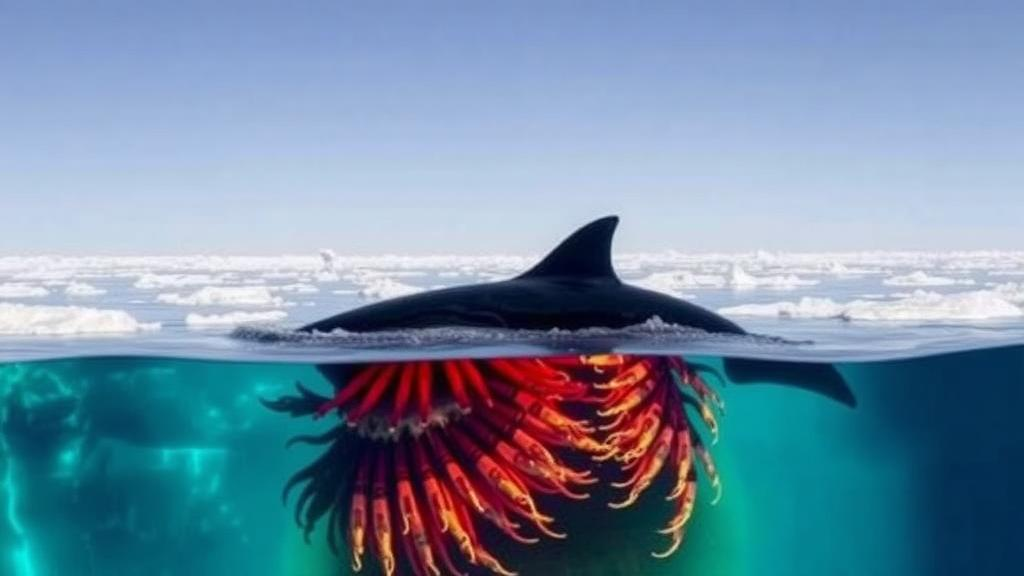
In one of the most ambitious genomics investments ever aimed at the polar south, the U.S. National Science Foundation has awarded $18.4 million to a team led by molecular microbial ecologist and biological oceanographer Alison Murray of the Desert Research Institute in Reno, Nevada. The project, formally titled Genome Infrastructure catalyzing next Generation Antarctic Data, Access, Tools, and Analytics, or GIGA DATA, is designed to do nothing less than build the genetic reference library for an entire continent. Over the coming years, the initiative will sequence the genomes of more than 250 Antarctic species, ranging from algae and mosses to terrestrial and marine invertebrates, birds, fish, and marine mammals, while simultaneously generating 600 ecosystem samples that will yield tens of thousands of microbial and viral genomic datasets.
What distinguishes GIGA DATA from previous sequencing campaigns is not merely its scale but its architecture. The new genomic data will not sit in isolated repositories; instead, the project will unite them with existing Antarctic sequencing efforts under a purpose-built, artificial intelligence-enabled cyberinfrastructure. The resulting digital platform is intended to function as an open, accessible data science gateway to Antarctic life, allowing researchers anywhere in the world to query, analyze, and cross-reference genetic information spanning the full breadth of the continent’s biodiversity. According to Murray, the initiative will redefine evolutionary and Antarctic ecosystem science by uncovering the fundamental rules that shape life, and by providing a novel gateway to Antarctic genomic data at scale, it will fuel discovery, innovation, and cross-disciplinary application.
The scientific rationale behind the effort rests on a striking gap in modern biology. Antarctic organisms evolved to persist under conditions that are lethal to most life on Earth: months of continuous daylight followed by months of darkness, subzero desiccating winds, and the isolation of subglacial lakes sealed beneath ice for millennia. Their genomes carry the signatures of the adaptations that made such persistence possible, making them an extraordinary frontier for discovery. Yet high-quality genome maps are currently unavailable for most Antarctic species, and the majority of the continent’s taxonomic lineages remain poorly understood at the genome level. For a region that functions as a natural laboratory for studying evolutionary extremes, the absence of reference genomes represents a fundamental bottleneck.
That bottleneck extends well into the microbial world, where the stakes may be highest. The vast diversity of Antarctic microorganisms, a reservoir of immense potential for biodiscovery, biotechnology, and the emerging bioeconomy, remains largely undescribed. Microbes that thrive in permanent cold, intense ultraviolet exposure, and prolonged desiccation have evolved enzymes, protective molecules, and regulatory strategies that could inform everything from industrial catalysis to medicine. By positioning reference genomes and assembled metagenomes as foundational scientific infrastructure, enduring data resources meant to catalyze new discoveries for generations, GIGA DATA aims to convert that untapped reservoir into a systematically organized, machine-readable asset.
The analytical ambitions of the project are matched by its technical scope. Sequencing 250-plus representative species across the animal, plant, fungal, and microbial domains requires coordinated workflows in sample collection, DNA and RNA extraction, long-read and short-read sequencing, genome assembly, and annotation, each of which must be standardized so that genomes produced in different years and by different laboratories remain directly comparable. The 600 ecosystem samples add a second layer of complexity: metagenomic datasets that capture entire communities of bacteria, archaea, viruses, and microbial eukaryotes as they exist in situ. Tens of thousands of such datasets, integrated with the reference genomes, will allow researchers to move from cataloging individual species to understanding how Antarctic ecosystems function as interconnected genetic systems.
Artificial intelligence sits at the center of the cyberinfrastructure that will bind these data together. Machine learning approaches are increasingly essential in genomics, where the sheer volume of sequence data has outpaced manual analysis, and the GIGA DATA platform is being designed to exploit those tools for tasks such as genome annotation, functional prediction, and pattern detection across species and environments. By embedding AI capabilities directly into the data gateway rather than treating them as downstream add-ons, the project intends to lower the barrier for researchers who lack the computational resources to process polar genomic data on their own. The platform’s open-access design is a deliberate choice, reflecting a growing consensus in the genomics community that reference data achieve their full value only when they are broadly and equitably available.
The consortium assembled under Murray’s leadership reflects the breadth of expertise the project demands. It includes Rachel O’Neill and Jill Wegrzyn at the University of Connecticut, bringing strengths in genomics and bioinformatic data management; Patrick Chain and Bin Hu at the New Mexico Consortium, contributing sequencing and computational biology capabilities; Allyson Hindle at the University of Nevada, Las Vegas, whose work addresses Antarctic physiology; Rauri Bowie at the University of California, Berkeley, an expert in evolution and biodiversity; Arvind Varsani at Arizona State University, a virologist whose research spans viral diversity across ecosystems; and Emily McDonald-Williams at DRI. Together, the team spans genome sequencing, bioinformatic cyberinfrastructure, Antarctic physiology, evolution, and ecosystem function, the full disciplinary range required to turn raw sequence data into biological insight.
Training is woven into the project’s structure rather than bolted on afterward. GIGA DATA will establish a workforce development pipeline for 69 participants across early-career, graduate, and undergraduate tracks, built around a novel early-career project rotator program and two undergraduate training initiatives. Participants will gain skills in genomic data management, bioinformatics, machine learning, and computational engineering, competencies with broad relevance to science, medicine, and industry. In a field where the demand for scientists who can move fluidly between biology and computation far exceeds supply, the project’s training pipeline may prove as consequential as the genomes it produces, seeding laboratories and companies with researchers fluent in both polar science and large-scale data analysis.
The initiative also builds on more than three decades of Murray’s own Antarctic experience. In 2026, she completed her 16th Antarctic field season, an expedition to the Antarctic Peninsula focused on polar ecology and a promising cancer-fighting agent, during which she and her team shared live updates, photographs, and videos from the field through a public Storymap documenting their journey. That continuity matters: polar fieldwork depends on hard-won logistical knowledge, from permit regimes and cold-weather sampling protocols to the preservation of genetic material during long transport chains, and few researchers combine that operational experience with the genomic and bioinformatic perspective that GIGA DATA requires. The project is supported by the National Science Foundation under Award No. 2535692, with additional information available through the Desert Research Institute.
If the project delivers on its promise, the consequences could reach far beyond Antarctic science. A continent-scale genomic reference library would allow researchers to identify the genetic basis of resilience to extreme and rapidly changing conditions, and to reveal fundamental principles governing how organisms adapt to environmental change across daily, seasonal, and evolutionary timescales. In an era when climate shifts are reshaping ecosystems worldwide, understanding how life persists at the limits of habitability has never been more urgent. At the same time, the biotechnological potential of Antarctic genetic resources, from cold-active enzymes to novel bioactive compounds, positions the continent’s genomes as a strategic scientific asset. By treating genomes not as one-off research products but as enduring infrastructure, GIGA DATA signals a shift in how big science is organized: the data, like telescopes and research vessels, become instruments that future generations of scientists will use to ask questions no one has yet thought to pose.
Subject of Research: Antarctic genome sequencing infrastructure and AI-enabled genomic data platform
Article Title: NSF supports groundbreaking research infrastructure to sequence Antarctic genomes from microbes to whales
Article References: NSF supports groundbreaking research infrastructure to sequence Antarctic genomes from microbes to whales. (n.d.). Original publication
Image Credits: AI Generated
DOI: Not provided
Keywords: Antarctica, genomics, National Science Foundation, bioinformatics, artificial intelligence, microbiology, biodiversity, biotechnology, evolution, cyberinfrastructure, metagenomics, Desert Research Institute
Cite Scienmag News
Juliet Wilcox. (October 1, 2026). NSF Bets $18.4 Million on Sequencing the Genomes of Antarctic Life, From Microbes to Whales. Scienmag. https://scienmag.com/nsf-bets-18-4-million-on-sequencing-the-genomes-of-antarctic-life-from-microbes-to-whales/
Juliet Wilcox. "NSF Bets $18.4 Million on Sequencing the Genomes of Antarctic Life, From Microbes to Whales." Scienmag, 1 October 2026, https://scienmag.com/nsf-bets-18-4-million-on-sequencing-the-genomes-of-antarctic-life-from-microbes-to-whales/. Accessed 4 October 2026.
Juliet Wilcox. "NSF Bets $18.4 Million on Sequencing the Genomes of Antarctic Life, From Microbes to Whales." Scienmag. October 1, 2026. https://scienmag.com/nsf-bets-18-4-million-on-sequencing-the-genomes-of-antarctic-life-from-microbes-to-whales/


