


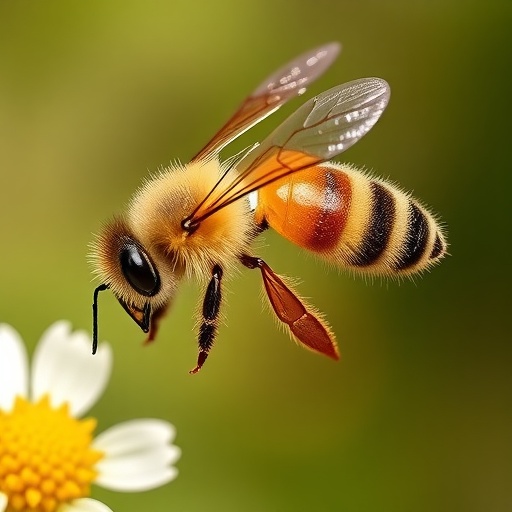
In a groundbreaking study recently published in Acta Parasitologica, researchers have illuminated the complex interplay between two microsporidian parasites, Nosema apis and Nosema ceranae, within honeybee colonies across Türkiye. This meticulous investigation not only revisits the prevalence rates of these pathogens but also pioneers the use of phylogenetic network analysis to unravel their evolutionary relationships. The insights gained from this work are poised to revolutionize our understanding of honeybee health, a critical concern given the global decline in bee populations and their indispensable role in pollination and ecosystem stability.
Honeybees, renowned for their vital contributions to agriculture and biodiversity, are increasingly threatened by myriad pathogens, among which Nosema species have emerged as prominent culprits. Nosema apis has historically been recognized as a predominant microsporidian parasite in Apis mellifera populations. However, the rise of Nosema ceranae—a species initially confined to the eastern honeybee Apis cerana—has challenged prior assumptions about pathogen dynamics and host specificity. The study conducted by Akpınar et al. delves deep into these shifts, providing comprehensive prevalence data that underscore the nuanced distribution of these parasites in Turkey’s apicultural landscapes.
Employing advanced molecular diagnostic techniques, the researchers collected and analyzed samples from honeybee colonies spanning diverse geographic regions in Türkiye. This extensive sampling allowed for a robust assessment of infection rates, revealing intriguing patterns of coexistence, displacement, and dominance between N. apis and N. ceranae. The data suggest that while N. ceranae has increasingly encroached upon habitats traditionally dominated by N. apis, both species remain co-endemic in several locales, potentially exacerbating stress on bee colonies through compounded pathogenic effects.
One of the standout innovations of this study lies in its application of phylogenetic network analysis—a computational tool that enables the visualization of evolutionary relationships and gene flow between pathogen populations. Unlike traditional phylogenetic trees, network analyses capture reticulate evolution and recombination events, offering a more intricate depiction of genetic connectivity. Through this approach, the research team decoded the genetic diversity within and between Nosema isolates, highlighting distinct clades and identifying possible recombinants, which may have implications for the pathogens’ adaptability and virulence.
The findings from the phylogenetic analysis extend beyond mere academic curiosity; they provide critical clues into the evolutionary pressures shaping these microsporidians. For example, the presence of highly divergent haplotypes within N. ceranae isolates suggests ongoing diversification, potentially driven by host immune responses or environmental factors unique to Türkiye’s varied ecosystems. These genetic insights pave the way for targeted strategies aimed at mitigating the impact of these pathogens on honeybee health, such as the development of resistant bee strains or tailored antimicrobial treatments.
A deeper understanding of Nosema’s epidemiology is imperative, given the devastating consequences of nosemosis on honeybee physiology and colony performance. Infections can impair nutrient absorption, reduce lifespan, and alter foraging behavior, cumulatively jeopardizing colony survival. Moreover, when accompanied by other stressors like pesticides, habitat loss, and climate change, Nosema infections may contribute to the alarming rates of colony collapse disorder observed worldwide. The work by Akpınar and colleagues equips apiarists and policymakers with crucial epidemiological evidence to refine management practices and safeguard pollinator populations.
Türkiye’s unique geographic positioning at the crossroads of Europe, Asia, and the Middle East imbues it with immense biodiversity and presents a natural laboratory for studying host-pathogen dynamics. This research capitalized on this advantage, encompassing samples from diverse climatic zones and beekeeping traditions. Such comprehensive coverage enhances the generalizability of the findings and underscores the importance of region-specific surveillance programs to detect emerging threats and monitor pathogen evolution continuously.
The molecular techniques employed in this study reflect the state-of-the-art in pathogen diagnostics. Utilizing sensitive PCR assays coupled with sequencing technologies, the team ensured high fidelity in detecting and differentiating between Nosema species. This methodological rigor is critical, as misidentification could undermine epidemiological assessments and hinder effective intervention. Furthermore, leveraging bioinformatics pipelines for network construction exemplifies the increasing role of interdisciplinary approaches bridging parasitology and computational biology.
Beyond prevalence and phylogenetics, the study casts a spotlight on the ecological ramifications of Nosema infections in honeybees. Given the essential role of bees in pollination services that underpin global food security, disruptions caused by microsporidian infections could have cascading effects on agricultural productivity. The detailed characterization of pathogen populations informs ecological modeling efforts to predict outbreak scenarios and evaluate the resilience of bee communities under different environmental stress regimes.
Another compelling facet of this research pertains to the evolutionary implications for pathogen-host coevolution. The observed genetic complexity within Nosema populations hints at ongoing arms races between the parasites and their bee hosts. Such dynamics might drive the emergence of novel strains with enhanced infectivity or the development of host immunity, necessitating continual monitoring to anticipate shifts in disease patterns. This evolutionary perspective reinforces the need for integrative research combining molecular epidemiology with ecological and behavioral studies.
The study also carries significant ramifications for global apiculture, especially in the context of transboundary trade and bee movement. The overlap of N. apis and N. ceranae in Turkey may mirror broader patterns of pathogen spread facilitated by apicultural practices and environmental changes. Understanding these trends aids in crafting biosecurity protocols to prevent the dissemination of virulent Nosema strains and maintain the health of apiaries worldwide.
Importantly, the authors mention this publication as a correction, reflecting the dynamic and self-correcting nature of scientific inquiry. Such transparency enhances the credibility of the findings and highlights the commitment within the scientific community to refine and validate knowledge continually. This attitude is particularly vital when dealing with issues affecting environmental and agricultural sustainability.
Future directions emerging from this work include longitudinal studies to monitor temporal changes in Nosema prevalence and genetic structure, experimental investigations into host-pathogen interactions, and the development of intervention strategies informed by molecular diagnostics. By charting the evolutionary trajectories of these parasites, researchers can anticipate potential shifts in pathogenicity and guide the selection of bee strains better equipped to withstand infections.
In summary, this comprehensive reassessment of Nosema apis and Nosema ceranae infection patterns in Turkish honeybee colonies, augmented by sophisticated phylogenetic network analysis, offers profound insights into parasite ecology and evolution. It underscores the necessity of integrating advanced molecular tools with field epidemiology to address pressing challenges in pollinator health. As the threats facing honeybees intensify globally, such multifaceted research endeavors are indispensable for devising sustainable solutions that preserve these invaluable contributors to our ecosystems and economies.
Cite Scienmag News
Drew Townsend. (November 15, 2025). Nosema Parasite Diversity in Turkish Honeybees Explored. Scienmag. https://scienmag.com/nosema-parasite-diversity-in-turkish-honeybees-explored/
Drew Townsend. "Nosema Parasite Diversity in Turkish Honeybees Explored." Scienmag, 15 November 2025, https://scienmag.com/nosema-parasite-diversity-in-turkish-honeybees-explored/. Accessed 5 September 2026.
Drew Townsend. "Nosema Parasite Diversity in Turkish Honeybees Explored." Scienmag. November 15, 2025. https://scienmag.com/nosema-parasite-diversity-in-turkish-honeybees-explored/


