


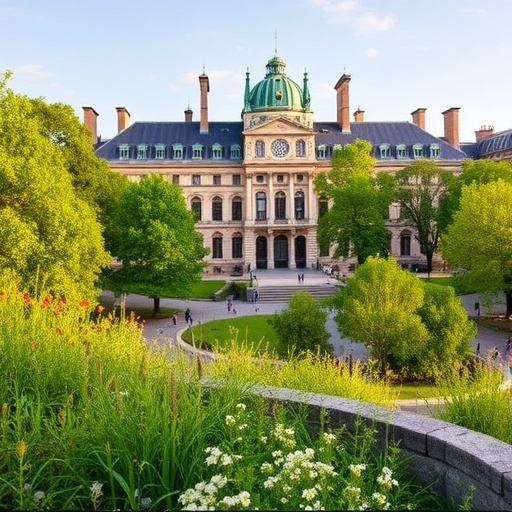
In June 2026, a pivotal conference will convene in Brussels, Belgium, spotlighting transformative pathways to safeguard global biodiversity. This gathering, anchored by nine prominent Horizon Europe research projects within the Transformative Change Cluster, represents an unprecedented collaborative effort to fuse scientific inquiry with actionable policy development. These projects—BAMBOO, BioAgora, BIOTraCes, BIONEXT, CircHive, DAISY, PLANET4B, TCforBE, and TRANSPATH—have, through rigorous interdisciplinary research, aimed to dissect and accelerate the systemic shifts imperative for halting biodiversity loss.
Set within the historic Comet Louise venue, the event will assemble roughly 150 stakeholders, including leading scientists, policymakers, and practitioners, to engage in forward-looking discourse. The convergence of these diverse actors is designed to translate intricate research outcomes into effective governance frameworks, innovative policies, and societal practices that collectively uphold ecological integrity. This conference embodies a critical juncture to consolidate collective insights and stimulate momentum toward a nature-positive future.
The conference’s architecture strategically encompasses four thematic tracks, each delving deeply into different dimensions essential for transformative change. The first track emphasizes systems, models, and scenarios, seeking to elucidate complex ecological networks and predict pathways for biodiversity resilience. Advanced modeling techniques and scenario analyses have been pivotal in understanding how multiple anthropogenic pressures interplay, enabling researchers to frame potential futures and resilience thresholds.
Parallel to this, the governance, policy, and innovation track critically examines current institutional frameworks and explores novel mechanisms to embed biodiversity priorities at policy and financial decision levels. Research within this stream underscores the necessity of adaptive governance structures capable of responding to dynamic socio-ecological systems and fostering policy coherence across sectors and scales. Innovation in policy design and implementation remains a cornerstone for bridging knowledge and actionable governance.
The societal, values, and practice track highlights the integral role of human dimensions in biodiversity conservation. Here, in-depth explorations of societal values, equity considerations, and behavioral transformations are paramount. Researchers emphasize that achieving transformative change demands not only technical solutions but also shifts in cultural norms, ethical frameworks, and participatory governance. This perspective integrates social science methodologies to capture the nuanced fabric of societal engagement with nature.
A dedicated poster and visualization strand complements these thematic areas by showcasing empirical case studies, novel data visualizations, and intersectional analyses fostering knowledge dissemination and stakeholder engagement. This strand employs cutting-edge communication tools to render complex scientific data accessible and compelling, thereby enhancing interdisciplinary dialogue and policy uptake.
The two-day agenda commences with “Exploring Transformative Pathways,” where each research project presents comprehensive syntheses of their findings. This segment facilitates cross-cluster reflection, identifying convergences and delineating unresolved challenges. The moderated panel that follows serves as a crucible for interrogating thematic overlaps, methodological innovations, and emergent research questions, grounding the collective inquiry in practical relevance.
Day one’s parallel sessions provide meticulous scrutiny of biodiversity impacts through nexus approaches, linking biodiversity with critical sectors such as water, agriculture, and energy. These sessions foreground integrative frameworks that reconcile competing resource demands while promoting ecological sustainability. Innovations in transformative research and innovation methodologies are also prominently featured, highlighting systemic innovation methods and transdisciplinary research strategies.
Closing day one, the cross-project synthesis plenary consolidates insights and formulates pressing questions, setting the stage for subsequent deliberations. This synthesis reflects the cluster’s commitment to iterative knowledge integration, ensuring that the research trajectory remains attuned to emergent policy and societal needs.
On day two, themed “From Knowledge to Action,” conference participants engage intensively in translating scientific knowledge into operationalized decision-making frameworks. This includes sessions on integrating transformative insights into ongoing and upcoming policy processes, with a particular emphasis on the EU Biodiversity Strategy and the European Green Deal. Discussions explore financial system reorientation toward nature-positive investments, addressing the catalytic role of finance in driving systemic ecological change.
The agenda also charts a future-oriented biodiversity research program, advocating for sustained transdisciplinary collaboration. Emphasis is placed on refining research agendas that encapsulate governance innovation, societal inclusion, and financial mechanisms, all essential to scaling transformative outcomes. The closing plenary engages stakeholders in an interactive policy dialogue, synthesizing contributions and charting pathways for cooperative, impact-driven efforts.
Throughout the conference, the strategic focus is on enhancing policy relevance and ensuring that transformative knowledge informs and shapes both European and global biodiversity agendas. Notably, the event aligns with key international frameworks such as IPBES, particularly its forthcoming assessments addressing nexus approaches and transformative change. The engagement of policymakers and financial actors underscores a commitment to making research directly actionable, thus reinforcing the science-policy interface.
The Transformative Change Cluster embodies a paradigm shift in environmental research by integrating disciplinary diversity with practical case studies across landscapes and value chains. By addressing governance, innovation, societal values, and finance, these projects collectively advance understanding of systemic shifts required to achieve equitable and sustainable biodiversity outcomes. The conference thus represents a keystone moment in mobilizing scientific excellence to support nature-positive futures.
In summary, the 4–5 June 2026 conference in Brussels will not only highlight the cumulative advances across nine pivotal Horizon Europe projects but also serve as a launchpad for embedding transformative change into policy frameworks and societal practices. Its multi-faceted program and strategic orientation toward actionable knowledge underscore the vital role of interdisciplinary and transdisciplinary collaboration in confronting the complex challenges of biodiversity loss.
News Publication Date: (Not explicitly provided in the source content)
Web References:
https://mediasvc.eurekalert.org/Api/v1/Multimedia/79456f8f-0ead-4ead-a5c0-21f19871f63a/Rendition/low-res/Content/Public
Cite Scienmag News
Margaret Porter. (May 20, 2026). Nine Horizon Europe Projects Unite in Brussels to Drive Science-Based Solutions for Transformative Biodiversity Change. Scienmag. https://scienmag.com/nine-horizon-europe-projects-unite-in-brussels-to-drive-science-based-solutions-for-transformative-biodiversity-change/
Margaret Porter. "Nine Horizon Europe Projects Unite in Brussels to Drive Science-Based Solutions for Transformative Biodiversity Change." Scienmag, 20 May 2026, https://scienmag.com/nine-horizon-europe-projects-unite-in-brussels-to-drive-science-based-solutions-for-transformative-biodiversity-change/. Accessed 3 September 2026.
Margaret Porter. "Nine Horizon Europe Projects Unite in Brussels to Drive Science-Based Solutions for Transformative Biodiversity Change." Scienmag. May 20, 2026. https://scienmag.com/nine-horizon-europe-projects-unite-in-brussels-to-drive-science-based-solutions-for-transformative-biodiversity-change/


