

Thursday, September 3, 2026
Science
No Result
View All Result
  • Login
  • HOME
  • SCIENCE NEWS
  • CONTACT US
  • HOME
  • SCIENCE NEWS
  • CONTACT US
No Result
View All Result
Scienmag
No Result
View All Result
Home Science News Biology

NIH Grants $10.7 Million to Advance Sensory Biology at OU Medicine

July 16, 2026
in Biology
Drew Townsend
By Drew Townsend Scienmag Editorial Profile - Cell Biology
Reading Time: 2 mins read
0
NIH Grants $10.7 Million to Advance Sensory Biology at OU Medicine

NIH Grants $10.7 Million to Advance Sensory Biology at OU Medicine

65
SHARES
587
VIEWS
Share on FacebookShare on Twitter
ADVERTISEMENT

The University of Oklahoma College of Medicine has secured a five-year, $10.7 million National Institutes of Health grant to build a new research hub focused on sensory biology—how cells detect environmental cues and convert them into signaling responses. Announced as part of the COBRE (Centers of Biomedical Research Excellence) program, the award is designed to strengthen biomedical research capacity while supporting early-career investigators in states that have historically received comparatively less NIH funding.

Funded through the National Institute of General Medical Sciences, the center will function as an infrastructure-driven platform for multidisciplinary studies spanning model organisms and human materials. Researchers will use laboratory systems ranging from simple organisms such as roundworms and algae to mouse models and human tissue samples, enabling questions to be tested across evolutionary scales and experimental contexts.

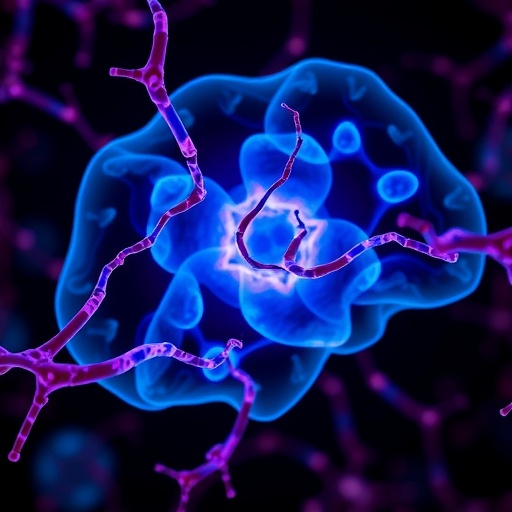
At the center of the program is the study of cilia, microscopic hair-like organelles that protrude from cells and operate as antennae for signal detection. By organizing receptor-mediated pathways at the cell surface, cilia help cells interpret mechanical and chemical inputs, coordinate developmental programs, and regulate physiological homeostasis.

Defects in cilia are not confined to a single organ system. Instead, impaired ciliary function has been linked to widespread disorders affecting nearly every part of the body. The grant-supported work will explore how cilia malfunction contributes to conditions including polycystic kidney disease, congenital heart disease, obesity, scoliosis, neuronal malformations, and certain cancers.

The investigators will emphasize a core technical objective: mapping how specific signaling pathways depend on ciliary structure and dynamics. This includes investigating how alterations at the molecular level can propagate into system-level phenotypes, offering mechanistic links between organelle behavior and disease progression.

“This is a relatively unexplored niche of research,” said Leonidas Tsiokas, Ph.D., professor and chair of the Department of Cell Biology, who will lead the initiative. Tsiokas noted that cilia-related signaling is increasingly recognized as a contributor to major disease processes, yet key mechanisms remain insufficiently charted.

The COBRE award will also provide mentorship and funding for four junior researchers in the College of Medicine. Their projects range across retinal degeneration mechanisms, neurodevelopmental biology in Joubert syndrome, cilia dysfunction in neuropsychiatric conditions such as autism spectrum disorder, schizophrenia, and bipolar disorder, and cellular regulation of copper sensing and handling.

To accelerate discovery, two shared equipment cores will support the program. A Super-Resolution Imaging Core will provide advanced microscopy to resolve cellular structures separated by only a few nanometers, while a Cell and Genetic Engineering Core will supply tools for probing gene and protein function in both healthy and diseased states.

Overall, the center aims to convert cilia biology into actionable biomedical insights—supporting the development of improved strategies to prevent, diagnose, and treat a broad range of illnesses driven by dysfunctional cellular sensing.

Subject of Research: Cilia-mediated sensory biology and related cellular signaling in health and disease
Article Title: University of Oklahoma Receives NIH Grant to Create Sensory Biology Research Center Focused on Cilia
Web References: https://mediasvc.eurekalert.org/Api/v1/Multimedia/c1177dbc-2c5b-4158-aaff-1495a06918b8/Rendition/low-res/Content/Public
References: Research supported by NIH/National Institute of General Medical Sciences under award number P20GM161969-01
Image Credits: University of Oklahoma

Article Title: NIH Grants $10.7 Million to Advance Sensory Biology at OU Medicine

Article References: Original research article

Image Credits: AI Generated

DOI: Not provided

Keywords: cellular response to environmental cues, cilia function and sensory signaling, ciliary defects and human disease, development of sensory system models, early-career researcher support NIH, interdisciplinary sensory biology studies, model organisms in sensory biology, NIH COBRE program for biomedical research, NIH grant for sensory cell signaling, NIH-funded biomedical research infrastructure, sensory biology research, sensory cell detection mechanisms

Cite Scienmag News

Drew Townsend. (July 16, 2026). NIH Grants $10.7 Million to Advance Sensory Biology at OU Medicine. Scienmag. https://scienmag.com/nih-grants-10-7-million-to-advance-sensory-biology-at-ou-medicine/

Drew Townsend. "NIH Grants $10.7 Million to Advance Sensory Biology at OU Medicine." Scienmag, 16 July 2026, https://scienmag.com/nih-grants-10-7-million-to-advance-sensory-biology-at-ou-medicine/. Accessed 3 September 2026.

Drew Townsend. "NIH Grants $10.7 Million to Advance Sensory Biology at OU Medicine." Scienmag. July 16, 2026. https://scienmag.com/nih-grants-10-7-million-to-advance-sensory-biology-at-ou-medicine/


Tags: cellular response to environmental cuescilia function and sensory signalingciliary defects and human diseasedevelopment of sensory system modelsearly-career researcher support NIHinterdisciplinary sensory biology studiesmodel organisms in sensory biologyNIH COBRE program for biomedical researchNIH grant for sensory cell signalingNIH-funded biomedical research infrastructuresensory biology researchsensory cell detection mechanisms
Share26Tweet16
Previous Post

Orienting Selective Attention Within Long-Term Contextual Memories

Next Post

Gender Pay Gap Persists Despite Ongoing Battle of the Sexes

Related Posts

Genetic Structure and Environment-Linked Loci in a Resilient Coral Along Eutrophication Gradient
Biology

Genetic Structure and Environment-Linked Loci in a Resilient Coral Along Eutrophication Gradient

September 3, 2026
Genome Analysis Identifies Multi-Epitope Vaccine Targets Against Drug-Resistant Enterobacter
Biology

Genome Analysis Identifies Multi-Epitope Vaccine Targets Against Drug-Resistant Enterobacter

September 3, 2026
Loneliness drives depression and poor health among older European adults, study finds
Biology

Loneliness drives depression and poor health among older European adults, study finds

September 3, 2026
Two Ways to Read a Cell’s Master Switches Reveal Hidden Biases in Gene Regulation Studies
Biology

Two Ways to Read a Cell’s Master Switches Reveal Hidden Biases in Gene Regulation Studies

September 3, 2026
Shikonin compound triggers prostate cancer cell death through heme oxygenase-1 and ERK/p38 pathways
Biology

Shikonin compound triggers prostate cancer cell death through heme oxygenase-1 and ERK/p38 pathways

September 3, 2026
Integrated bioinformatics profiling of the lysine demethylase gene family in breast cancer
Biology

Integrated bioinformatics profiling of the lysine demethylase gene family in breast cancer

September 3, 2026
Next Post
Gender Pay Gap Persists Despite Ongoing Battle of the Sexes

Gender Pay Gap Persists Despite Ongoing Battle of the Sexes

  • Mothers who receive childcare support from maternal grandparents show more optimized

    Mothers who receive childcare support from maternal grandparents show more parental warmth, finds NTU Singapore study

    27656 shares
    Share 11059 Tweet 6912
  • University of Seville Breaks 120-Year-Old Mystery, Revises a Key Einstein Concept

    1061 shares
    Share 424 Tweet 265
  • Bee body mass, pathogens and local climate influence heat tolerance

    682 shares
    Share 273 Tweet 171
  • Researchers record first-ever images and data of a shark experiencing a boat strike

    546 shares
    Share 218 Tweet 137
  • Groundbreaking Clinical Trial Reveals Lubiprostone Enhances Kidney Function

    531 shares
    Share 212 Tweet 133
Science

Embark on a thrilling journey of discovery with Scienmag.com—your ultimate source for cutting-edge breakthroughs. Immerse yourself in a world where curiosity knows no limits and tomorrow’s possibilities become today’s reality!

RECENT NEWS

  • Genetic Structure and Environment-Linked Loci in a Resilient Coral Along Eutrophication Gradient
  • Dietary Polyphenols Modulate NF-κB Signaling in Inflammation-Driven Diseases Including Cancer
  • Genome Analysis Identifies Multi-Epitope Vaccine Targets Against Drug-Resistant Enterobacter
  • Forensic insights from a fishy pangolin on the trade in real and fake whole pangolin skins

Categories

  • Agriculture
  • Anthropology
  • Archaeology
  • Athmospheric
  • Biology
  • Biotechnology
  • Blog
  • Bussines
  • Cancer
  • Chemistry
  • Climate
  • Earth Science
  • Editorial Policy
  • Marine
  • Mathematics
  • Medicine
  • Pediatry
  • Policy
  • Psychology & Psychiatry
  • Science Education
  • Social Science
  • Space
  • Technology and Engineering

Subscribe to Blog via Email

Enter your email address to subscribe to this blog and receive notifications of new posts by email.

Join 5,151 other subscribers

© 2025 Scienmag - Science Magazine

Welcome Back!

Login to your account below

Forgotten Password?

Retrieve your password

Please enter your username or email address to reset your password.

Log In
No Result
View All Result
  • HOME
  • SCIENCE NEWS
  • CONTACT US

© 2025 Scienmag - Science Magazine

Discover more from Science

Subscribe now to keep reading and get access to the full archive.

Continue reading