


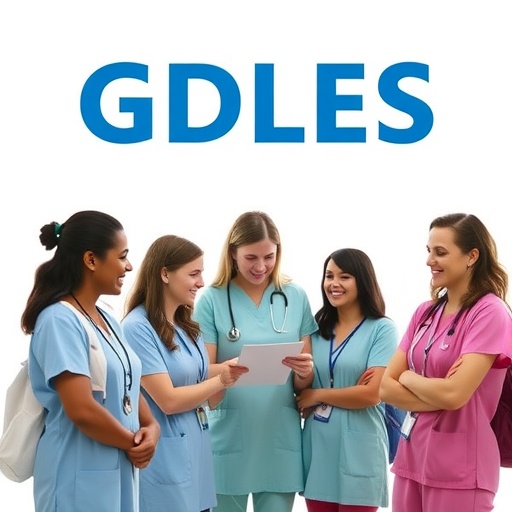
The role of nursing education is fundamentally shifting in response to dynamic healthcare environments and the evolving needs of patients. Central to this transformation is the adoption of the Next Generation Digital Learning Environment (NGDLE), a concept that seeks to leverage technology to enhance educational outcomes. The recent cross-sectional study conducted by Sorour et al. sheds light on how NGDLE not only influences nursing students’ learning experiences but also impacts their empowering outcomes and the formation of professional identities—elements crucial to their future roles as healthcare providers.
In the rapidly changing landscape of healthcare, nursing students are confronted with the necessity for a robust educational foundation that integrates theoretical knowledge with practical skills. Traditional modes of education often fail to provide the immediacy and relevance needed to prepare today’s practitioners. NGDLE addresses these shortcomings by enabling a more interactive, personalized, and integrated approach to learning. By incorporating various digital tools and resources, NGDLE fosters a collaborative learning environment that aligns closely with the real-world practices of nursing.
One of the significant findings of Sorour et al.’s study is the enhancement of professional identity among nursing students who experienced NGDLE. Professional identity in nursing encapsulates how individuals perceive themselves in their roles as nurses. This self-perception is pivotal as it influences motivation, ethical decision-making, and ultimately the quality of patient care. The ability of NGDLE to cultivate this sense of identity through simulated experiences and collaborative projects indicates its potential for long-lasting impact on students’ readiness to embrace their roles within healthcare systems.
Embarking on the path of nursing education involves not just the acquisition of knowledge but also the empowerment to utilize that knowledge effectively in practice. The study emphasizes empowering outcomes, which refer to the capabilities students develop to act confidently and independently in their practice. Through NGDLE, nursing students engage in active learning processes, gaining not only clinical skills but also critical thinking abilities essential for effective patient advocacy and decision-making. As students navigate these digital learning environments, they report higher levels of self-efficacy, which translates into their professional practice.
Moreover, the study highlights the importance of community and collaboration in nursing education. NGDLE facilitates opportunities for peer-to-peer interaction, allowing students to share experiences, insights, and resources. This collaborative spirit is crucial in building a supportive learning culture where students can thrive. The connections made within this network contribute not only to knowledge acquisition but also to emotional resilience—a key attribute for those entering the demanding field of healthcare.
In parallel, the research findings draw attention to the implications for educators and curriculum developers. As nursing programs increasingly incorporate NGDLE elements, it is critical for educators to be equipped with the necessary skills to facilitate this shift effectively. Professional development opportunities for faculty focusing on digital tools and pedagogies will be essential in ensuring that the benefits of NGDLE are fully realized. This trend signals a movement towards embracing innovation in education, challenging traditional teaching methodologies, and fostering a culture of continuous improvement within nursing programs.
The importance of assessment methods within the NGDLE framework cannot be overlooked. As educational approaches evolve, so too must the ways in which student performance is evaluated. The study advocates for new assessment strategies that reflect the complexities of modern nursing. By aligning assessments with the competencies and skills expected in clinical practice, educators can better gauge student readiness for the challenges they will face in the field. The effective implementation of such assessments will guide curricular refinements and promote a standards-based approach to nursing education.
As we reflect on the future of nursing as impacted by NGDLE, it is clear that an intentional and strategic approach to integrating technology in education is paramount. The study by Sorour et al. serves as a compelling call to action for nursing educators to embrace these new methodologies with open arms. The potential to transform educational experiences and outcomes for nursing students engages a powerful narrative that underscores the importance of adaptability in education.
Research emphasizes that the skills and qualities derived from NGDLE are not just beneficial for nursing students but ultimately translate into enhanced patient care in the healthcare system. When nursing students are equipped with the tools they need to succeed, informed by both their educational experiences and community support, the positive ripple effects can lead to improved patient outcomes, elevated professional standards, and a more resilient healthcare workforce.
The notion of lifelong learning is integral to the nursing profession, where the landscape is ever-evolving, and knowledge must be continually updated. NGDLE supports this by fostering an environment where learning is an ongoing process. By driving student engagement and promoting a culture of inquiry, NGDLE aligns with the evolving responsibilities of nurses who must be prepared to tackle future healthcare challenges effectively and innovatively.
In conclusion, the study by Sorour et al. paints a promising picture of the future of nursing education within the context of NGDLE. The integration of technology and innovative pedagogical approaches not only empowers nursing students but also strengthens their professional identities. As nursing education continues to evolve, the principles established through NGDLE will undoubtedly usher in a new era of learning, leading to a generation of nurses who are well-prepared to meet the demands of a complex healthcare landscape.
The significance of the findings from this research cannot be understated. They serve as a vital resource for institutions aiming to refine their nursing curricula, adopt new teaching methodologies, and ultimately enhance the training of future nursing professionals. As we advance in this digital age, the commitment to creating meaningful, inclusive, and empowering educational experiences will be crucial in shaping the next generation of nursing leaders.
Cite Scienmag News
Ophelia Keating. (September 24, 2025). NGDLES Impact on Nursing Students’ Empowerment and Identity. Scienmag. https://scienmag.com/ngdles-impact-on-nursing-students-empowerment-and-identity/
Ophelia Keating. "NGDLES Impact on Nursing Students’ Empowerment and Identity." Scienmag, 24 September 2025, https://scienmag.com/ngdles-impact-on-nursing-students-empowerment-and-identity/. Accessed 3 September 2026.
Ophelia Keating. "NGDLES Impact on Nursing Students’ Empowerment and Identity." Scienmag. September 24, 2025. https://scienmag.com/ngdles-impact-on-nursing-students-empowerment-and-identity/


