


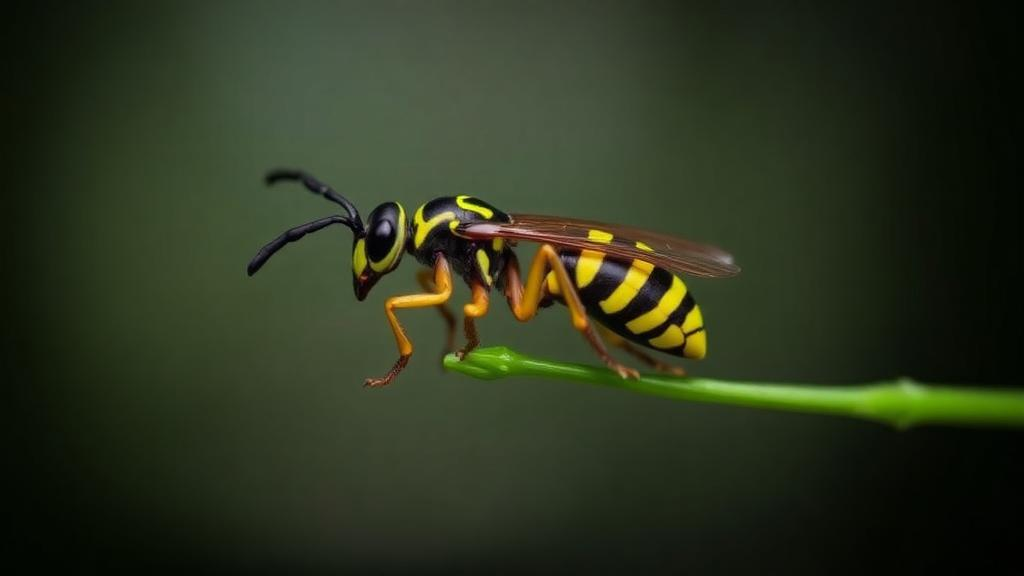
Deep in the forests of New Zealand lives a tiny parasitoid wasp genus that has puzzled entomologists for more than three decades. Pronkia, a group of small braconid wasps found nowhere else on Earth, has long been classified alongside a cosmopolitan genus called Meteoridea in the subfamily Meteorideinae. That placement, made in 1990 by Dutch hymenopterist C. van Achterberg, was always acknowledged as uncertain. Now, for the first time, scientists have generated molecular data for Pronkia and run it through rigorous phylogenetic analysis, and the results overturn the old classification entirely. The genus belongs neither with Meteoridea nor with the agathidine wasps that van Achterberg also considered. Instead, it sits within the sigalphoid clade, a well-defined lineage of caterpillar-parasitizing wasps, and deserves recognition as its own distinct subfamily.
The research, published in the journal ZooKeys, presents the first molecular phylogeny to include Pronkia. The team assembled DNA sequences for five so-called heritage gene fragments: the barcoding region of the mitochondrial cytochrome oxidase c subunit 1 gene (COI), the nuclear protein-coding elongation factor-1 alpha gene (EF1-α), and three ribosomal genes, 28S, 18S and 16S. These markers have been workhorses of braconid wasp systematics for decades, and the researchers combined newly generated sequences with data drawn from published studies, mitogenomes and even secondary products of ultraconserved element libraries deposited in GenBank. The sampling covered representatives of nearly all non-cyclostome braconid subfamilies, with particular emphasis on the sigalphoid lineage and multiple species of Meteoridea.
The results were unambiguous on the central question. None of the analyses, whether each gene was examined separately or all five were concatenated into a single dataset, supported the inclusion of Pronkia within Meteorideinae. In every individual gene analysis, Pronkia formed a monophyletic clade together with Agathidinae and Sigalphinae, the two subfamilies that make up the sigalphoid group. Meteoridea never appeared anywhere near Pronkia. The combined analysis recovered the sigalphoid clade with maximum statistical support, with ultrafast bootstrap values and Shimodaira-Hasegawa-like approximate likelihood ratio tests both reaching 100 percent for the grouping and for the monophyly of each of the three constituent subfamilies.
What the data could not fully resolve is exactly how the three sigalphoid subfamilies are related to one another. In the combined tree, Pronkia appeared as a sister group to Sigalphinae, but with very low support, essentially forming a trichotomy, or three-way split, among the three lineages. This kind of unresolved branching pattern, known as a polytomy, often reflects either genuinely rapid evolutionary radiation or simply insufficient signal in the markers used. The researchers therefore took the conservative but significant step of elevating Pronkiini, previously a tribe within Meteorideinae, to full subfamily rank as Pronkiinae stat. nov., a formal taxonomic act that recognizes its evolutionary distinctiveness without overcommitting to a specific sister relationship.
The methods behind the study involved careful handling of some notoriously difficult sequence data. While the protein-coding COI and EF1-α fragments aligned cleanly with no insertions or deletions, the ribosomal genes required alignment guided by secondary structure models, which map the paired stems and unpaired loops of the RNA molecules. The 28S sequences of the sigalphoid taxa, including Pronkia, proved highly divergent in both sequence and length. Most strikingly, the D3-1 to D3-1′ helix and loop region of Pronkia bore no resemblance to that of any other taxon in the analysis, though it could be aligned among the three Pronkia species themselves. That region was therefore offset from the other sequences rather than forced into a misleading alignment. The final concatenated matrix was partitioned into twelve subsets, with codon positions for the protein-coding genes and paired versus unpaired bases for the ribosomal genes, and analyzed by maximum likelihood using IQ-TREE 3.
Beyond the phylogeny, the team provided a formal diagnosis of the new subfamily and a photographic portfolio of representative species, illustrated for the first time. Pronkia wasps are small, measuring just 2.5 to 3.5 millimeters in body length, with largely granulate cuticular sculpture. Females carry well-exserted ovipositors roughly as long as the fore wing. The antennae bear 26 to 29 elongate flagellomeres, the occipital carina is complete, and the mesosoma shows a distinctive combination of features including well-developed subpronopes and a transverse subposterior depression on the scutellum. Wing venation offers particularly telling characters: the fore wing has a distinct vein 1RS, a wide marginal cell, a four-sided second submarginal cell, and a largely unsclerotized vein M+CU, while vein 1cu-a is antefurcal. The hind wing carries a well-developed tubular vein CUb, and the hind tibia is clavate, suggesting a well-developed subgenual organ, a sensory structure.
These morphological details matter because they distinguish Pronkiinae from Meteorideinae, with which it had been grouped under van Achterberg’s 1993 illustrated key to braconid subfamilies. Four features separate the two: the presence of a well-developed fore wing vein 1RS, the largely unsclerotized vein M+CU, the antefurcal position of vein 1cu-a, and the female’s long exserted ovipositor. The authors also discuss the evolutionary significance of hind wing vein 2CU, which appears in several non-cyclostome subfamilies including Agathidinae and Meteorideinae but is absent from most other extant taxa, occurring otherwise only in the monotypic Chilean Apozyginae and in various Cretaceous and a few Eocene fossils. Because the subfamilies possessing this vein do not cluster together in recent phylogenomic trees, the researchers suspect it may have arisen secondarily in at least some of these lineages rather than being inherited from a common ancestor.
The study also sheds light on hidden diversity within the genus. Although Pronkia contains only a single described species, DNA barcoding tells a different story. The 202 barcodes currently on the BOLD database collectively represent nine BINs, or barcode index numbers, which are algorithmically defined species-level clusters. That suggests the genus actually comprises nine or more species, most of them still awaiting formal description. All sequence data for these specimens have been made publicly available, and the alignments are deposited on Datadryad.org, reflecting the growing emphasis on reproducibility in taxonomy.
Perhaps the most intriguing implications concern biology. All members of the two other sigalphoid subfamilies, Agathidinae and Sigalphinae, are koinobiont endoparasitoids of Lepidoptera caterpillars, meaning the larvae develop inside living hosts that continue to grow. Sigalphoids share a remarkable oviposition strategy: their ovipositors lack the preapical dorsal notch typical of many other braconids, and the egg, which is hydropic, is placed either inside or attached to the ventral nerve cord or cerebral ganglion of the host caterpillar. This placement prevents or restricts encapsulation by the host’s immune cells during early development. The egg then swells and hatches into a polypodiform first-instar larva, an extremely uncommon form among Ichneumonoidea. Given Pronkia’s close relationship to these subfamilies and the similarity of its ovipositor, the authors speculate that it too will prove to attack concealed caterpillars and deposit its eggs in protective host tissue such as the nervous system.
The broader context of this discovery highlights how much remains unknown about New Zealand’s parasitoid wasp fauna. The family Braconidae is represented there by just 99 indigenous species in 52 genera, yet 16 of those genera, a remarkable 30 percent, are known only from New Zealand. Pronkia now stands as the sole genus of a newly recognized endemic subfamily, a lineage that survived in isolation long enough to become genetically and morphologically distinct from its relatives. The finding also vindicates, in part, an earlier hunch: Chen and van Achterberg had tentatively suggested that Meteorideinae might belong among the sigalphoids. As the authors wryly note, they were 50 percent correct, since Pronkia is indeed a sigalphoid, but its supposed relative Meteoridea is actually far more basal among the non-cyclostome braconids. The revision underscores how molecular data can resolve questions that morphology alone left open for thirty-five years, and it adds a new branch to the evolutionary tree of one of the most species-rich families of parasitic insects on the planet.
Subject of Research: The molecular phylogenetic placement and taxonomic elevation of the endemic New Zealand braconid wasp genus Pronkia to subfamily rank as Pronkiinae stat. nov.
Article Title: Revised relationships of the endemic New Zealand subfamily Pronkiinae stat. nov. ( Hymenoptera , Braconidae )
Article References: Quicke, D. L. J., Ward, D. F., Sharkey, M. J., & Butcher, B. A. (2026). Revised relationships of the endemic New Zealand subfamily Pronkiinae stat. nov. (Hymenoptera, Braconidae). ZooKeys, 1294, 313-331. https://doi.org/10.3897/zookeys.1294.210518
Image Credits: AI Generated
DOI: 10.3897/zookeys.1294.210518
Keywords: Pronkia, Pronkiinae, Braconidae, New Zealand, parasitoid wasps, molecular phylogeny, sigalphoid clade, taxonomy, Hymenoptera, DNA barcoding, endemism, ZooKeys
Cite Scienmag News
Juliet Wilcox. (October 15, 2026). New Zealand’s Endemic Pronkia Wasps Get Their Own Subfamily After DNA Study Upends Classification. Scienmag. https://scienmag.com/new-zealands-endemic-pronkia-wasps-get-their-own-subfamily-after-dna-study-upends-classification/
Juliet Wilcox. "New Zealand’s Endemic Pronkia Wasps Get Their Own Subfamily After DNA Study Upends Classification." Scienmag, 15 October 2026, https://scienmag.com/new-zealands-endemic-pronkia-wasps-get-their-own-subfamily-after-dna-study-upends-classification/. Accessed 15 October 2026.
Juliet Wilcox. "New Zealand’s Endemic Pronkia Wasps Get Their Own Subfamily After DNA Study Upends Classification." Scienmag. October 15, 2026. https://scienmag.com/new-zealands-endemic-pronkia-wasps-get-their-own-subfamily-after-dna-study-upends-classification/


