


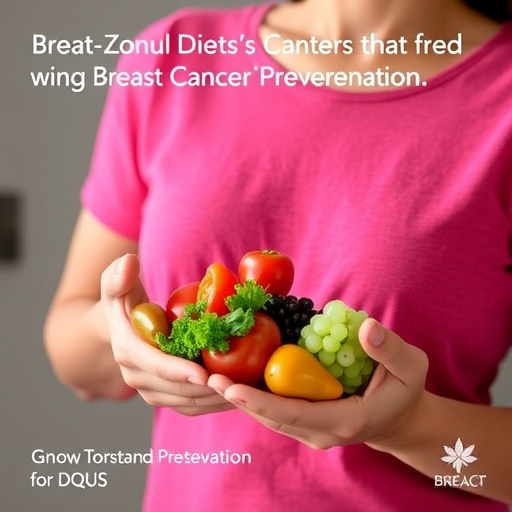
In a recent nationwide survey conducted by the Physicians Committee for Responsible Medicine in collaboration with Morning Consult, striking insights have emerged regarding American women’s awareness of nutrition’s role in breast cancer prevention. The study, which polled 2,022 women across the United States, reveals a concerning knowledge gap about how dietary choices influence the risk of developing breast cancer, a disease that continues to pose a significant public health challenge worldwide. The findings underscore the urgent need for enhanced communication between healthcare providers and patients on this critical topic.
Despite modest progress in healthcare discussions, only 19% of women reported that their healthcare providers had engaged them in conversations about the intersection of nutrition and breast cancer. This statistic represents a slight increase from 16% the previous year, but still indicates that the vast majority of women remain uninformed. Even more troubling is the observation that fewer women identified diet as a specific risk-modifying factor in breast cancer, with awareness declining from 28% to 25% over the past year.
This disconnect is especially surprising given the mounting scientific evidence supporting the influence of diet on breast cancer risk modulation. Dr. Kristi Funk, a leading breast cancer surgeon and prevention expert, emphasizes the profound impact that dietary patterns exert on carcinogenesis in breast tissue. She stresses that lifestyle factors, including nutrition, should be integral components of breast cancer prevention strategies, yet many women remain unaware of these connections.
Supporting Dr. Funk’s perspective, the American Medical Association recently adopted a groundbreaking breast cancer prevention policy aimed at promoting lifestyle modifications. This policy, instituted in June, advocates for regular physical activity, adherence to a whole-food, plant-based diet, alcohol limitation, and weight maintenance as evidence-based approaches to reduce breast cancer incidence. The policy also encourages physicians to systematically engage patients in discussions about these lifestyle factors, thereby bridging the prevailing information gap.
Diving deeper into the survey’s outcomes, it is evident that while fruits and vegetables remain the most commonly recognized dietary elements associated with breast cancer risk reduction, the overall awareness of more nuanced dietary guidelines remains limited. Approximately 24% of respondents mentioned vegetables and 17% mentioned fruits as beneficial, marking only slight improvements from the prior year. Conversely, awareness of the roles of avoiding processed meats or limiting dietary fats was considerably lower, signaling a lack of comprehensive understanding.
The survey further highlights a glaring deficiency in familiarity with plant-based dietary patterns as preventive measures, with a mere 1% of women citing vegan, vegetarian, or specifically plant-based diets. This finding underscores a persistent gap in public knowledge despite accumulating research showing that diets rich in plant-based foods can modulate inflammation, hormonal pathways, and oxidative stress—mechanisms intricately linked to breast cancer development.
One of the more encouraging findings from the survey pertains to the evolving perception of soy products. Historically stigmatized due to myths associating soy consumption with increased breast cancer risk, recent data contradicts these misconceptions. The percentage of women recognizing that high soy intake can be protective against breast cancer rose by 4%. This shift aligns with comprehensive meta-analyses and large cohort studies, such as a 2017 investigation involving over 6,000 women, that reveal soy isoflavones exhibit estrogen-modulating properties without increasing cancer risk and may even confer protective benefits.
However, the survey results also reveal confusion surrounding dairy products. Paradoxically, among women who reported discussing nutrition’s role in breast cancer with healthcare providers, a growing number inaccurately believe that dairy consumption reduces cancer risk—rising from 9% to 16% in one year. This discrepancy signals potential misinformation or mixed messages conveyed during clinical encounters, emphasizing the necessity for healthcare professionals to provide clear, consistent, and evidence-based nutrition guidance.
Furthermore, positive trends were observed concerning legumes, particularly beans, with women who engaged in nutrition discussions being more likely to recognize beans as beneficial in lowering breast cancer risk. Beans are rich in fiber, antioxidants, and phytochemicals with potential chemoprotective properties, offering mechanistic plausibility for their protective role, including modulation of estrogen metabolism and inhibition of cellular proliferation in breast tissue.
As Breast Cancer Awareness Month approaches, the Physicians Committee for Responsible Medicine is spearheading a movement to amplify public understanding of prevention strategies. Starting in September, a series of community-sponsored rallies across the United States aims to spotlight preventive lifestyle interventions. This grassroots effort will include health experts collaborating with local leaders to disseminate actionable knowledge on diet, physical activity, and other modifiable risk factors to a broad audience.
The challenge remains formidable: bridging the divide between scientific evidence and public awareness necessitates systemic change, including reformation of clinical communication practices. Healthcare providers must be equipped and motivated to deliver comprehensive counseling on lifestyle factors, particularly nutrition, with the goal of empowering women to make informed choices that can reduce breast cancer risk. This aligns with growing public health paradigms that prioritize prevention as a cornerstone of reducing cancer burden.
In conclusion, the Physicians Committee’s survey reveals that while incremental progress has been made in raising awareness of diet’s role in breast cancer prevention, significant gaps persist. The nuanced understanding of dietary patterns that contribute to risk reduction remains elusive for many women, underscoring an urgent need for targeted education, clear messaging by health professionals, and broader public health initiatives. Efforts to dismantle entrenched myths—such as the erroneous perception of soy and dairy’s impact—are vital components in the overarching strategy to combat breast cancer through modifiable lifestyle factors.
Cite Scienmag News
Daisy Hatcher. (August 12, 2025). New Survey Reveals Most U.S. Women Are Uninformed by Healthcare Providers About Diet’s Role in Breast Cancer Prevention. Scienmag. https://scienmag.com/new-survey-reveals-most-u-s-women-are-uninformed-by-healthcare-providers-about-diets-role-in-breast-cancer-prevention/
Daisy Hatcher. "New Survey Reveals Most U.S. Women Are Uninformed by Healthcare Providers About Diet’s Role in Breast Cancer Prevention." Scienmag, 12 August 2025, https://scienmag.com/new-survey-reveals-most-u-s-women-are-uninformed-by-healthcare-providers-about-diets-role-in-breast-cancer-prevention/. Accessed 3 September 2026.
Daisy Hatcher. "New Survey Reveals Most U.S. Women Are Uninformed by Healthcare Providers About Diet’s Role in Breast Cancer Prevention." Scienmag. August 12, 2025. https://scienmag.com/new-survey-reveals-most-u-s-women-are-uninformed-by-healthcare-providers-about-diets-role-in-breast-cancer-prevention/


