


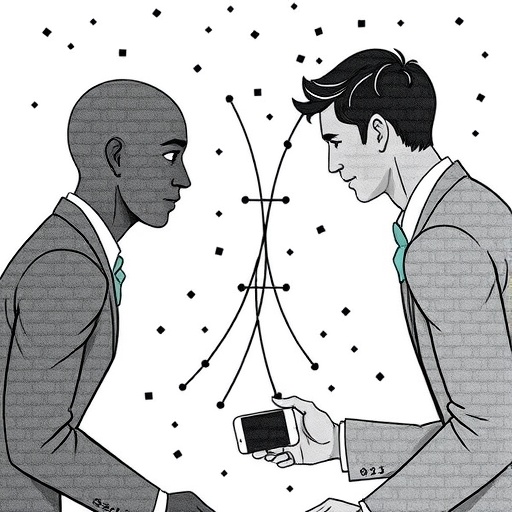
In the intricate fabric of human society, our personal identity unfolds as a mosaic of diverse dimensions—age, gender, ethnicity, and socioeconomic status, among others. These variables do not exist in isolation; rather, they collectively shape the contours of our social interactions and relationships. Understanding how these multifaceted identity elements influence human connectivity has long posed a challenge to social scientists, behavioral researchers, and complexity theorists alike. Addressing this challenge head-on, a pioneering team of researchers led by Fariba Karimi of the Institute of Human-Centred Computing at Graz University of Technology (TU Graz) and Samuel Martin-Gutierrez from the Complexity Science Hub has developed an innovative computational framework known as the Multiplex Assortativity Parameterized Statistical model, or MAPS.
MAPS represents a major leap forward in quantitatively dissecting the interplay of personal identity variables in social networks. Fundamentally, it’s a statistical model tailored to unravel the nuances of human selectivity by calculating the influence of multiple identity dimensions on the formation and sustainability of social ties. Unlike traditional models that often focus on single attributes or overlook overlapping identity factors, MAPS integrates and weighs various identity dimensions simultaneously. This holistic approach affords unprecedented insight into how people selectively forge friendships and intimate relationships, shedding light on the fundamental mechanisms of social stratification and cohesion.
In a striking demonstration of MAPS’s power, Karimi, Martin-Gutierrez, and their collaborators conducted an ambitious empirical study probing the fabric of high school friendships and marriage patterns in the United States. By parsing extensive datasets on adolescent social networks and long-term marital bonds, they were able to trace how identity-based preferences govern the choices individuals make in bonding with others. Their findings, published in the esteemed journal Communications Physics, underscore a striking revelation: human beings exhibit a degree of social selectivity that is both intricate and robust across various identity spectra.
One of the central technical breakthroughs that MAPS enables is its multiplex network perspective. Human identity is inherently layered; for example, individuals simultaneously belong to age cohorts, genders, ethnic groups, and economic strata, all of which contribute multidimensionally to who they connect with and why. The MAPS model employs advanced statistical mechanics and parameter inference techniques to parse these overlapping layers and quantify “assortativity”—a measure of the tendency for similar individuals to bond. By doing so, the model teases apart which identity attributes weigh most heavily in shaping social ties.
Delving into the specifics, the researchers applied MAPS to a multiplex dataset derived from American high school friendship networks. This data involved mapping social contacts across distinct dimensions: gender homophily (preference for same gender), age group clustering, ethnic affiliations, and even the socioeconomic environment of students. The model revealed discernible patterns reflecting strong assortativity along the lines of ethnicity and socioeconomic status, while gender and age showed more nuanced effects. Such findings illuminate the subtle ways in which teenagers’ social worlds are bounded by multiple identity constraints instead of a single factor, reinforcing the concept of multilayered social selectivity.
Beyond adolescent friendships, the team’s MAPS-based analysis also extended to marital patterns within communities. By examining marriage records alongside census data comprising a broad spectrum of personal characteristics, the researchers decoded how complex assortative mating preferences emerge. The results highlighted that people do not choose partners randomly but rather show significant assortativity regarding education level, ethnicity, and economic background. Interpreted through the MAPS lens, these observations emphasize that social boundaries are simultaneously permeable yet selective, mediated by a confluence of identity dimensions that collectively guide partner selection.
One particularly illuminating conclusion of the study is the quantification of how identity dimensions interplay rather than operate independently. For instance, the model uncovered that someone’s ethnicity and socioeconomic background are not just parallel filters but interact synergistically to enhance or mitigate social selectivity. This critical insight permits more refined predictions about the structure and evolution of social networks in diverse societies, carrying profound implications for understanding segregation, social mobility, and integration.
From a methodological standpoint, MAPS harnesses the power of multiplex network theory combined with parameterized assortativity metrics to model real-world complexity. The model’s architecture incorporates likelihood functions calibrated to capture joint assortativity patterns, multi-attribute interdependencies, and random connectivity noise. The computational approach is scalable, allowing it to be applied to large social datasets spanning different contexts, making it a versatile tool for sociologists, data scientists, and policy analysts seeking to decode social connectivity trends.
The work of Karimi and Martin-Gutierrez represents a nexus between computational social science and complex systems theory. Their MAPS model builds upon foundational concepts in network science—such as homophily and community detection—while extending the analytical toolkit to embrace multilayered personal identities. This holistic perspective is increasingly relevant in today’s hyper-diverse societies, where social divisions are rarely monolithic and individuals navigate a tapestry of intersecting demographic factors.
Equally important is the model’s potential impact on practical applications, from informing educational policies aimed at fostering inclusivity to providing data-driven insights for tackling social inequalities. Understanding the mechanisms of human social selectivity through MAPS can aid in devising intervention strategies that promote cross-cutting ties, which are vital for social cohesion and reducing polarization. Furthermore, in domains like online social platforms and urban planning, nuanced insights into social dynamics can enhance community-building efforts and improve network resilience.
Looking forward, the MAPS framework opens exciting avenues for future research. Expanding the model to encompass additional identity dimensions—such as religion, political affiliation, or personality traits—could further refine our grasp of social bonding patterns. Moreover, integrating temporal dynamics into MAPS would allow scientists to trace how social selectivity evolves across life stages or in response to societal changes, thereby deepening our understanding of social adaptation and transformation.
The research exemplifies the power of interdisciplinary collaboration, uniting expertise in human-centered computing, complexity science, sociology, and statistical physics. The resulting MAPS model stands as a testament to how computational innovation can unlock profound insights into the human condition. By highlighting the extraordinary selectivity embedded in social relationships, this work challenges simplistic narratives about social mixing and offers a sophisticated lens through which to examine the social architecture of identity.
In summarizing this groundbreaking study, what becomes clear is that human social networks are structured not merely by chance or singular identity factors, but by a rich, multiplex matrix of attributes that dynamically select, exclude, and bond. MAPS provides the empirical rigor and computational sophistication necessary to decode this matrix, promising to revolutionize how scientists and policymakers alike understand and foster human connections in a complex world.
News Publication Date: Not provided.
Web References: Not provided.
References: Published in Communications Physics.
Keywords
social networks, identity dimensions, assortativity, multiplex networks, computational social science, human selectivity, MAPS model, statistical modeling, social relationships, complexity science, high school friendships, marriage patterns
Cite Scienmag News
Denise Maddox. (May 13, 2026). New Study Uncovers Rigorous Selection Patterns in Social Relationships. Scienmag. https://scienmag.com/new-study-uncovers-rigorous-selection-patterns-in-social-relationships/
Denise Maddox. "New Study Uncovers Rigorous Selection Patterns in Social Relationships." Scienmag, 13 May 2026, https://scienmag.com/new-study-uncovers-rigorous-selection-patterns-in-social-relationships/. Accessed 4 September 2026.
Denise Maddox. "New Study Uncovers Rigorous Selection Patterns in Social Relationships." Scienmag. May 13, 2026. https://scienmag.com/new-study-uncovers-rigorous-selection-patterns-in-social-relationships/


