


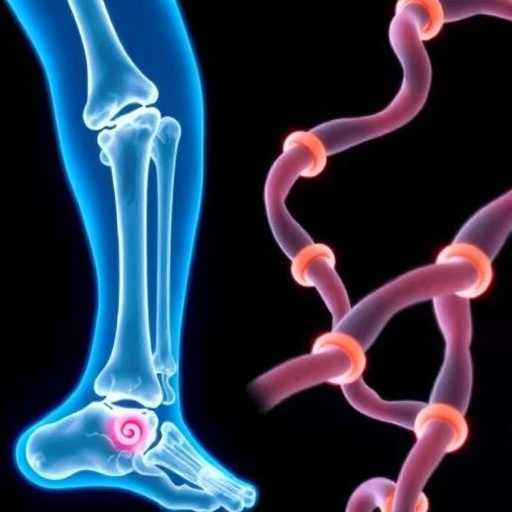
In a groundbreaking study published in the Journal of Clinical Oncology on October 9, 2025, researchers at Cleveland Clinic Children’s, alongside collaborators from renowned institutions such as St. Jude’s Children’s Research Hospital, Mayo Clinic, and the Kitz Hopp Children’s Cancer Center Heidelberg in Germany, have uncovered a novel genetic factor that significantly elevates the risk of osteosarcoma in children. This discovery identifies the gene SMARCAL1 as a pivotal player in the susceptibility to osteosarcoma, a malignant bone tumor that predominantly affects children and young adults.
Osteosarcoma represents the most common type of malignant bone tumor in the pediatric population, primarily arising in the long bones of the limbs, such as the arms and legs. Despite advances in oncology, treatment outcomes for osteosarcoma have stagnated over the last four decades, underscoring the urgent need for novel insights into its pathogenesis and potential therapeutic targets. The devastating nature of this cancer is highlighted by its survival rates: approximately 70% of patients survive if the disease remains localized, but this plummets to roughly 20% when metastasis occurs.
This study harnessed the power of large-scale genetic data by analyzing genomic information from nearly 6,000 pediatric cancer patients and contrasting it with data collected from over 14,000 adult controls devoid of cancer diagnoses. The researchers specifically examined mutations in 189 genes implicated in various DNA repair pathways—a biological system critical to the maintenance of genomic integrity. DNA repair mechanisms correct damage inflicted on DNA, which if left unresolved, can initiate mutagenic processes leading to cancerous growth.
The crux of the findings lies in the identification of inherited mutations in the SMARCAL1 gene as a noteworthy risk factor in osteosarcoma development. SMARCAL1 encodes an ATP-dependent DNA annealing helicase that plays an essential role in replication fork stabilization and repair of DNA double-strand breaks, key aspects of maintaining genomic stability during cell division. Mutations in SMARCAL1 are hypothesized to disrupt normal DNA repair capacity, allowing for the accumulation of genetic aberrations that drive oncogenesis in bone tissue.
Approximately 2.6% of children diagnosed with osteosarcoma were found to carry these inherited mutations in SMARCAL1, suggesting a significant genetic predisposition that had previously gone unrecognized. This not only advances our understanding of osteosarcoma’s molecular underpinnings but also opens avenues for genetic screening programs designed to identify at-risk populations early, allowing for preemptive monitoring or intervention.
Such insights into DNA repair dysfunction further illuminate the broader relationship between genomic instability and pediatric cancer susceptibility. DNA damage response (DDR) genes, integral to detecting and repairing lesions, are increasingly recognized as central to the vulnerability of cells to malignant transformation. The study’s focus on 189 DNA repair-associated genes underscores a systemic approach to deciphering genetic predispositions, moving beyond single gene mutations to a network of interrelated genomic maintenance pathways.
The implications for clinical practice are profound. Identification of SMARCAL1 mutations as a marker for osteosarcoma risk sharpens the potential for personalized medicine strategies. Therapies targeting DNA repair pathways, including synthetic lethality approaches or agents that induce DNA damage selectively in cancer cells, could be tailored based on an individual’s genetic profile. Moreover, earlier diagnosis through genetic risk assessment may enhance patient outcomes by initiating treatment before metastasis sets in.
Dr. Richa Sharma, a pediatric hematologist and oncologist at Cleveland Clinic Children’s and the study’s senior author, emphasized that these findings represent a transformative stride in the fight against an aggressive and rare malignancy. Given the minimal progress in osteosarcoma treatment protocols over the last 40 years, understanding the biological basis of the disease at the genetic level is pivotal to developing innovative therapies and improving survival rates.
The research methodology was robust, integrating next-generation sequencing technologies with comprehensive bioinformatic analyses, thus offering an unprecedented depth of insight into the genomic landscapes of pediatric cancers. By comparing cancer-afflicted children to a large cohort of cancer-free adults, the researchers effectively delineated inherited mutational burdens that predispose to malignancy, ruling out sporadic mutations associated with tumorigenesis.
Furthermore, this work reinforces the critical importance of collaborative, multi-institutional studies in rare pediatric cancers. By pooling genetic data across continents and institutions, the scientific community amplifies its capabilities to detect subtle, yet clinically significant, genetic variants that single-center studies might overlook.
Despite the breakthrough, experts caution that SMARCAL1 mutations represent one piece within a complex puzzle of osteosarcoma etiology. Environmental factors, other genetic alterations, and epigenetic modifications also likely contribute to tumor development. Continuous research will be essential to fully elucidate these mechanisms and translate them into reliable diagnostic and treatment paradigms.
In summary, this landmark investigation validates the hypothesis that defects in DNA damage response genes are integral to pediatric cancer risk and establishes SMARCAL1 as a novel osteosarcoma predisposition gene. This breakthrough advances not only the scientific community’s understanding of osteosarcoma’s molecular basis but also offers hope for future innovations in detection, prevention, and targeted therapy of this devastating pediatric cancer.
News Publication Date: October 8, 2025
Web References:
- Journal of Clinical Oncology: https://ascopubs.org/toc/jco/0/ja
- DOI link: http://dx.doi.org/10.1200/JCO-25-01114
Cite Scienmag News
Nathaniel Bowman. (October 9, 2025). New Study Uncovers Genetic Connection to the Most Common Pediatric Bone Cancer. Scienmag. https://scienmag.com/new-study-uncovers-genetic-connection-to-the-most-common-pediatric-bone-cancer/
Nathaniel Bowman. "New Study Uncovers Genetic Connection to the Most Common Pediatric Bone Cancer." Scienmag, 9 October 2025, https://scienmag.com/new-study-uncovers-genetic-connection-to-the-most-common-pediatric-bone-cancer/. Accessed 4 September 2026.
Nathaniel Bowman. "New Study Uncovers Genetic Connection to the Most Common Pediatric Bone Cancer." Scienmag. October 9, 2025. https://scienmag.com/new-study-uncovers-genetic-connection-to-the-most-common-pediatric-bone-cancer/


