


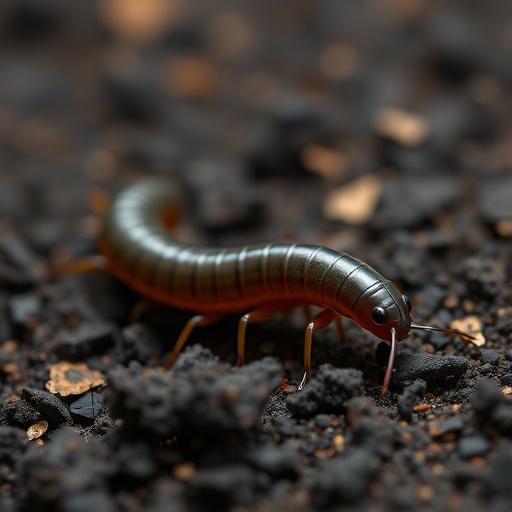
Researchers have recently launched a significant investigation into the effects of dissolved biochar, a soil amendment created from burned plant materials, on soil nematodes. This research is particularly noteworthy given the pivotal role nematodes play in various ecosystems, functioning as both decomposers and nutrient recyclers. The study, centered on the model organism Caenorhabditis elegans, describes how the concentration of dissolved biochar markedly influences the well-being and functionality of these organisms, revealing a nuanced relationship that has substantial implications for agricultural practices and ecological sustainability.
Dissolved biochar consists of tiny carbon-rich particles that when mixed into soil can potentially enhance nutrient availability and improve soil structure. However, the research team, through extensive testing, has found that the impact of biochar on C. elegans varies considerably based on the dosage administered. Lower concentrations of dissolved biochar were shown to be beneficial for the nematodes, stimulating their growth and increasing their physical activity. This beneficial effect suggests that lower doses of biochar may serve as additional nutrients, promoting healthier development through enhanced metabolic pathways.
Conversely, the effects of higher concentrations of dissolved biochar were markedly detrimental. Nematodes subject to increased dosages exhibited stunted growth, decreased mobility, and heightened metabolic stress. These adverse outcomes suggest that at elevated concentrations, biochar can disrupt essential physiological processes and hinder the normal functioning of cellular mechanisms critical for health and reproduction. This duality of biochar’s effects underscores the necessity for careful consideration of dosage in agricultural applications, as the balance between benefit and harm can be precariously thin.
To elucidate the underlying mechanisms driving these observed effects, scientists employed advanced methodologies, including behavioral assays and RNA sequencing. By tracking various biological indicators such as movement patterns, growth rates, and reproductive success, the researchers could ascertain the biochar’s influence on the transcriptomic landscape of C. elegans. The RNA sequencing data revealed that lower doses of biochar initiated a “hormetic effect,” where mild stressors catalyze adaptive responses that ultimately benefit growth and vitality.
In contrast, the genetic analysis at higher dosages highlighted significant disruptions in cellular functions, particularly those associated with stress response systems and metabolic pathways. Key genes related to the nematodes’ growth, stress resilience, and locomotion exhibited varying levels of sensitivity to biochar concentrations. The intricate molecular responses outlined in this study bring to light the complexity of biological interactions within soil ecosystems affected by anthropogenic interventions.
This research serves as a crucial alert to policymakers and agricultural stakeholders regarding the indiscriminate use of biochar as a soil amendment. While biochar is recognized for its potential contributions to soil health improvement and carbon sequestration, this study elucidates the potential risks associated with its use. The dissolved fraction of biochar has been shown to infiltrate soil ecosystems and engage directly with living organisms, potentially compromising the health of non-target species. Given the potential for negative outcomes, the study stresses the need for rigorous safety assessments and regulatory frameworks to guide biochar application in agricultural contexts.
Furthermore, the researchers advocate for further exploration into the long-term ramifications of biochar usage on soil biology, particularly focusing on nematodes and other soil-dwelling organisms. Understanding these interactions in greater detail may help to optimize biochar application strategies, maximizing ecological benefits while minimizing risks to biodiversity. Such comprehensive investigations are imperative to advance our comprehension of sustainable practices that promote soil restoration without jeopardizing ecological integrity.
Applying molecular biology techniques to environmental risk assessment—a theme evident throughout this study—highlights the growing intersection between cutting-edge scientific methodologies and practical agricultural applications. As the field of biochar research continues to expand, employing molecular tools will be pivotal in developing informed practices that harmonize agricultural productivity and environmental sustainability.
The implications of these findings extend beyond just the immediate context of nematodes and biochar interaction, as they emphasize the importance of interdisciplinary research in addressing contemporary environmental challenges. By integrating ecological science with advancements in molecular biology, researchers can help identify the means to harmonize agricultural practices with the resilience of diverse soil ecosystems. This approach could lead to innovative strategies for maintaining soil health while fulfilling the increasing demands for food production in a changing climate.
Ultimately, the insights gained from this study not only contribute to the growing body of knowledge on biochar but also stimulate vital discussions about responsible agricultural technology deployment. Stakeholders are urged to consider the broader ecological impacts of soil amendments, which can have cascading effects on biodiversity and ecosystem functioning. Through conscientious dosing and the employment of best management practices, it is possible to leverage biochar’s benefits while safeguarding the intricate biotic communities that are essential for a thriving ecosystem.
In conclusion, the research on dissolved biochar’s effects on C. elegans serves as a microcosm of broader ecological dynamics. It illustrates the delicate balance inherent in agricultural practices that strive to enhance soil properties while minimizing ecological risk. As we move forward, continuous dialogue among scientists, policymakers, and farmers will be essential to ensure that emerging agricultural innovations are implemented in ways that benefit both productivity and environmental health—ultimately fostering an agricultural future that is sustainable and vibrant.
Keywords
Environmental chemistry, Ecotoxicology, Microbiology, Toxicology, Environmental sciences.
Cite Scienmag News
Denise Maddox. (October 9, 2025). Exploring the Dose-Dependent Impact of Dissolved Biochar on C. elegans: Uncovering Physiological and Transcriptomic Changes. Scienmag. https://scienmag.com/exploring-the-dose-dependent-impact-of-dissolved-biochar-on-c-elegans-uncovering-physiological-and-transcriptomic-changes/
Denise Maddox. "Exploring the Dose-Dependent Impact of Dissolved Biochar on C. elegans: Uncovering Physiological and Transcriptomic Changes." Scienmag, 9 October 2025, https://scienmag.com/exploring-the-dose-dependent-impact-of-dissolved-biochar-on-c-elegans-uncovering-physiological-and-transcriptomic-changes/. Accessed 3 September 2026.
Denise Maddox. "Exploring the Dose-Dependent Impact of Dissolved Biochar on C. elegans: Uncovering Physiological and Transcriptomic Changes." Scienmag. October 9, 2025. https://scienmag.com/exploring-the-dose-dependent-impact-of-dissolved-biochar-on-c-elegans-uncovering-physiological-and-transcriptomic-changes/


