


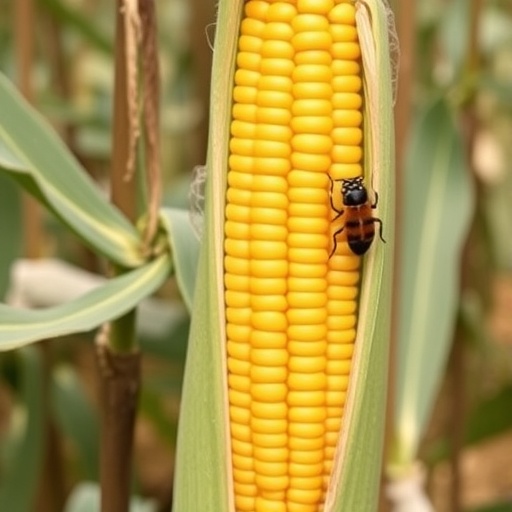
Corn rootworms, known as one of agriculture’s most damaging pests, are demonstrating an alarming evolution of resistance that jeopardizes the efficacy of cutting-edge biotechnology designed to control them. A groundbreaking study published in the prestigious journal Proceedings of the National Academy of Sciences reveals that these beetles are undermining even the newest dual-action genetically engineered corn varieties combining Bacillus thuringiensis (Bt) proteins and RNA interference (RNAi) technology. This development signals a pressing challenge for crop protection and sustainability in U.S. corn production.
Drawing upon an unprecedented synthesis of field data collected across multiple states over the last two decades, University of Arizona entomologists meticulously analyzed millions of corn rootworm samples spanning the core of America’s Corn Belt, from western Ohio through eastern Nebraska to northeastern Kansas. Their comprehensive meta-analysis presents a critical finding: fields where corn rootworms have developed resistance to Bt proteins also exhibit reduced protection from crops employing both Bt and RNAi, calling into question the long-term durability of these genetically fortified pest control strategies.
The corn rootworm, often dubbed the “billion-dollar bug,” continues to inflict substantial economic damage, costing the U.S. corn industry approximately $2 billion annually in yield losses, with an additional billion dollars spent each year on pest management efforts. These subterranean larvae relentlessly feed on corn roots, severely impairing water and nutrient uptake and threatening the viability of one of America’s most valuable commodities. Historically, the introduction of genetically modified Bt corn offered a pivotal breakthrough, significantly reducing reliance on broad-spectrum insecticides that can have deleterious environmental and human health impacts.
Bt corn is engineered to express toxins derived from the bacterium Bacillus thuringiensis, lethal to specific insect pests but safe for humans and wildlife. Since its debut targeting corn rootworms in 2003, Bt corn swiftly became the cornerstone of rootworm management programs due to its impressive efficacy. However, as with many pest control methods grounded in biological agents, evolutionary pressure facilitated the emergence of resistant corn rootworm populations, eroding these initial gains over time.
Resistance to Bt corn arises through classical Darwinian natural selection. Rootworms with pre-existing genetic traits reducing susceptibility to Bt survive applications year after year and propagate these resistance-conferring genes, gradually resulting in field populations that can withstand Bt toxins. To counteract this adaptive response, seed companies innovated the “pyramid” strategy, genetically stacking two or more Bt proteins targeting the same pest, thereby making simultaneous resistance less probable. Yet, the relentless evolutionary arms race led rootworms to develop resistance to multiple Bt toxins, diminishing the pyramid’s protective effectiveness.
Recognizing the escalating threat, biotechnology firms introduced RNA interference (RNAi) technology as a novel tool in 2022 to reinforce control over rootworm populations. RNAi functions by selectively silencing crucial genes in the pest, effectively disabling biological processes necessary for survival and reproduction. Unlike Bt proteins, which act through toxin expression, RNAi targets the pest’s genetic machinery with remarkable specificity, theoretically reducing off-target effects on non-pest insects and broader ecological systems. The RNAi mechanism also represents the pioneering application of gene silencing technologies for controlling an agricultural pest on a commercial scale.
Importantly, RNAi is engineered to be used synergistically with Bt corn, creating a two-pronged attack intended to overwhelm pest populations and delay resistance evolution. RNAi’s slower mode of action compared to Bt toxins complements this strategy. However, the University of Arizona team’s evidence suggests that when RNAi was deployed commercially, it already faced an uphill battle. Widespread pre-existing resistance to Bt proteins meant that even this carefully designed genetic “one-two punch” was compromised, exhibiting reduced efficacy in fields burdened by Bt-resistant rootworms.
This troubling trend highlights the stark realities of pest adaptation and the limits of relying solely on genetically engineered solutions. The researchers emphasize that the continued success of these biotech tools hinges on integrated pest management approaches combining genetic, cultural, and ecological tactics. Traditional methods such as crop rotation, which disrupts rootworm life cycles by alternating corn with non-host crops, remain indispensable. Furthermore, maintaining refuges of non-transgenic corn allows susceptible insect populations to persist, slowing the spread of resistant individuals and extending the commercial lifespan of Bt and RNAi technologies.
The stakes are high. Without vigilant resistance management and diversification, the corn rootworm’s rapid evolution threatens to outpace innovations in pest control, eroding yields, increasing production costs, and potentially prompting a resurgence of environmentally harmful insecticide use. As Bruce Tabashnik, lead entomologist and study author, warns, “Evolution doesn’t stop. Rootworms adapt, and if farmers don’t diversify their strategies, we risk chronic setbacks that undermine agricultural sustainability.”
This research stands as a clarion call to the agriculture sector: no single technology, regardless of sophistication, offers a permanent silver bullet against pests. Biotechnology must be integrated thoughtfully within a broader system of pest suppression, attentive to the genetic and ecological dynamics that drive resistance. Only through such multi-faceted stewardship can the balance be restored, securing the future of corn productivity against these billion-dollar beetles.
- Study DOI: 10.1073/pnas.2518683122
Keywords: Pest control, Biocontrol, Insecticide resistance, Sustainable agriculture, Agriculture
Cite Scienmag News
Alan Morgan. (September 23, 2025). New Study Highlights Threat of Pest Resistance to Corn’s Latest Biotech Defenses. Scienmag. https://scienmag.com/new-study-highlights-threat-of-pest-resistance-to-corns-latest-biotech-defenses/
Alan Morgan. "New Study Highlights Threat of Pest Resistance to Corn’s Latest Biotech Defenses." Scienmag, 23 September 2025, https://scienmag.com/new-study-highlights-threat-of-pest-resistance-to-corns-latest-biotech-defenses/. Accessed 4 September 2026.
Alan Morgan. "New Study Highlights Threat of Pest Resistance to Corn’s Latest Biotech Defenses." Scienmag. September 23, 2025. https://scienmag.com/new-study-highlights-threat-of-pest-resistance-to-corns-latest-biotech-defenses/


