


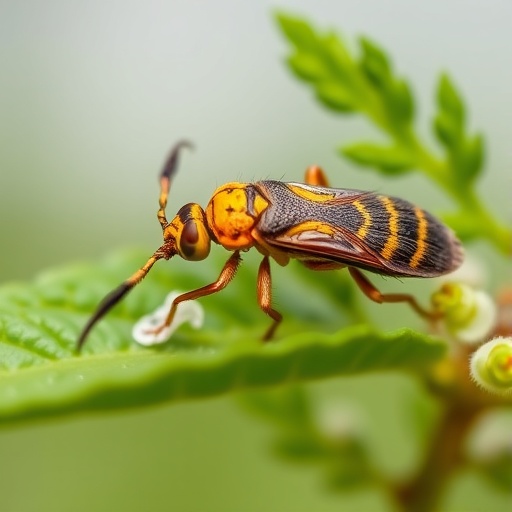
The agricultural sector faces an ongoing battle against pests, which can drastically compromise crop yields and threaten the sustainability of farming operations worldwide. Among these pests, the South American tomato moth, scientifically designated as Phthorimaea absoluta, stands out for its unique capacity to impact diverse agricultural systems. Recent breakthroughs presented by Mahlangu and Sibisi in their pivotal 2026 study shed light on integrated pest management (IPM) strategies that could reshape our approach to dealing with this formidable adversary. As we delve into their findings, it becomes clear that the future of crop protection hinges on innovative and sustainable methodologies.
The South American tomato moth was originally recognized as a pest of tomato plants; however, its adaptability has led it to infest various Solanaceae crops, including potatoes and eggplants. This adaptability is largely attributed to the moth’s rapid reproductive cycle and its ability to develop resistance to various chemical controls. Despite ongoing efforts in pest control, the spread and establishment of Phthorimaea absoluta present significant challenges for farmers. The critical need for resilient and effective management strategies has never been more urgent, making the work of researchers like Mahlangu and Sibisi particularly noteworthy.
In their research, Mahlangu and Sibisi explore multiple facets of IPM related to Phthorimaea absoluta. They propose a multifactorial approach that blends biological control with advanced technological methods, including the use of pheromone traps. This dual strategy not only targets the moth at different life stages but also helps in monitoring pest population dynamics effectively. Through these methods, farmers can potentially reduce the dependency on synthetic pesticides and minimize the ensuing environmental impact.
Biological control agents have emerged as a cornerstone in the fight against Phthorimaea absoluta. These organisms, which include natural enemies such as parasitoids and predators, play a vital role in regulating pest populations. Research conducted by the authors illustrates how investing in these agents can lead to sustainable pest control without adverse side effects commonly associated with chemical interventions. By promoting these natural adversaries in agricultural fields, farmers can establish a balanced ecosystem that enhances crop resilience.
Mahlangu and Sibisi’s work also highlights the integration of cultural practices within IPM strategies. Crop rotation, intercropping, and proper sanitation are fundamental practices that can disrupt the lifecycle of Phthorimaea absoluta. By understanding the biological and ecological preferences of this pest, farmers can implement practices that create unfriendly environments for moth infestation. Such cultural techniques not only control pest populations but also support soil health and biodiversity.
Another significant aspect of the study is the importance of educating farmers on the application and benefits of IPM. Knowledge dissemination serves as both a preventive and control measure against Phthorimaea absoluta. By equipping farmers with the tools to identify and manage infestation, they can make informed decisions that align with sustainable practices. Workshops, field days, and the use of digital platforms can play pivotal roles in elevating this knowledge.
The use of biotechnology has opened new avenues for dealing with Phthorimaea absoluta. Genetic engineering and transgenic crops have shown promise by enhancing plant resistance to this pest. By incorporating specific genes that confer resistance into crop varieties, researchers can bolster the defense mechanisms of plants against the tomato moth. However, this approach is not without controversy, as debates around genetic modification continue to challenge its widespread acceptance in certain regions.
Alarmingly, the increasing resistance of Phthorimaea absoluta to conventional insecticides poses another hurdle. As this pest evolves, it not only compromises the effectiveness of available treatments but also puts pressure on farmers to adopt newer, often more expensive solutions. The study by Mahlangu and Sibisi delves into the implications of resistance management strategies, which are critical in prolonging the efficacy of both biological and chemical controls.
Adaptive management practices play a crucial role in this arena. The dynamic nature of agriculture necessitates flexible pest control strategies that can respond to changing pest behaviors and environmental conditions. The findings bolster the need for continuous research and development to keep pace with the evolving challenges posed by Phthorimaea absoluta.
In their concluding remarks, Mahlangu and Sibisi envision a future of agricultural sustainability fortified through holistic approaches to pest management. The integration of technology, biological control, cultural practices, and education presents a synergistic framework that could revolutionize how farmers engage with pests. This vision implores stakeholders—from policymakers to agricultural enterprises—to invest in sustainable pest management practices that prioritize ecological balance.
Furthermore, the implications of this research extend beyond immediate agricultural needs. With a growing global population and increased demand for food production, strategies that mitigate pest pressures are vital for food security. The innovative methodologies explored by Mahlangu and Sibisi not only promise enhanced yield potential but also aim to uphold the ecological integrity of farming systems.
Ultimately, the lessons learned from studying Phthorimaea absoluta can serve as a microcosm of broader agricultural challenges. As researchers continue to unravel the intricate relationships between pests, crops, and the environment, the principles of integrated pest management will undeniably reshape agricultural practices worldwide. The pressing need for resilience in farming cannot be overstated, and the findings presented in this pivotal study mark a significant step toward addressing these challenges.
In conclusion, as the spotlight remains on pest management efforts, the work of Mahlangu and Sibisi serves as a clarion call. The art of pest management is not merely about eradication but about creating synergies within agricultural ecosystems that allow crops to thrive while coexisting harmoniously with nature’s complexities. This balance is not only desirable but essential in crafting a sustainable agricultural future.
Mahlangu, L., Sibisi, P. Current advances and prospects in integrated pest management of Phthorimaea absoluta.
Discov Agric 4, 29 (2026). https://doi.org/10.1007/s44279-026-00501-x
Cite Scienmag News
Alan Morgan. (January 29, 2026). New Strategies in Managing Phthorimaea absoluta Pest. Scienmag. https://scienmag.com/new-strategies-in-managing-phthorimaea-absoluta-pest/
Alan Morgan. "New Strategies in Managing Phthorimaea absoluta Pest." Scienmag, 29 January 2026, https://scienmag.com/new-strategies-in-managing-phthorimaea-absoluta-pest/. Accessed 5 September 2026.
Alan Morgan. "New Strategies in Managing Phthorimaea absoluta Pest." Scienmag. January 29, 2026. https://scienmag.com/new-strategies-in-managing-phthorimaea-absoluta-pest/


