


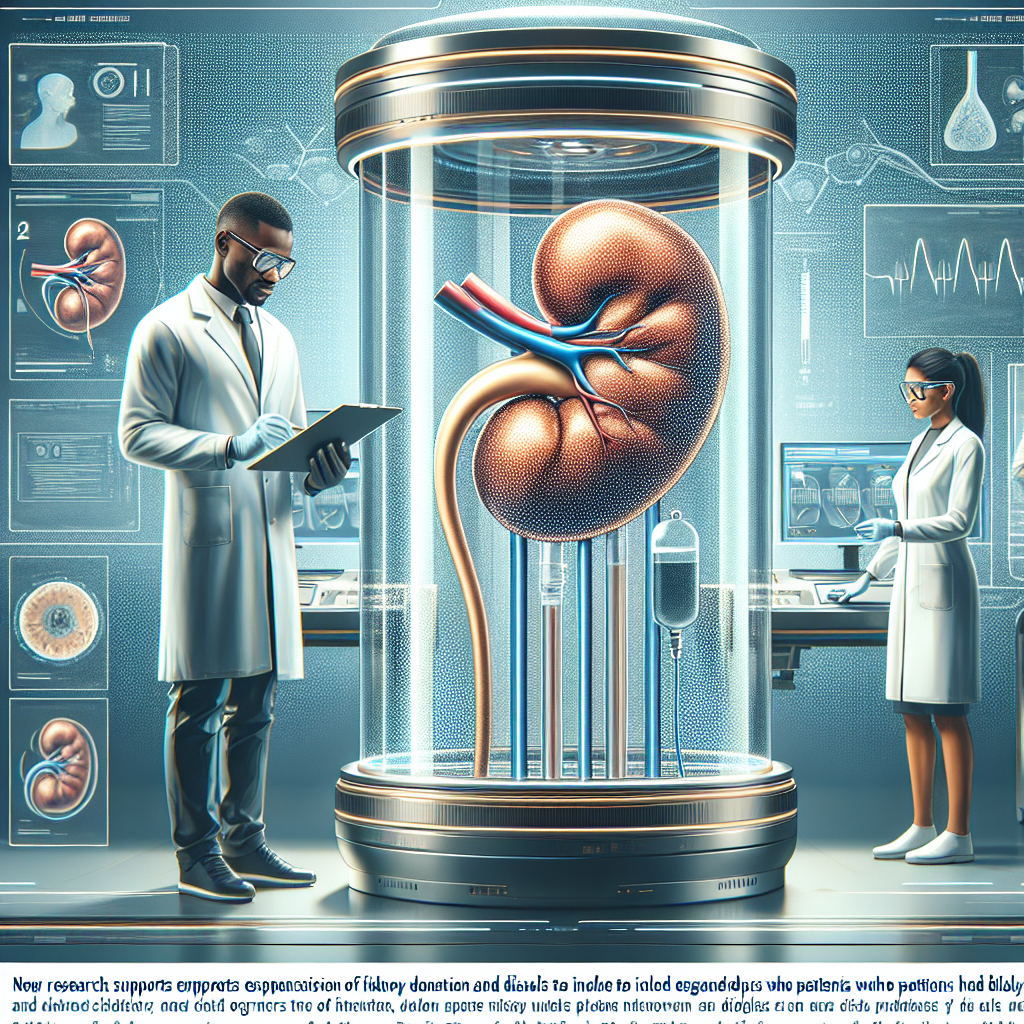
Researchers from Johns Hopkins Medicine propose a novel approach to addressing the pressing issue of a kidney donor shortage through findings that suggest a promising method to expand the pool of available kidney donors by utilizing deceased donors on dialysis for kidney transplants.
Researchers from Johns Hopkins Medicine propose a novel approach to addressing the pressing issue of a kidney donor shortage through findings that suggest a promising method to expand the pool of available kidney donors by utilizing deceased donors on dialysis for kidney transplants.
The findings, published in the May 23rd issue of JAMA, identifies that while those who received such kidneys experienced a “significant delay” in the function of the transplanted organ compared to those whose donors did not have dialysis, there was no significant difference in rates of transplant failure or death.
According to the United Network for Organ Sharing, (UNOS) approximately 100,000 patients are on the waiting list for kidney transplants in the United States. Some 25,000 successful kidney transplants were performed in 2022, the latest year for which complete data are available, and it is estimated that fewer than 20,000 of those on the list will receive transplants from deceased donors.
Historically, according to UNOS, more than 20% of deceased donor kidneys are not used each year, largely several of them are not utilized due to concerns that acute kidney injury (AKI) in the kidneys and dialysis used to treat the donors renders the kidneys too damaged for transplantation.
However, recent studies suggest there might not be much long-term difference between how the organ recipient’s body responds to a deceased donor kidney exposed to dialysis prior to transplant surgery and a diseased donor kidney not exposed to dialysis before transplant surgery.
These deceased donors are receiving dialysis treatment because they have severe AKI around the time of their death. It is known that kidneys with AKI are at a higher risk of delayed graft function (DGF) in recipients—a term for when the transplanted kidney does not work right away. What has been unclear, is whether DGF predicts shortened life expectancy and organ function over the long term.
Suppose studies prove that the risks associated with the transplantation of kidneys from deceased donors on dialysis are minimal in regard to long term life expectancy of the graft and quality of life of the recipient. In that case, this will go a long way toward increasing the number of available kidney donors.
“With patients waiting many years to receive a kidney, and a significant portion of them deteriorate or succumb to their condition while on the waiting list, we need to rapidly increase the pool of available kidneys,” says Chirag Parikh, M.D., Ph.D., professor of medicine and the director of the division of Nephrology at Johns Hopkins Medicine and key investigator for the study.
For the study, researchers analyzed medical records for 1,944 kidney transplant patients gathered from 58 U.S. organ transplant organizations from the years 2010 and 2018 with 954 receiving kidneys from deceased donors who underwent dialysis and matched them to 990 receiving kidneys from deceased donors who had not undergone dialysis.
Results showed there was higher incidence of DGF in patients who received kidneys from donors who were deceased and who underwent dialysis than there was for patients with kidneys from donors who were deceased and who did not receive dialysis. However, the kidney recipients with higher DGF did not show any significant differences in long-term graft failure (permanent loss of function of the transplanted organ).
“There is significant variability in the utilization of kidneys from high risk deceased donors across the country,” Parikh says. “The findings from this study should encourage organ procurement organizations and transplant professionals to cautiously bring kidneys with severe AKI, from deceased donors who received dialysis, into the allocation pool.”
Along with Dr. Parikh, members of the study team from Johns Hopkins Medicine are Yumeng Wen, MD, PhD; Nitya Srialluri, MD, MS, MHS, and Heather Thiessen Philbrook, M, Math.
Funding for the study was provided by the National Institute of Diabetes and Digestive and Kidney Diseases (NIDDK) grant T32DK007732-27, grant U01DK-116097, grant U01DK-116066, grant R01DK-126739, and grant U01DK130058, the National Institute on Minority Health and Health Disparities grant R01MD-014161, the National Institute of Biomedical Imaging and Bioengineering grant R01EB-032910; grants R01DK-123041, U01DK-126654, and U01DK-110961, the National Institute of Allergy and Infectious Diseases grant K24AI-146137; the NIDDK and grant P30DK079310 from the George M. O’Brien Kidney Center at Yale University grants R01DK-93770, K24DK090203 and grant P30DK079310.
Journal
JAMA
Cite Scienmag News
Jerry Hayes. (May 28, 2024). New research supports expansion of kidney donation to include organs from deceased patients who once had dialysis. Scienmag. https://scienmag.com/new-research-supports-expansion-of-kidney-donation-to-include-organs-from-deceased-patients-who-once-had-dialysis/
Jerry Hayes. "New research supports expansion of kidney donation to include organs from deceased patients who once had dialysis." Scienmag, 28 May 2024, https://scienmag.com/new-research-supports-expansion-of-kidney-donation-to-include-organs-from-deceased-patients-who-once-had-dialysis/. Accessed 6 September 2026.
Jerry Hayes. "New research supports expansion of kidney donation to include organs from deceased patients who once had dialysis." Scienmag. May 28, 2024. https://scienmag.com/new-research-supports-expansion-of-kidney-donation-to-include-organs-from-deceased-patients-who-once-had-dialysis/


