


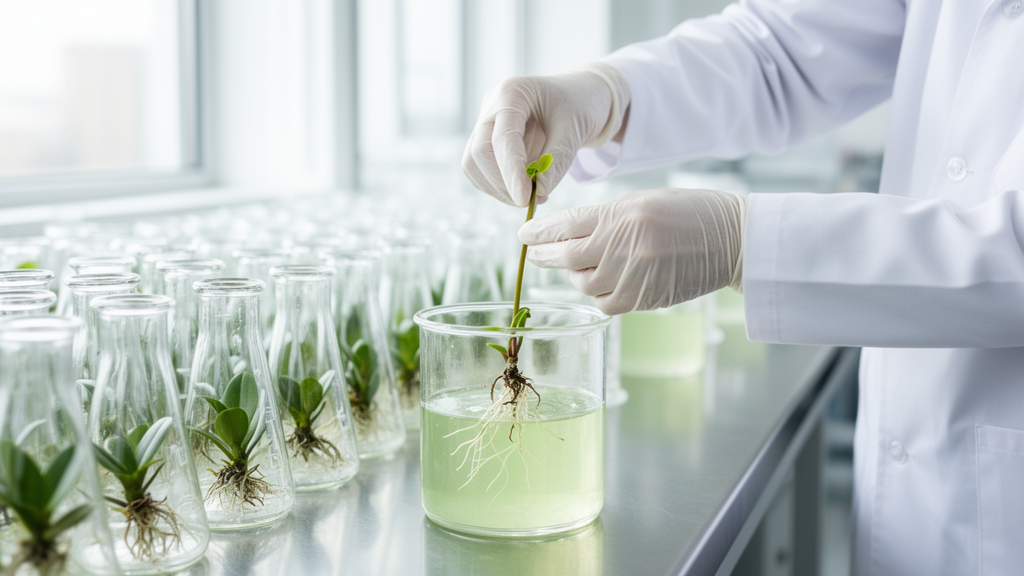
Researchers have developed efficient laboratory protocols for the mass propagation of Phalaenopsis circus, a valuable orchid species native to the tropical rainforests of South and South-East Asia. Published in the journal Italian Botanist, the study presents novel methods for in vitro propagation using two distinct biological pathways: organogenesis and somatic embryogenesis. By utilizing specific explants and precise combinations of plant growth regulators, the team demonstrated that it is possible to produce large numbers of genetically identical plantlets from both seed-derived protocorms and thin cell layers derived from leaves. This advancement addresses a significant challenge in the floriculture industry, where the high economic value of Phalaenopsis hybrids often outpaces the capacity for natural or traditional vegetative propagation.
The genus Phalaenopsis is one of the most popular in the global flower market, comprising approximately 60 species that are prized for their long-lasting blooms and aesthetic appeal. However, natural clonal propagation is a slow process that often results in the segregation of desirable traits, while sexual propagation leads to heterozygous offspring with unpredictable characteristics. Consequently, the establishment of reliable in vitro propagation protocols is critical for both conservation efforts and commercial breeding programs. Orchids are among the most diverse flowering plant families, with over 25,000 species, yet many remain vulnerable or threatened, making laboratory-based conservation techniques increasingly important for preserving genetic diversity and supporting sustainable horticulture.
The study focused on two primary types of explants: protocorms obtained from germinated seeds and thin cell layers (TCLs) prepared from leaves. Protocorms are early developmental structures derived from seeds, while protocorm-like bodies (PLBs) are vegetative structures that can be induced from various plant organs during tissue culture. The researchers utilized Murashige and Skoog (MS) basal medium, a standard nutrient formulation for plant tissue culture, enriched with various concentrations of plant growth regulators (PGRs). These included the auxins 2,4-dichlorophenoxyacetic acid (2,4-D), α-naphthalene-acetic acid (NAA), and indole-3-butyric acid (IBA), as well as the cytokinins N-phenyl-N´-1,2,3-thiadiazol-5-yl-urea (TDZ) and kinetin (Kin). The precise manipulation of these hormonal balances is essential for directing cell differentiation and regeneration in orchid tissues.
In the organogenesis pathway, the researchers observed that the highest number of PLBs, reaching 75.0 per explant, was obtained when protocorms were cultured on medium enriched with 1.0 mg l–1 of 2,4-D without the addition of TDZ. This finding highlights the specific role of auxins in stimulating the proliferation of protocorm-like structures in this species. When combining NAA and kinetin, the maximum PLB production of 63.0 was achieved with 1.0 mg l–1 of kinetin and 0.5 mg l–1 of NAA. These results indicate that the ratio and concentration of PGRs play a critical role in determining the efficiency of shoot multiplication. The direct formation of PLBs without an intervening callus phase is particularly advantageous, as it reduces the risk of somaclonal variation, ensuring that the resulting plants remain genetically stable and true to the mother plant.
Somatic embryogenesis, another key pathway investigated, involves the direct development of embryos from somatic cells, bypassing the typical zygotic embryo stage. The study found that the maximum number of somatic embryos, 12.3 per explant, was induced on medium containing 0.5 mg l–1 of 2,4-D together with 2.0 mg l–1 of NAA. This combination proved more effective than other tested ratios, demonstrating that specific auxin interactions can trigger embryogenic responses in Phalaenopsis circus. Somatic embryos are capable of developing into complete plantlets, offering a rapid route for regeneration. The ability to induce somatic embryogenesis from protocorms provides an additional tool for breeders seeking to multiply elite genotypes quickly, as this method can produce a large number of uniform plants in a relatively short timeframe.
The use of thin cell layers (TCLs) represented another significant aspect of the research, as this technique allows for the regeneration of plants from very small tissue sections. TCLs are excised from leaves and consist of only a few cell layers, making them highly efficient for in vitro culture. The researchers found that transversal TCLs with 2–3 cell layers, when cultured on medium supplemented with 0.5 mg l–1 of IBA and 1.0 mg l–1 of TDZ, produced the highest number of plantlets, reaching 9.0 per explant. This result underscores the potential of TCLs for large-scale commercial multiplication, as the technique is simple and effective for clonal propagation. The direct organogenesis from TCLs without callus formation further supports the genetic stability of the regenerated plants, which is a crucial factor for maintaining the quality of commercial orchid varieties.
Following the in vitro phase, the well-developed plantlets were transferred to plastic pots for ex vitro establishment and acclimatization. The potting mixture consisted of Light Expanded Clay Aggregate (LECA), peat moss, coco peat, charcoal soil, coco chips, and perlite in a specific proportion to ensure optimal aeration and moisture retention. The plantlets were placed in a greenhouse with controlled temperature and humidity conditions, and the pots were covered initially to retain moisture. After two weeks, the covers were removed, and the plants were monitored for survival. The study reported a 100% survival rate after three months, with the plantlets being morphologically identical to the mother plants. This high success rate in acclimatization is a critical indicator of the robustness of the in vitro protocols and their readiness for practical application in commercial nurseries.
The findings of this study contribute to the broader understanding of orchid tissue culture by identifying specific PGR combinations that optimize regeneration in Phalaenopsis circus. The research demonstrates that 2,4-D is the most effective auxin for PLB induction, while TDZ is superior to kinetin for plantlet production from TCLs. These insights are valuable for developing standardized protocols that can be applied to other Phalaenopsis species and cultivars. The ability to propagate orchids in vitro not only supports the commercial floriculture industry but also aids in the conservation of rare and threatened species by providing a means to maintain genetic diversity in laboratory settings. As the demand for orchids continues to grow, efficient and reliable propagation techniques will play a pivotal role in meeting market needs while ensuring sustainable practices.
Furthermore, the study highlights the importance of avoiding callus formation in orchid tissue culture, as callus-mediated regeneration can lead to genetic instability. The direct pathways of organogenesis and somatic embryogenesis observed in this research minimize this risk, ensuring that the propagated plants retain the desired traits of the parent. The use of TCLs as explants offers a particularly promising approach for future breeding programs, as it allows for the rapid multiplication of elite genotypes from small amounts of tissue. This technique can be integrated with other advanced biotechnological tools, such as genetic transformation, to develop new orchid varieties with enhanced traits. The successful acclimatization of plantlets to greenhouse conditions confirms the viability of the in vitro protocols and their potential for widespread adoption in the orchid industry.
In conclusion, the development of efficient in vitro propagation protocols for Phalaenopsis circus represents a significant advancement in orchid biotechnology. By leveraging the potential of organogenesis and somatic embryogenesis using protocorms and thin cell layers, researchers have provided a robust framework for the mass production of high-quality orchid plantlets. The specific PGR combinations identified in this study offer practical solutions for propagators and breeders seeking to enhance their propagation efficiency. As the orchid industry continues to evolve, the integration of such in vitro techniques will be essential for meeting the growing demand for diverse and high-quality orchid varieties while supporting conservation efforts. This research not only addresses current challenges in orchid propagation but also paves the way for future innovations in plant biotechnology and horticulture.
Subject of Research: In vitro propagation protocols for Phalaenopsis circus orchids using organogenesis and somatic embryogenesis
Article Title: In vitro propagation of the orchid Phalaenopsis circus via organogenesis and somatic embryogenesis using protocorm and thin cell layer explants
Article References: Kiaheirati, H., Hashemabadi, D., & Kaviani, B. (2024). In vitro propagation of the orchid Phalaenopsis circus via organogenesis and somatic embryogenesis using protocorm and thin cell layer explants. Italian Botanist, 18, 29-50. https://doi.org/10.3897/italianbotanist.18.123376
Image Credits: AI Generated
DOI: 10.3897/italianbotanist.18.123376
Keywords: Phalaenopsis circus, in vitro propagation, organogenesis, somatic embryogenesis, plant tissue culture, orchid biotechnology, plant growth regulators, thin cell layers, protocorms, floriculture, clonal propagation, acclimatization
Cite Scienmag News
Drew Townsend. (October 18, 2026). New Protocols Enable Mass Propagation of Phalaenopsis Circus Orchids. Scienmag. https://scienmag.com/new-protocols-enable-mass-propagation-of-phalaenopsis-circus-orchids/
Drew Townsend. "New Protocols Enable Mass Propagation of Phalaenopsis Circus Orchids." Scienmag, 18 October 2026, https://scienmag.com/new-protocols-enable-mass-propagation-of-phalaenopsis-circus-orchids/. Accessed 18 October 2026.
Drew Townsend. "New Protocols Enable Mass Propagation of Phalaenopsis Circus Orchids." Scienmag. October 18, 2026. https://scienmag.com/new-protocols-enable-mass-propagation-of-phalaenopsis-circus-orchids/


